

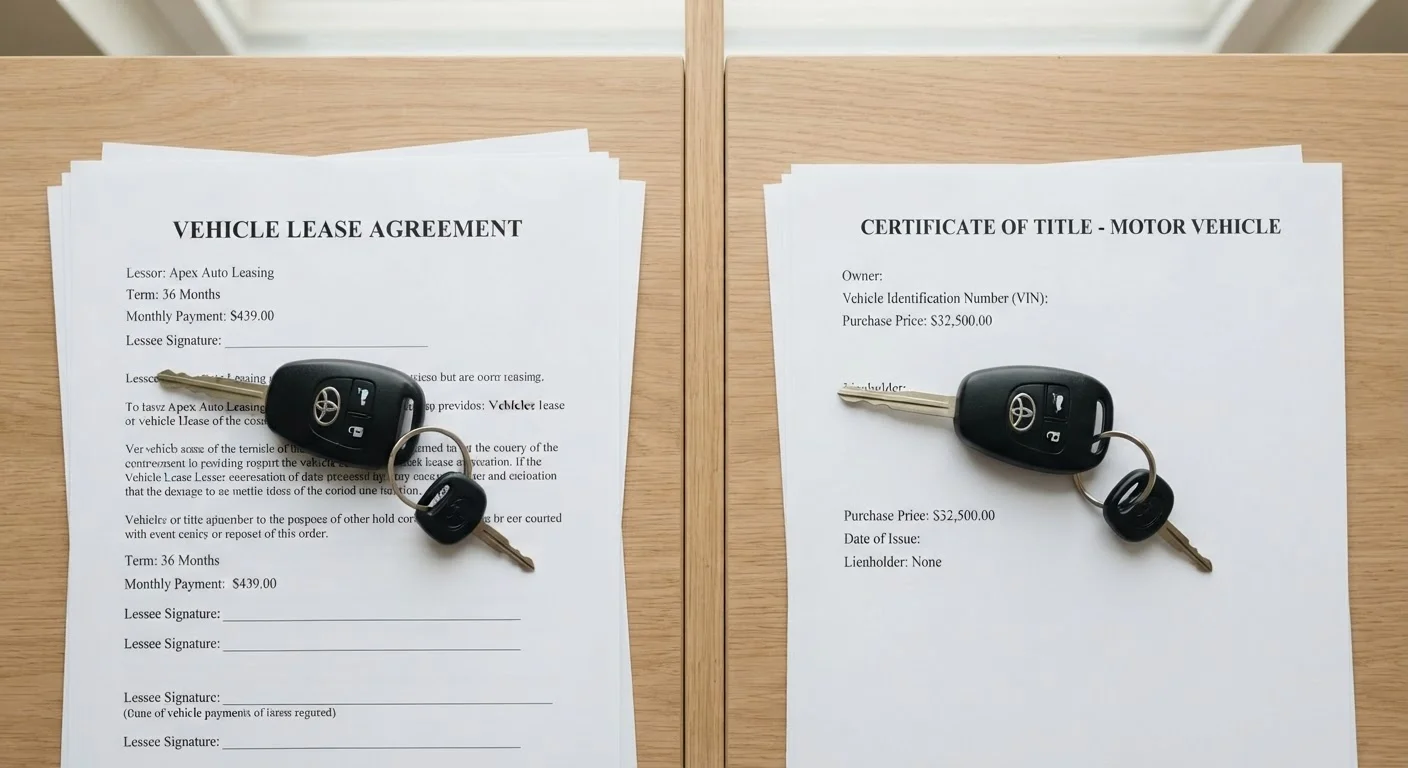
Option A
Leasing a Car
The lower-payment, flexibility-first option.
Best for: Drivers who want a new vehicle every few years and prefer predictable monthly costs without a long-term ownership commitment.
Option B
Buying a Car
The long-term equity-building path.
Best for: Drivers who plan to keep a vehicle for many years and want to build ownership equity over time.
What You're Actually Paying For in Each Path
When you lease a car, you're essentially paying for the portion of the vehicle's value you use during the lease term — typically two to four years. The monthly payment is calculated based on the car's projected depreciation over that period, plus interest (called the money factor in lease contracts) and fees. At the end, you return the vehicle and start fresh.
When you buy, you're paying for the entire vehicle — either in cash or through a loan. Monthly loan payments tend to be higher than lease payments for the same car because you're financing the full purchase price rather than a slice of it. But when the loan is done, you own an asset outright.
Neither option is universally cheaper. The path that costs less overall depends heavily on how long you drive the vehicle, how many miles you put on it, and what you value: lower monthly costs now, or a paid-off car later. For a broader look at all the costs that follow you home on signing day, see what car ownership actually costs beyond the monthly payment.
| Criterion | Leasing | Buying |
|---|---|---|
| Monthly Payment | Generally lower | Generally higher |
| Upfront Costs | First payment, fees, security deposit | Down payment, taxes, dealer fees |
| Ownership at End | None — vehicle returned | Full ownership, resale value |
| Mileage Limits | Yes — penalties for overages | No limit |
| Warranty Coverage | Usually covered throughout lease | Expires; repair costs shift to owner |
| Insurance Requirements | Higher minimums set by lessor | State minimums (often more flexible) |
| Customization | Not permitted | Owner's discretion |
| Long-Term Cost | Higher if leasing continuously | Lower after loan paid off |
The Hidden Costs That Shift the Math
Both options carry costs that don't show up in the headline payment figure. For leases, the biggest landmines are excess mileage charges (commonly $0.15–$0.25 per mile over the contract limit) and excess wear-and-tear fees at turn-in. A few door dings and worn tires can generate a surprisingly large bill. There's also the acquisition fee at the start and a disposition fee at the end if you don't lease another vehicle from the same manufacturer.
Buyers face a different set of surprises. Once the factory warranty expires — typically three years or 36,000 miles for bumper-to-bumper coverage — all repair costs fall to you. A major repair in year five or six can erase some of the savings built up by avoiding lease fees. That said, a vehicle you've owned for eight years with no payment is almost always cheaper per month than continuing to lease. Hidden car costs that catch new owners off guard covers many of these overlooked expenses in detail.
~$0.20
Typical per-mile excess mileage charge
Most lease contracts set overage penalties between $0.15 and $0.25 per mile, according to general industry figures; 5,000 extra miles can cost $1,000 or more.
3 yrs / 36K mi
Common bumper-to-bumper warranty window
Many manufacturers offer a 3-year or 36,000-mile bumper-to-bumper warranty, after which repair costs fall to the vehicle owner.
~50%
Typical new car depreciation in first 3 years
Industry data generally shows new vehicles can lose roughly 40–50% of their value in the first three years, which is what lease payments are primarily covering.
Insurance, Equity, and the Long View
Leased vehicles are technically owned by the leasing company, which means they set the insurance minimums — and those minimums are usually higher than what many states require for owned vehicles. You'll typically need comprehensive and collision coverage with lower deductibles, which raises your premium. Gap coverage (which pays the difference if a totaled car's insurance payout falls short of what you owe) is often required or strongly recommended for leased vehicles and new auto loans alike.
The equity question is where buying separates itself most clearly. Every payment on an owned vehicle builds toward an asset. When you sell or trade in, that value comes back to you. Lease payments build no equity — you're paying for use, not ownership. Over a decade of continuous leasing versus buying and holding, the cumulative cost difference can be substantial, though exact figures vary widely by vehicle, market conditions, and individual deal terms.
For drivers thinking year by year, an annual car ownership cost checklist can help you track what you're spending regardless of which path you chose. And if you're weighing new versus used on top of this decision, how new and used car ownership costs compare over five years adds another useful layer to consider.
This article is for general informational purposes only and does not constitute financial or legal advice. Costs and terms vary significantly by lender, manufacturer, region, and individual circumstances. Consult a licensed financial professional before making vehicle financing decisions.
The content on this site is for informational purposes only and is not a substitute for professional advice. Always consult a qualified professional for guidance specific to your situation.