

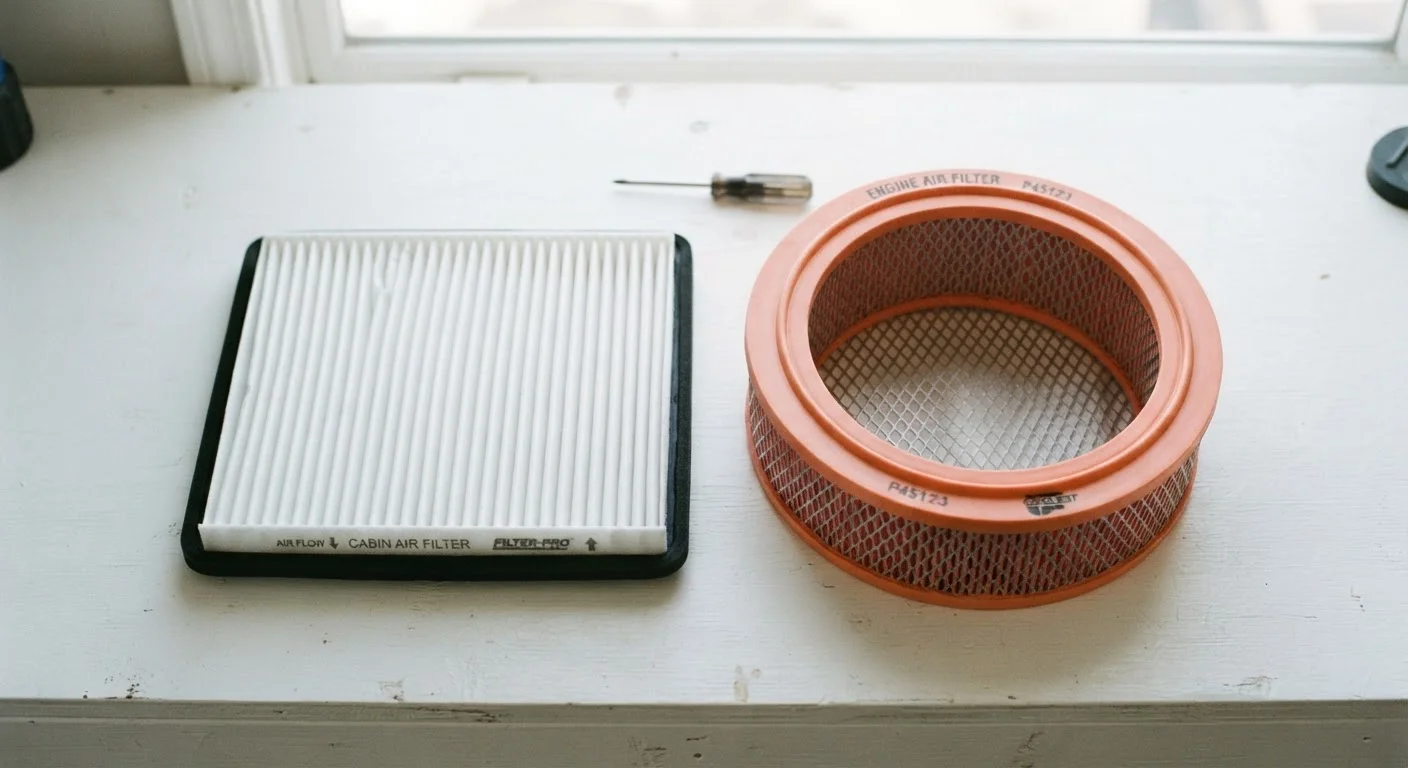
Option A
Cabin Air Filter
The filter that keeps the air you breathe clean inside the car.
Best for: Protecting passengers from dust, pollen, exhaust fumes, and airborne particles entering through the HVAC system.
Option B
Engine Air Filter
The filter that keeps combustion air clean for your engine.
Best for: Preventing dirt and debris from entering the engine, protecting internal components and supporting fuel efficiency.
What Each Filter Actually Does
Most drivers know their car has an air filter. Fewer realize it has two — and that mixing them up is an easy mistake to make at the shop or when reading your owner's manual.
The cabin air filter sits inside the HVAC system — typically behind the glove box, under the dashboard, or beneath a panel near the base of the windshield. Its entire purpose is to filter outside air before it flows through the vents into the passenger compartment. It traps dust, pollen, mold spores, exhaust particles, and other airborne contaminants. When it's working well, you get cleaner air and strong airflow. When it's clogged, you might notice weak vent output, musty smells, or worsening allergy symptoms during your commute.
The engine air filter lives in the engine bay, inside a housing connected to the intake system. Its job is to filter the air pulled into the engine for combustion. Engines need a precise mix of air and fuel to run properly, and that air needs to be free of grit and debris that could damage pistons, cylinders, and other internal components. A restricted engine air filter can reduce power output and, over time, affect fuel efficiency.
Both Filters Matter — Neither Covers the Other's Job
Replacing your engine air filter does absolutely nothing for the air quality inside your cabin, and vice versa. They are entirely separate systems with no overlap. If a shop tells you that you need one, it's worth asking specifically which filter they mean — and confirming the location they're referring to.
Side-by-Side: Key Differences at a Glance
Understanding both filters is easier when you compare them directly. Here's how they stack up across the criteria that matter most to everyday drivers.
| Criterion | Cabin Air Filter | Engine Air Filter |
|---|---|---|
| Primary function | Filters air entering the passenger cabin | Filters air entering the engine |
| Location | Inside HVAC system (often behind glove box) | Engine bay, inside air intake housing |
| Typical replacement interval | Every 15,000–25,000 miles | Every 15,000–30,000 miles |
| What it protects | Passengers from dust, pollen, and pollutants | Engine internals from dirt and debris |
| Warning signs when clogged | Weak airflow, odors, allergy symptoms | Reduced power, poor fuel economy, rough idle |
| DIY difficulty | Often easy, no tools needed | Generally easy; varies by vehicle |
One important note: service intervals in your owner's manual are a starting point, not a hard rule. Driving conditions matter a great deal. City driving with heavy traffic, rural roads with loose dirt, or regions with high pollen counts can all shorten how long either filter lasts effectively.
How to Know When Each One Needs Replacing
Neither filter will announce itself loudly when it's past due — but both will send signals worth paying attention to.
Signs your cabin air filter needs attention:
- Noticeably weak airflow from the vents even at high fan settings
- Musty, stale, or unpleasant odors when the heat or AC is running
- Increased dust accumulation on your dashboard surfaces
- Worsening allergy or respiratory symptoms during drives
Signs your engine air filter needs attention:
- Reduced acceleration or a sluggish feeling when pressing the gas
- Slight drop in fuel economy over time
- Engine running rough or misfiring at idle
- Visible dirt or discoloration when you inspect the filter directly
Both filters can be visually inspected. Hold the cabin filter up to a light source — heavy gray or brown discoloration means it's time. For the engine filter, a mechanic can pull it during a routine service visit and show you its condition. Many shops will do this at no charge during an oil change.
15,000–25,000 mi
Typical cabin air filter service interval
Many vehicle manufacturers recommend replacing the cabin air filter every 15,000 to 25,000 miles, though dusty or high-pollen environments may require more frequent changes.
15,000–30,000 mi
Typical engine air filter service interval
Engine air filter replacement intervals vary by manufacturer and driving conditions; always refer to your vehicle's owner's manual for the recommended schedule.
Can You Replace Them Yourself?
Both filters are among the more approachable DIY maintenance items — but ease of access varies widely by vehicle make and model.
The cabin air filter on many vehicles can be swapped out in under 15 minutes with no tools at all. Access is typically behind the glove box or under a simple panel. Your owner's manual will show the exact location and procedure. If the access point is awkward or requires removing other components, having a mechanic handle it is a reasonable choice.
The engine air filter is generally straightforward too — it sits in a housing in the engine bay secured by clips or screws. However, some modern vehicles with turbocharged engines or tightly packed engine bays make access more complicated. If you're not comfortable working in the engine bay, a shop visit is the sensible call.
When in doubt, defer to a qualified mechanic. Incorrect installation of either filter — particularly the engine filter — can cause problems that are far more expensive than the filter itself.
This article provides general vehicle maintenance information for educational purposes only. Always consult your vehicle's owner's manual and a qualified mechanic for guidance specific to your car's make, model, and condition.
The content on this site is for informational purposes only and is not a substitute for professional advice. Always consult a qualified professional for guidance specific to your situation.