

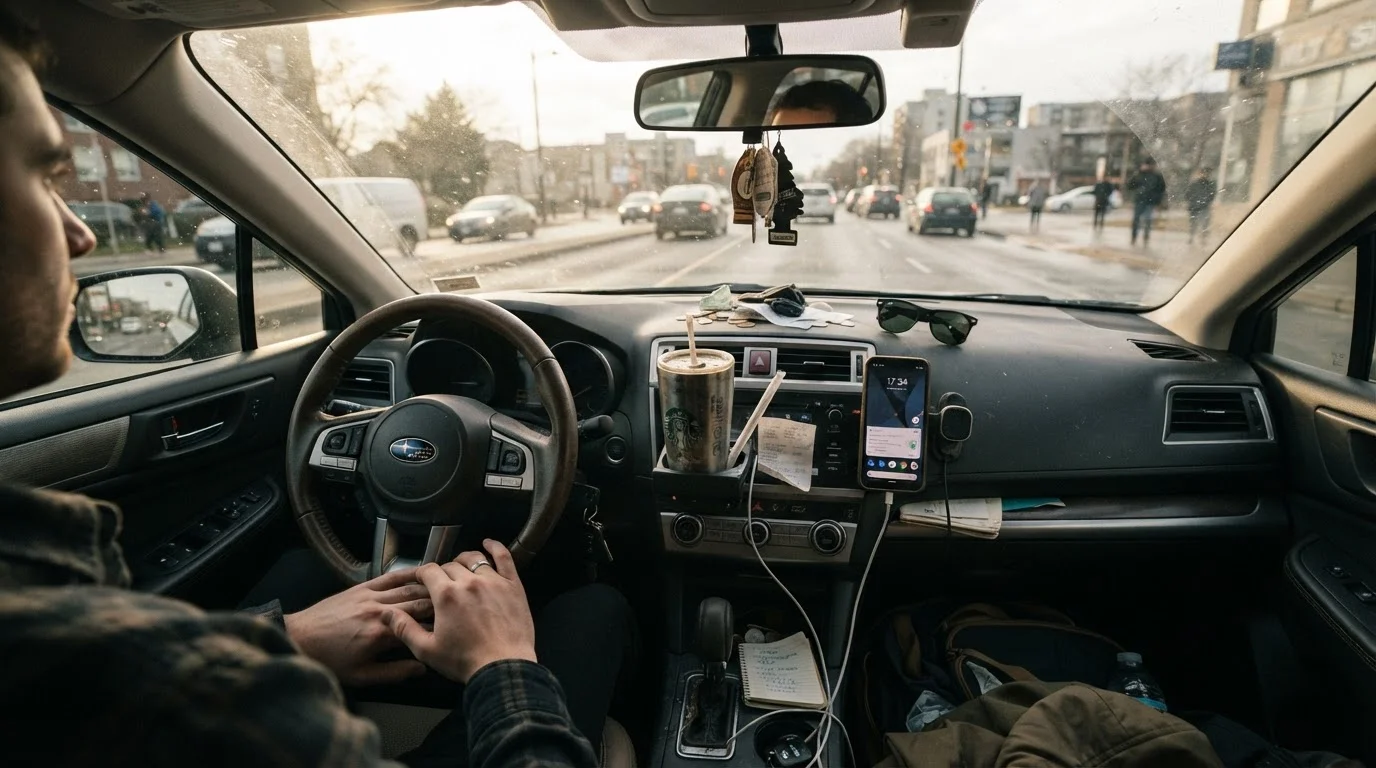
The Three Types of Distraction Every Driver Should Know
Most drivers think of distracted driving as glancing at a phone. But transportation safety researchers break distraction into three distinct categories, and understanding them changes how you think about every trip you take.
- Visual distractions take your eyes off the road — reading a text, checking a GPS screen, or looking at something outside the car.
- Manual distractions take your hands off the wheel — reaching for a drink, adjusting the radio, or searching through a bag.
- Cognitive distractions take your mind off driving — a deep conversation, an emotional phone call, or simply zoning out on a familiar route.
Texting is uniquely dangerous because it hits all three at once. But dozens of ordinary habits qualify under at least one category, and that's where most drivers underestimate their own risk.
5 seconds
Average time eyes leave the road when texting
According to the NHTSA, a 5-second glance at 55 mph covers approximately the length of a football field.
~8%
Of fatal crashes involving distraction
The NHTSA's traffic safety data consistently identifies distraction as a factor in a notable share of annual crash fatalities on U.S. roads.
3 types
Distinct distraction categories recognized by safety researchers
Visual, manual, and cognitive distractions are the three categories identified by NHTSA and traffic safety researchers.
Everyday Habits That Qualify as Distracted Driving
Here's what often surprises drivers: the activities most likely to cause a distraction-related crash aren't always phones. According to data from the NHTSA, the leading distractions involved in fatal crashes include being lost in thought (daydreaming), phone use, looking at something outside the vehicle, and interacting with passengers.
Other common culprits include:
- Eating or drinking while driving
- Adjusting climate controls, mirrors, or audio systems
- Grooming — applying makeup, fixing hair
- Reading — including navigation apps set to display text-heavy routes
- Attending to pets or children in the back seat
None of these feel as dramatic as texting behind the wheel, but each one pulls one or more types of attention away from the road. Defensive driving techniques are built around anticipating hazards — something that's nearly impossible when your mind or eyes are elsewhere.
Make a Pre-Drive Routine
Treating distraction prevention like a checklist — phone silenced, GPS set, snacks finished — takes under a minute and significantly reduces competing demands on your attention. Think of it the same way pilots run a pre-flight check: small habits, big payoff.
Why Even Brief Distractions Matter More Than You Think
The NHTSA offers a useful benchmark: at 55 mph, taking your eyes off the road for just five seconds is the equivalent of driving the length of a football field completely blind. That's enough distance to miss a braking vehicle, a pedestrian stepping off a curb, or a road hazard with no time to react.
Reaction time compounds the problem. The typical driver needs about 1.5 seconds to perceive a hazard and begin braking. Add even a two-second distraction before that, and you've nearly tripled the distance your vehicle travels before you even start to stop. This is why distracted driving is closely related to — and often overlaps with — the risks described in aggressive driving behaviors like tailgating. Reduced following distance plus reduced reaction time is a dangerous combination.
Risk isn't equal across all drivers, either. Newer and older drivers may be more vulnerable to the effects of distraction due to differences in experience and processing speed.
Practical Ways to Reduce Distraction Before You Drive
Cutting distraction doesn't require sacrificing convenience — it mostly requires building a few habits before you pull out of the driveway.
- Set your GPS before you go. Program your destination while parked so you're not fiddling with navigation while moving.
- Put your phone on Do Not Disturb. Most smartphones have a driving mode that silences notifications automatically. Use it.
- Finish eating and drinking before you drive. If you're pressed for time, factor that in — eating in a parked lot takes minutes and eliminates one distraction category entirely.
- Secure loose items and passengers. A sliding coffee cup or an unsettled child draws your hands and eyes away from the road. Deal with it before shifting into drive.
- Check mirrors and controls before moving. Seat position, mirrors, and climate settings should all be adjusted while stationary.
No single habit eliminates all risk, but each one reduces the number of competing demands on your attention while you're operating a two-ton vehicle.
This article is for general informational purposes only and does not constitute legal or safety compliance advice. Traffic laws vary by state; consult your state's DMV or a qualified professional for guidance specific to your situation.
Frequently Asked Questions
Yes, passenger conversations are a cognitive distraction. However, research suggests they are generally less risky than phone calls because passengers can naturally pause conversation during high-demand driving moments, whereas a phone caller cannot see the road conditions.
Hands-free calls eliminate manual and visual distractions but still create significant cognitive distraction. Studies from the AAA Foundation for Traffic Safety have found that hands-free calls can impair reaction time similarly to handheld calls in some conditions.
Eating and drinking, adjusting the radio or climate controls, grooming, reading, daydreaming, and interacting with other passengers are all frequently cited distractions. Any activity that pulls attention from the driving task counts.
A traffic citation for distracted driving can affect your auto insurance premiums, though the extent varies by insurer, state, and your overall driving record. This article is general information — consult a licensed insurance agent for guidance specific to your policy.
The NHTSA consistently identifies distraction as a contributing factor in a significant share of annual crash fatalities. Precise risk multipliers vary by distraction type and driving conditions, but any reduction in attention increases crash probability.
The content on this site is for informational purposes only and is not a substitute for professional advice. Always consult a qualified professional for guidance specific to your situation.