

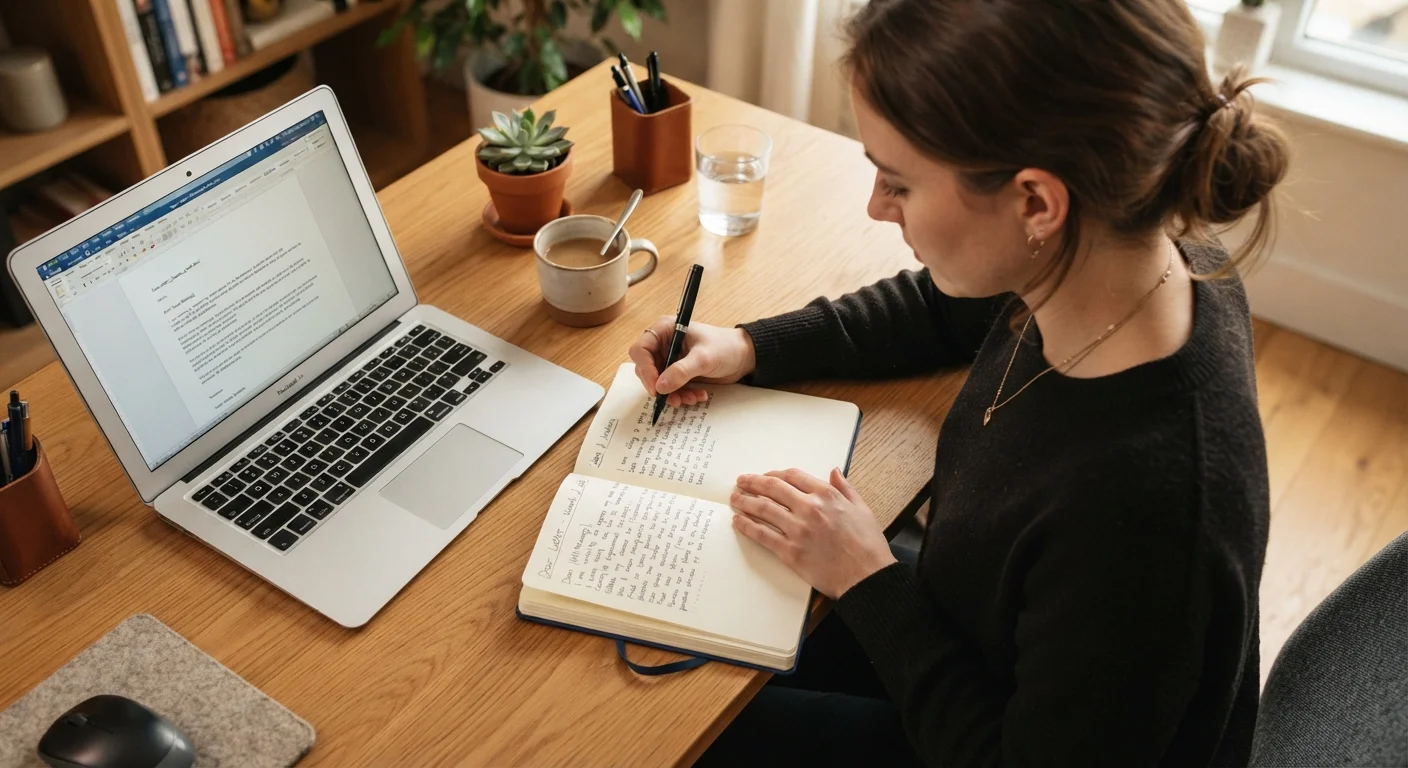
What a Cover Letter Is Actually For
Most cover letters fail before the second paragraph — not because they're poorly written, but because they're structured like a second resume. Hiring managers already have your resume. What they want from a cover letter is the reasoning, the context, and the voice behind the experience.
Think of the resume as a table of contents and the cover letter as the introduction to the book. Your resume lists what you did. Your cover letter explains why it matters to this particular employer — and why you're genuinely interested in this specific role, not just any open position.
This distinction matters more than most job seekers realize. A well-crafted cover letter can move an average resume to the top of a pile. A generic one can push a strong resume to the bottom. If you're customizing your applications, pair that effort with a tailored letter — see how customizing your resume for each posting works alongside a strong cover letter strategy.
Best Practices for Writing a Cover Letter That Works
The following practices reflect what career coaches, hiring managers, and professional development researchers consistently recommend. Apply them in combination for the best result.
Open with a specific reason you're drawn to this role or company
Generic openers — 'I am excited to apply' — are so common they've become invisible. A specific, researched opening signals that you've done your homework and that your interest is genuine, not just convenience.
Choose one accomplishment and give it narrative depth
Listing five achievements in a cover letter produces the same effect as listing them on a resume — it's data, not a story. Choosing one and explaining the challenge, your decision-making, and the outcome creates a memorable impression that a bullet point can't.
Mirror the language of the job posting without copying it verbatim
Hiring managers write job descriptions with specific words and priorities in mind. Reflecting that language back — in your own framing — signals alignment without sounding robotic or keyword-stuffed.
Keep the letter to a single page with no more than four short paragraphs
Long cover letters are rarely read in full. Hiring managers reviewing dozens of applications spend limited time on each. A tight, well-structured letter shows respect for their time and demonstrates the ability to communicate concisely — a skill valued in most roles.
Close with a clear and confident call to action
Vague closings like 'I hope to hear from you' leave the next step ambiguous. A confident, direct close — expressing interest in discussing the role further — signals professionalism and initiative without being presumptuous.
Quick Actions You Can Take Right Now
If you're actively applying, these steps can improve your cover letters immediately — no overhaul required.
For career changers, framing your existing experience in a new context is a particular challenge. The career changers' guide to transferable skills offers a practical framework for making that case compellingly in both your resume and cover letter.
Common Mistakes That Undercut Strong Applications
Even well-intentioned cover letters often stumble in predictable ways. Avoid these patterns:
- Opening with "I am writing to apply for..." — This wastes your first sentence, the one with the most reader attention. Lead with something specific and engaging instead.
- Summarizing your entire work history — Pick one or two moments that are directly relevant to this role and develop them. Breadth signals uncertainty; focus signals confidence.
- Writing a letter that works for any job — Hiring managers notice generic language immediately. Reference the company's work, mission, or a specific challenge in the role description.
- Skipping the closing ask — End with a direct, professional expression of interest in an interview. Ambiguous closings reduce callbacks.
“Hiring managers are looking for a reason to keep reading — and the cover letter is your best chance to give them one. A candidate who can tell a coherent story about their experience is already ahead of most of the field.”
— Liz Ryan, Career advisor and founder of Human Workplace
It's also worth understanding how your application materials interact with automated screening systems. Applicant tracking systems process many applications before a human sees them — knowing how they work helps you write materials that actually get read.
And if you're questioning which conventional job search habits are actually helping you, common job search myths covers which widely held beliefs may be slowing your search down.
The content on this site is for informational purposes only and is not a substitute for professional advice. Always consult a qualified professional for guidance specific to your situation.