

Summary
22 items · 15–30 minutes to review and plan your week
Why a Weekly Movement Checklist Works
Most people know they should move more. The harder question is how to structure that movement in a way that's balanced, sustainable, and actually fits a real schedule. A weekly checklist solves a specific problem: it turns vague intentions into concrete, trackable actions.
The U.S. Department of Health and Human Services' Physical Activity Guidelines for Americans recommend that most adults aim for at least 150 minutes of moderate-intensity aerobic activity — or 75 minutes of vigorous activity — per week, alongside muscle-strengthening activity on two or more days. But those numbers can feel abstract without a framework to organize them.
This checklist breaks that guidance into manageable daily and weekly actions across four pillars: cardiovascular movement, strength training, mobility and flexibility, and active recovery and rest. Use it as a planning tool at the start of each week or as a Sunday audit to see what you covered. For a deeper look at structuring these elements into a coherent schedule, see our guide to building a sustainable weekly workout schedule.
Cardiovascular Movement
Strength Training
Mobility and Flexibility
Active Recovery and Rest
Weekly Planning and Reflection
Tools That Make This Checklist Easier to Use
You don't need specialized equipment to follow this checklist — but a few simple tools can make tracking and completing your weekly movement goals significantly more consistent.
Movement tracking journal or app
Log completed sessions, track duration and intensity, and review weekly patterns over time.
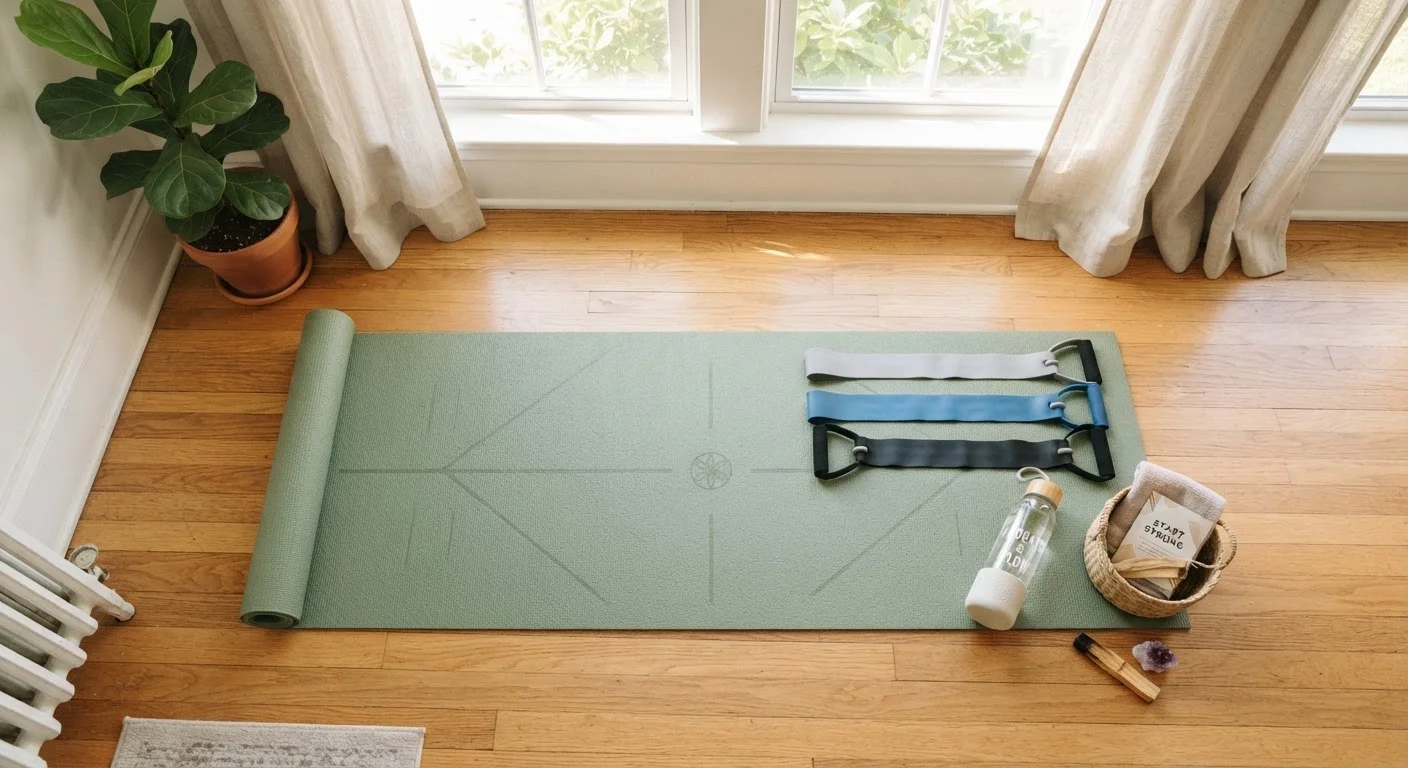
Resistance bands
Provide scalable resistance for strength training at home or when travel limits gym access.
Foam roller
Support self-myofascial release on tight muscle groups as part of your mobility and recovery routine.
Timer or interval app
Structure warm-ups, work sets, and rest periods accurately during both cardio and strength sessions.
If your challenge is finding time during the day rather than motivation, our article on weaving movement into a sedentary workday offers practical strategies for desk workers. And if mornings are your best window, building a morning movement routine that actually sticks walks through how to anchor activity before the day's demands take over.
How to Use This Checklist Effectively
Treat this checklist as a flexible framework, not a rigid prescription. Life rarely allows a perfect week, and the goal is consistency over perfection. Here's how to get the most from it:
- Plan on Sunday or Monday. Spend a few minutes mapping which activities fit which days, accounting for your actual schedule that week.
- Track as you go. Check items off in real time — don't try to reconstruct the week from memory on Friday.
- Adapt, don't abandon. If you miss a strength session, don't skip the whole week. Shift it forward and keep moving.
- Notice patterns. After three or four weeks, your checklist history reveals your real habits — not just your intentions.
Don't Skip the Recovery Items
Rest days and sleep are frequently the first things people cut when a week gets busy — but they are physiologically necessary. Overtraining without adequate recovery can increase injury risk, impair performance, and negatively affect mood and energy. If you find yourself consistently skipping recovery items, treat that as a signal to recalibrate your weekly volume, not to push harder.
Movement also has a meaningful relationship with mental well-being. If you want to track both dimensions of health in one weekly habit, pair this checklist with our weekly mental health check-in. The two complement each other naturally.
For readers whose activity levels change significantly across different life stages, fitness habits across every stage of adult life provides helpful context on how to adapt your approach over time.
This article is for general informational and educational purposes only and is not a substitute for personalized medical or fitness advice. Consult a qualified healthcare professional or certified fitness specialist before beginning or significantly changing any exercise program, particularly if you have an existing health condition, injury, or special health circumstances.
The content on this site is for informational purposes only and is not a substitute for professional advice. Always consult a qualified professional for guidance specific to your situation.