

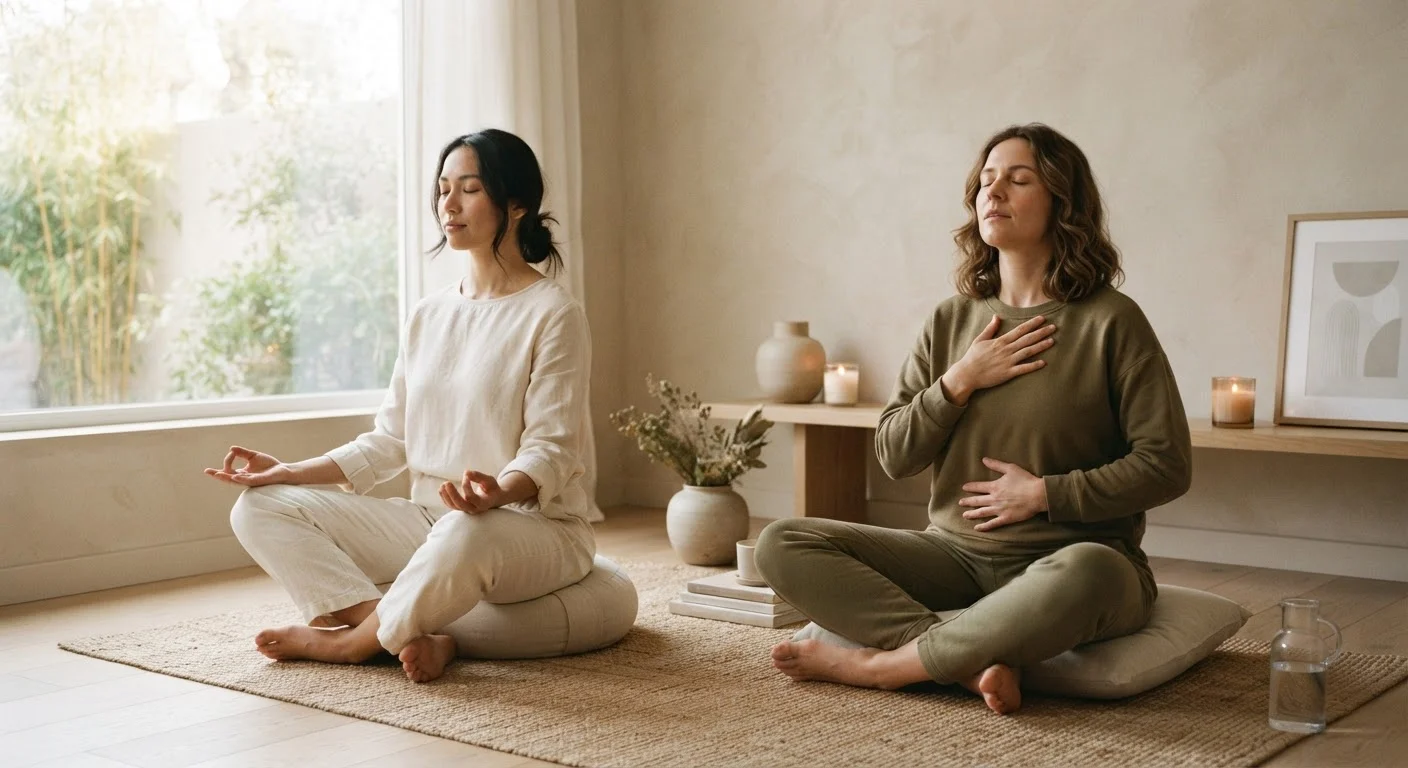
Option A
Meditation
The structured, long-game practice for mental clarity.
Best for: People seeking sustained improvements in focus, emotional regulation, and stress resilience over weeks or months.
Option B
Deep Breathing
The immediate, low-barrier tool for on-the-spot calm.
Best for: Anyone needing rapid relief from acute stress or anxiety in everyday moments, with no prior experience required.
How Each Practice Works
Meditation and deep breathing both target the nervous system, but through different mechanisms. Understanding those differences helps you choose the right tool — or know when to use both.
Meditation is an umbrella term for practices that train attention and awareness. Whether the approach is mindfulness (observing thoughts without judgment), body scanning, or loving-kindness meditation, the common thread is deliberate, repeated mental effort over a sustained period. Research published in journals such as JAMA Internal Medicine suggests that consistent meditation practice is associated with reduced anxiety and improved psychological well-being, though individual results vary and more large-scale trials are ongoing.
Deep breathing — sometimes called diaphragmatic or controlled breathing — works through the autonomic nervous system. Slow, deliberate breaths stimulate the vagus nerve, which activates the parasympathetic (rest-and-digest) response and counters the fight-or-flight state. Techniques such as 4-7-8 breathing or box breathing can produce measurable changes in heart rate variability within minutes. For a closer look at specific techniques, see grounding techniques for acute stress.
This article is for general informational purposes only and is not medical advice. Always consult a qualified healthcare professional for guidance tailored to your individual health circumstances.
Side-by-Side Comparison
The table below contrasts both practices across the dimensions most relevant to everyday use.
| Criterion | Meditation | Deep Breathing |
|---|---|---|
| Time to feel an effect | Weeks of consistent practice | Minutes per session |
| Learning curve | Moderate; guidance helps | Minimal; immediate to learn |
| Session length | Typically 10–30 minutes | 1–10 minutes |
| Environment needed | Quiet, undistracted space preferred | Anywhere, any setting |
| Primary mechanism | Attention and awareness training | Autonomic nervous system regulation |
| Best use case | Long-term resilience and focus | Immediate stress or anxiety relief |
| Research support | Strong; growing body of evidence | Strong; well-established physiology |
One practical note: deep breathing is frequently incorporated into meditation sessions as an anchor for attention, so the boundary between these practices is often fluid rather than strict.
Time, Effort, and Realistic Expectations
Neither practice delivers identical results for every person, and neither should be expected to replace professional mental health care when that care is needed.
~10 min
Minimum daily meditation linked to measurable benefit
Multiple clinical trials suggest even brief daily sessions — around ten minutes — show cumulative effects on perceived stress over four to eight weeks.
~60 sec
Time for slow breathing to lower heart rate
Physiological studies show controlled slow breathing can begin reducing heart rate and cortisol markers within about one minute of practice.
36%
Reduction in anxiety symptoms with mindfulness programs
A meta-analysis in JAMA Internal Medicine found mindfulness meditation programs associated with approximately a 36% reduction in anxiety symptom scores across studies.
Meditation generally requires a greater up-front investment. Beginners often find it difficult to sustain attention, and some research indicates that benefits accumulate gradually over four to eight weeks of consistent practice. Guided apps and structured programs can lower the barrier, but setting realistic expectations matters: early sessions may feel frustrating rather than peaceful.
Deep breathing has a nearly flat learning curve. Most adults can follow a simple breathing pattern within seconds, and the physiological effect — a slowing heart rate, reduced muscle tension — can be felt in real time. This immediacy is its most significant practical advantage. For readers new to mental wellness habits overall, understanding your emotional stress response is a useful starting point before layering in formal practices.
Importantly, both practices can fit into a broader approach to emotional health. They are discussed alongside other evidence-informed habits in our comprehensive mental well-being guide.
Combining Both for Everyday Wellness
For many people, the question is not meditation or deep breathing, but how to integrate both strategically. A common pattern is to open a meditation session with several minutes of intentional breathing to settle the nervous system, then shift attention to the chosen meditation technique. Outside of formal sessions, standalone breathing exercises serve as a rapid intervention during stressful moments.
This layered approach aligns with what research on emotional resilience suggests: sustainable mental wellness tends to result from multiple small, consistent habits rather than any single practice. See how these techniques fit into that broader picture with our article on everyday habits that support emotional resilience.
If you live with anxiety, depression, or another diagnosed condition, speak with a licensed mental health professional before relying on self-guided practices as primary management tools. These techniques can complement professional care — not replace it.
The content on this site is for informational purposes only and is not a substitute for professional advice. Always consult a qualified professional for guidance specific to your situation.