

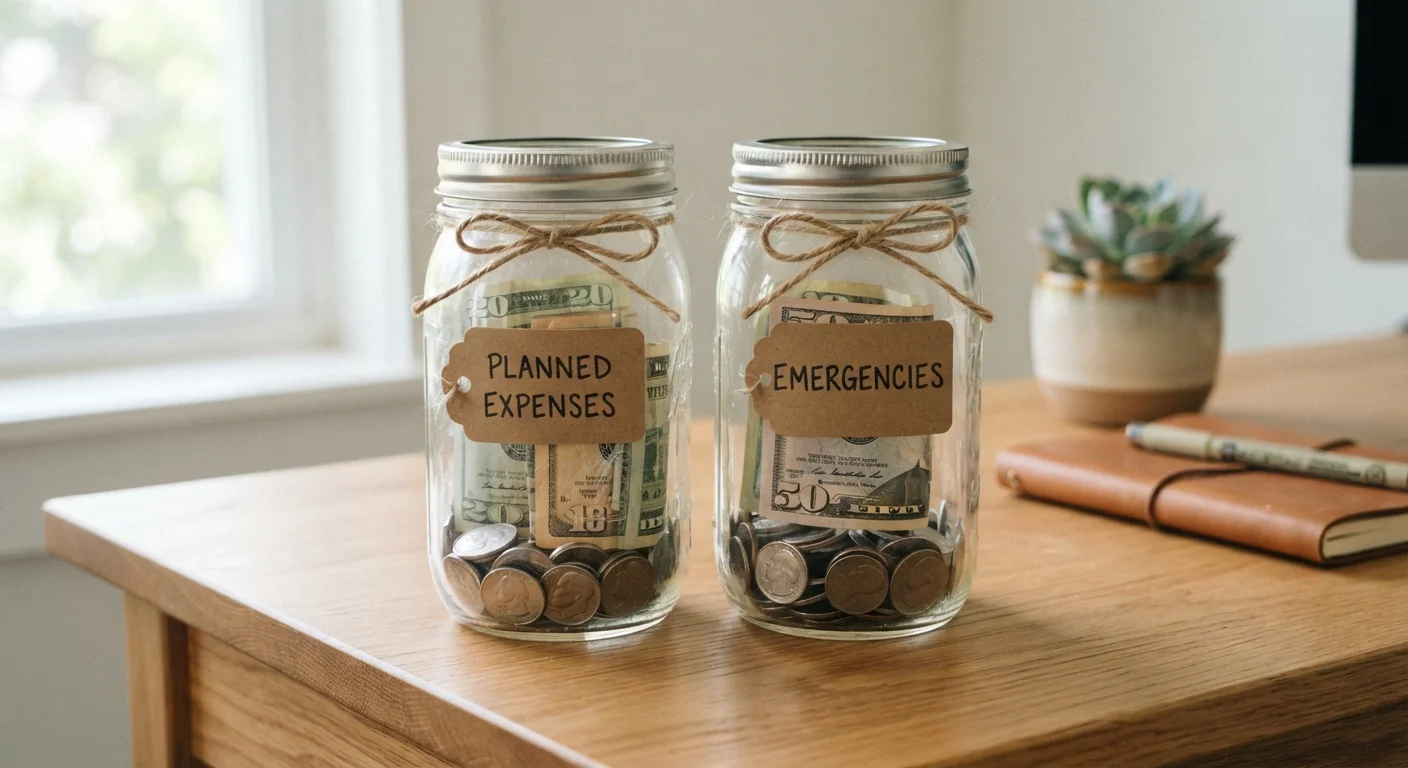
Option A
Sinking Fund
The proactive planner for predictable future expenses.
Best for: Anyone saving toward a specific, known expense with a target date — like a car repair, vacation, or annual insurance premium.
Option B
Emergency Fund
The financial safety net for life's unexpected disruptions.
Best for: Anyone who wants to cover sudden, unplanned financial shocks — such as job loss, a medical bill, or a major home repair — without going into debt.
What Each Fund Actually Does
Both a sinking fund and an emergency fund require you to set money aside regularly — but that's where the similarities end. Their purposes, mechanics, and the mindset behind each are fundamentally different.
A sinking fund is money you save deliberately for a specific, anticipated expense. You know the cost is coming — it's just a matter of when and how much. Common examples include saving for holiday gifts, a car registration, a home appliance replacement, or a vacation. You set a target amount, divide it by the number of months until you need it, and save that fixed amount each month. When the expense arrives, the money is ready.
An emergency fund is a general-purpose reserve held for the unexpected: a sudden job loss, an urgent medical expense, a furnace that fails in winter, or a car breakdown you didn't see coming. Unlike a sinking fund, there's no specific end date or pre-set expense — it simply exists to absorb financial shocks without forcing you to reach for a credit card or loan. See our Emergency Fund Basics guide for a deeper look at sizing and maintaining this reserve.
| Criterion | Sinking Fund | Emergency Fund |
|---|---|---|
| Purpose | Planned, anticipated expenses | Unexpected financial emergencies |
| Target amount | Specific dollar goal per expense | 3–6 months of essential expenses |
| Timeline | Defined end date | Ongoing, no end date |
| When to use it | When the planned expense arrives | Only for true, unplanned emergencies |
| Number of funds | Often multiple (one per goal) | Typically one general fund |
| Rebuild after use? | Yes, reset and start again | Yes, replenish as soon as possible |
How to Build and Use Both
The practical steps for each fund differ in important ways. For a sinking fund, start by listing recurring irregular expenses that have surprised your budget before — annual insurance premiums, back-to-school costs, holiday spending, car maintenance. Estimate the annual total for each, divide by 12, and add that amount to your monthly savings. Many people maintain multiple sinking funds at once, each labeled for its purpose. Keeping them in a separate account — ideally labeled clearly — prevents you from spending the money on something else.
For an emergency fund, most financial guidance suggests working toward three to six months of essential living expenses, though the right amount varies by household. If that target feels distant, a starter goal of $500 to $1,000 is still meaningful — it covers many common setbacks without requiring years of saving first. The key is that this money stays untouched unless a genuine, unforeseen emergency arises.
~57%
Americans unprepared for a $1,000 emergency
According to Bankrate's annual emergency savings survey, a majority of U.S. adults said they could not cover a $1,000 unexpected expense from savings alone.
3–6 months
Recommended emergency fund coverage
Most mainstream personal finance guidance suggests keeping three to six months of essential living costs in a liquid, accessible account.
If you're also managing debt, you don't have to choose between saving and paying down balances. Our guide on paying off debt while saving at the same time explains how to balance both goals without letting one derail the other. And if your monthly budget feels tight, building a savings habit when your budget feels too tight offers practical approaches for getting started at any income level.
Once you've established both types of funds, consider where you keep the money. Different savings account types offer varying levels of access and interest, and choosing the right one for each purpose can help your savings work a little harder while staying accessible when needed.
Should You Use the Same Account for Both?
Keeping sinking funds and your emergency fund in separate accounts — even at the same bank — is generally recommended. Mixing them together makes it harder to know how much is truly available for emergencies versus earmarked for upcoming expenses. Many savers use labeled sub-accounts or separate savings accounts to maintain clear boundaries between funds.
This article is for general informational and educational purposes only and does not constitute personalized financial advice. For guidance specific to your situation, consider speaking with a licensed financial professional.
The content on this site is for informational purposes only and is not a substitute for professional advice. Always consult a qualified professional for guidance specific to your situation.