

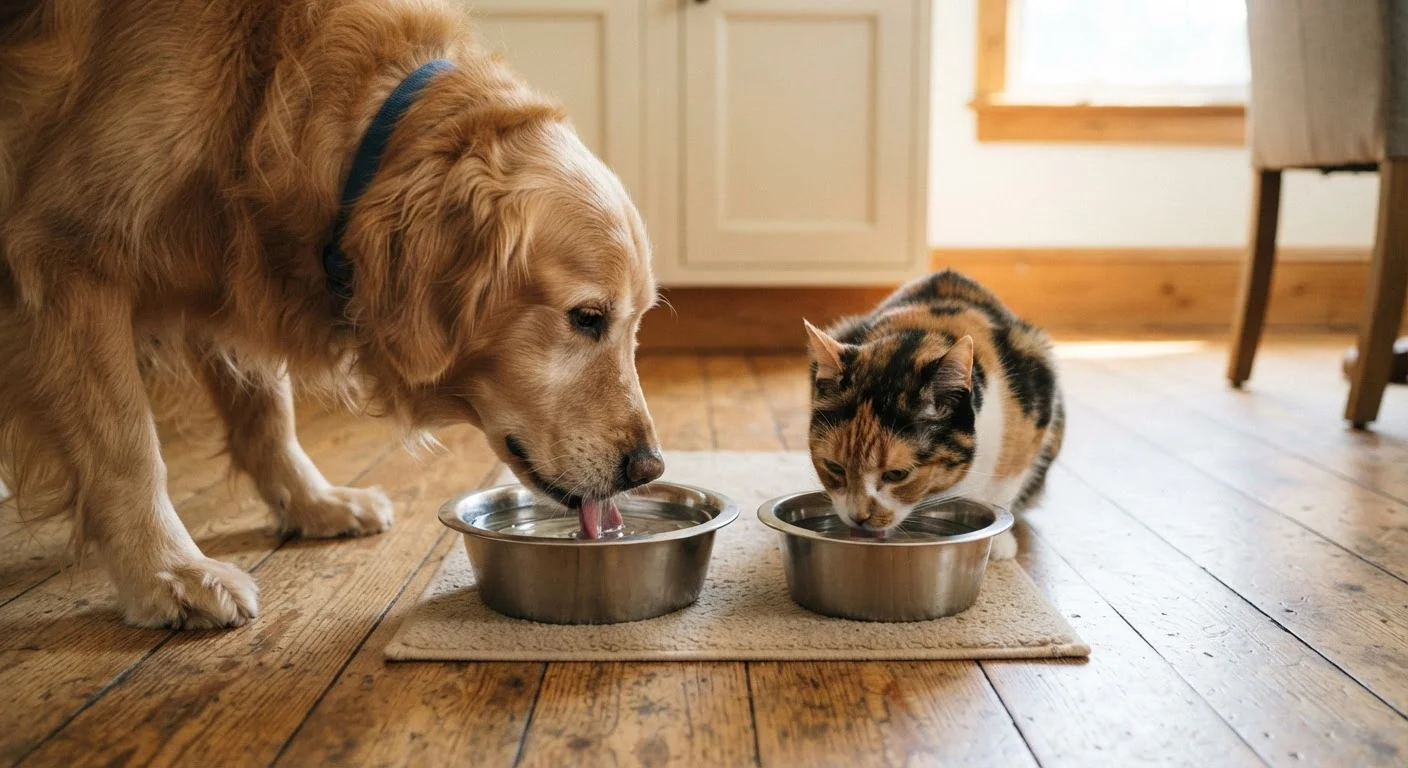
Why Hydration Needs Vary So Much Between Pets
There's no single water requirement that fits every pet. A Labrador running daily in summer heat, a senior cat on dry kibble, and a young rabbit housed indoors all have meaningfully different hydration needs — even if they're in the same household.
Four main factors shape how much water a pet requires each day:
- Species: Cats evolved as desert animals and naturally have a lower thirst drive than dogs. Rabbits and guinea pigs regulate water intake differently than either. Reptiles and birds have their own distinct needs.
- Diet: Pets eating wet or raw food get a significant portion of their water through food — sometimes 70–80% of their total intake. Those on dry kibble must drink considerably more from their bowl to compensate.
- Activity level and environment: A pet that exercises vigorously or lives in a warm, humid climate loses more water through panting and respiration and needs more to replace it. Activity type and setting both influence daily water needs.
- Age and health status: Puppies, kittens, and young animals often need more water relative to their size. Senior pets and those with conditions like kidney disease or diabetes may require careful monitoring of intake. Always consult your veterinarian for guidance on pets with health conditions.
General Hydration Guidelines by Common Pet Type
While individual variation matters, veterinary guidelines offer useful starting points:
Dogs
A commonly cited general guideline is approximately 1 ounce of water per pound of body weight per day — so a 40-pound dog may need roughly 40 ounces (about 5 cups) daily. Active breeds, nursing females, and dogs in hot weather often need significantly more. This is a general reference, not a precise prescription; your vet can help tailor it to your dog's specific situation.
Cats
Because cats have a naturally low thirst drive, getting them to drink enough is a common challenge. A typical cat may need around 3.5–4.5 ounces of total water per 5 pounds of body weight daily — but much of this can come from wet food. Cats on dry-only diets are at higher risk of chronic low-level dehydration, which over time can affect urinary and kidney health.
Small mammals
Rabbits drink more than many owners expect — often 50–150 mL per kilogram of body weight daily. Guinea pigs have similarly high relative needs. Both species should have constant access to fresh water, ideally from a sipper bottle and a bowl so they can choose.
Birds and reptiles
Water needs in these species vary widely by type. Many reptiles absorb water through soaking rather than drinking. Consult species-specific veterinary resources or an exotic animal vet for reliable guidance.
This article provides general information only and is not a substitute for veterinary advice. Always consult a qualified veterinarian about your pet's individual health and hydration needs.
Signs of Dehydration and How to Check
Recognizing low hydration early can prevent more serious health issues. Watch for these general signs in dogs and cats:
- Reduced energy or lethargy
- Dry or tacky gums instead of moist and slick
- Sunken eyes
- Loss of skin elasticity (the skin takes longer to spring back when gently pinched)
- Decreased urination or darker urine
The skin turgor test — gently lifting a small fold of skin at the back of the neck and observing how quickly it returns to flat — is a rough field check, but it's not fully reliable in all cases, particularly in overweight or elderly animals. If you notice any of these signs, contact your veterinarian promptly rather than attempting to rehydrate the animal yourself without guidance.
Changes in drinking habits can also be a meaningful signal. A pet suddenly drinking much more or much less water than usual deserves attention. Behavioral shifts like these are often among the first signs that something has changed in a pet's health.
When to Call Your Vet About Hydration
If your pet is showing visible signs of dehydration — sunken eyes, tacky gums, extreme lethargy — or has gone several hours without drinking any water, contact your veterinarian rather than waiting. Dehydration can escalate quickly, especially in small animals, very young pets, or those with existing health conditions. This article is general information only and is not a substitute for professional veterinary guidance.
Simple Daily Habits That Support Healthy Hydration
Building consistent routines around water access makes a noticeable difference. A few practical habits:
- Refresh water daily. Stale or contaminated water discourages drinking. Wash bowls with soap and water regularly — at least every other day.
- Offer multiple water stations. Placing bowls in more than one location, especially in multi-pet households, reduces competition and reminds pets to drink.
- Consider a pet water fountain. Many cats and some dogs drink more from moving water. Recirculating fountains keep water oxygenated and may appeal to pets that ignore still bowls.
- Monitor intake roughly. You don't need to measure every drop, but noticing whether a bowl empties faster or slower than usual gives you useful baseline information.
- Use food as a hydration tool. Adding a small amount of water or low-sodium broth (no onion or garlic) to dry food can increase overall fluid intake for reluctant drinkers — check with your vet before making dietary changes.
Hydration fits naturally into a broader daily care routine. The daily pet care checklist is a useful reference for keeping water checks alongside feeding, exercise, and observation habits. For a deeper look at how water interacts with your pet's diet overall, the Pet Nutrition Guide covers nutritional fundamentals across common household species.
The content on this site is for informational purposes only and is not a substitute for professional advice. Always consult a qualified professional for guidance specific to your situation.