

Why the First Vet Visit Matters
Bringing a new pet home is exciting — and a little overwhelming. Among the early to-dos, scheduling a veterinary exam is one of the most important. The first visit does several things at once: it establishes a health baseline, catches any conditions that may not be visible to an untrained eye, and begins the relationship between your pet and their care provider. That relationship matters more than many new owners realize. A vet who knows your pet from early on is better equipped to notice subtle changes over time.
Whether you've adopted a puppy, kitten, adult rescue, or a small animal like a rabbit or guinea pig, the principles are similar. You want a professional evaluation before any health issues have a chance to develop undetected. For ongoing guidance on building healthy daily habits, our Daily Pet Care hub is a useful companion resource.
What you will need
What You'll Need for a Smooth Visit
Preparation is what separates a productive first appointment from a stressful one. The right supplies, records, and mindset make every part of the process easier — for you, your pet, and the veterinary team.
Pet carrier or leash
Safely transports your pet to and from the clinic without causing injury or escape.
Health and vaccination records
Gives the vet a complete picture of prior care, vaccines received, and any known conditions.
Stool sample container
Allows the vet to screen for intestinal parasites during the exam.
Written question list
Helps you remember what to ask during the appointment so nothing important is missed.
Familiar comfort item (toy or blanket)
Reduces stress for anxious pets by providing a familiar scent in an unfamiliar environment.
Avoid Feeding Right Before the Visit
Some first-visit exams include blood draws or fecal tests that are easier to perform on a mildly empty stomach. Ask your vet's office when you book whether you should withhold food beforehand. Skipping this step can occasionally affect test results or cause nausea during travel.
Step-by-Step: How to Prepare and What to Expect
Follow these steps starting a few days before your appointment through the moment you leave the clinic. Each one is designed to help you get the most value from this foundational visit.
Schedule Within the First Week
Most veterinarians and animal shelters recommend a first exam within 48–72 hours of adoption, and no later than one week after bringing your pet home. This window helps catch any health issues before they worsen and establishes a medical baseline. If your pet shows urgent symptoms — labored breathing, vomiting, lethargy, or loss of appetite — contact a vet immediately rather than waiting for a scheduled appointment.
Gather your pet's health records before the appointment
Collect every document related to your pet's medical history. This includes vaccination records from a breeder or shelter, any prior treatment notes, and deworming or flea prevention history. If your pet came from a rescue, the adoption paperwork often lists known medical events. Having this information on hand prevents duplicate vaccines and helps the vet identify gaps in your pet's care.
Collect a fresh stool sample
Many vets request a fecal sample at the first visit to screen for common intestinal parasites such as roundworms, hookworms, and giardia. Collect a small amount — roughly the size of a grape — in a clean, sealed container within 24 hours of the appointment. Store it in the refrigerator until you leave. If your vet's office didn't mention this, call ahead and ask.
Prepare your list of questions
Think through everything you've noticed since bringing your pet home: eating habits, stool consistency, energy level, any sneezing or scratching. Write these observations down alongside specific questions about vaccination schedules, heartworm and flea prevention, spay or neuter timing, and appropriate diet for your pet's age and breed. A prepared list ensures you leave the office with clear, actionable guidance. For a broader look at diet and nutrition, explore our Pet Nutrition Guide.
Transport your pet safely and calmly
Use a properly sized carrier for cats, small dogs, or exotic pets — the animal should be able to stand and turn around comfortably but not have so much room that they slide around on turns. For larger dogs, use a fitted harness attached to a seatbelt clip or a secured crate in the cargo area. Place a familiar-smelling blanket or toy inside to reduce anxiety. Avoid letting cats or small animals roam freely in the car, as this is a safety risk for both the animal and the driver.
Check in and complete new-patient paperwork
Arrive five to ten minutes early. Most clinics ask new clients to complete intake forms covering the pet's name, age, species, breed, diet, living environment, and reason for the visit. Bring your identification and be ready to provide emergency contact details. Some offices may ask you to wait in your car with your pet rather than in a shared waiting room — check their protocol when you book.
Participate actively during the physical exam
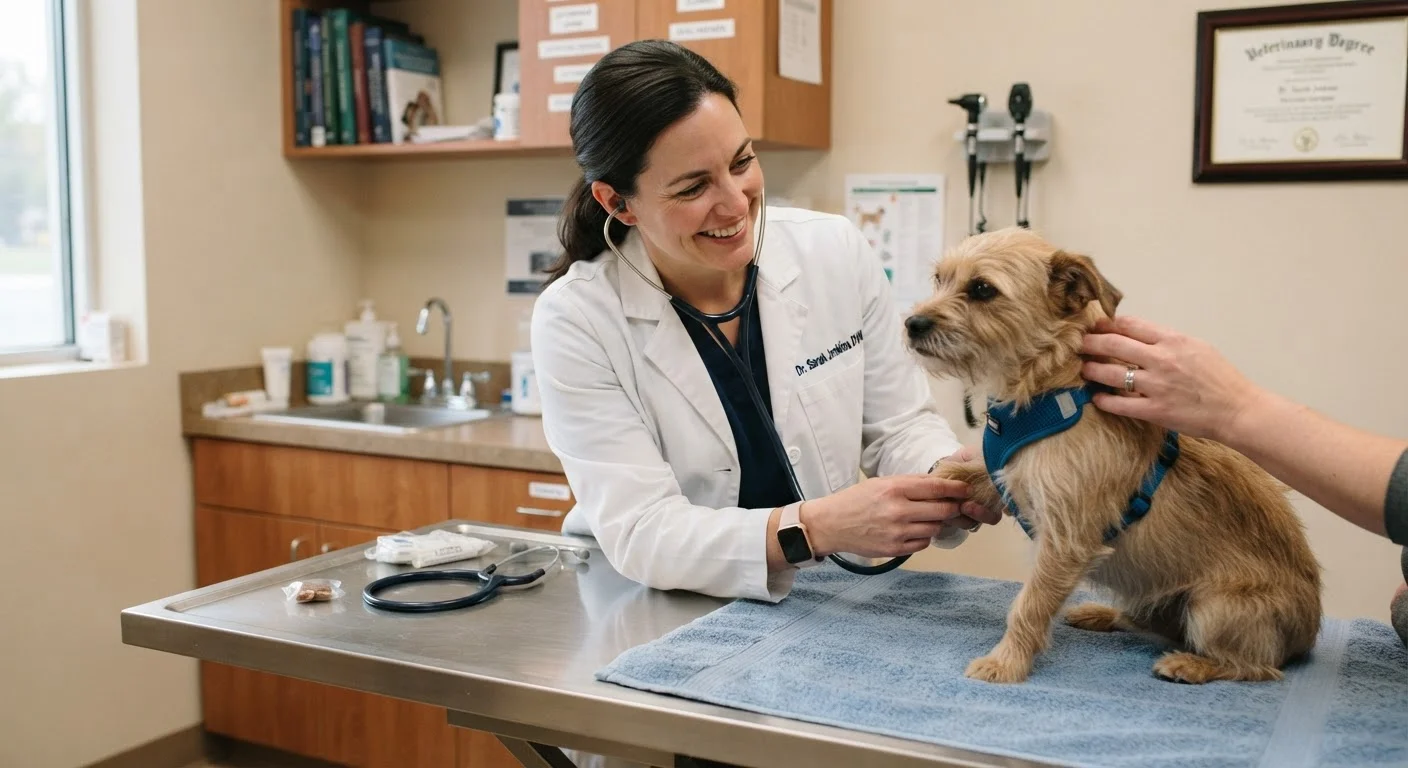
A standard first exam typically covers: weight and body condition score, temperature, heart rate and respiratory rate, eyes, ears, nose, and throat, teeth and gums, coat and skin, lymph nodes, abdomen, and limb mobility. Ask the vet to explain any findings as they go. This is the right moment to ask about microchipping if your pet isn't already chipped, and to confirm which vaccines are due now versus in coming weeks.
Review next steps and schedule follow-up care
Before leaving, confirm the recommended vaccine schedule, any parasite prevention prescriptions, follow-up appointment dates, and what warning signs should prompt an urgent call. Ask for a printed or emailed visit summary. This record becomes the starting point for your pet's long-term health file and ties directly into the kind of preventive care routine that keeps animals healthy year after year.
Bring a Calm, Confident Energy
Pets are sensitive to their owner's emotional state. If you appear anxious, your animal is likely to mirror that tension. Take a few slow breaths before walking in, speak to your pet in a low, even tone, and avoid overreacting to any whimpering or restlessness. A calm owner is one of the most effective stress-reduction tools in the room.
After the Visit: Keeping the Momentum Going
The first exam is a starting point, not a one-time event. Use the visit summary to build a simple health file — whether that's a physical folder or a notes app on your phone. Track vaccine due dates, any medications prescribed, and the vet's dietary recommendations. From there, you can work toward the kind of structured annual routine described in our annual pet health checklist — a practical tool for staying on top of your pet's needs year-round.
If anything feels uncertain after you leave — a reaction to a vaccine, a behavior change, or a question you forgot to ask — don't hesitate to call the clinic. Vets and their support staff expect follow-up questions from new pet owners. Building an open line of communication from the very beginning is one of the simplest things you can do for your animal's long-term wellbeing.
This article is for general informational purposes only and is not a substitute for professional veterinary advice, diagnosis, or treatment. Always consult a licensed veterinarian for guidance specific to your pet's health needs.
The content on this site is for informational purposes only and is not a substitute for professional advice. Always consult a qualified professional for guidance specific to your situation.