

Why Regional Differences Matter Before You Plan
The US national park system covers more than 85 million acres across every climate zone in the country. Treating it as a single category — "national parks" — leads to mismatched expectations. A family expecting leisurely scenic drives may be underprepared for a backcountry-heavy park in the Rockies; a solo hiker seeking solitude may find the Great Smoky Mountains overwhelmingly busy in fall. Understanding what each region genuinely delivers lets you match the destination to what you actually want from a trip.
If you're still deciding between a park road trip and an urban getaway, comparing those formats side by side can help you figure out which suits your travel style first.
| Total NPS units | Over 430 sites (National Park Service) |
| Designated national parks | 63 (National Park Service) |
| Annual visits (system-wide) | Approximately 325 million (NPS annual visitation data) |
| Most-visited national park | Great Smoky Mountains (no entrance fee) (NPS visitation statistics) |
| America the Beautiful Pass | Annual pass covering entrance fees at federal recreation sites (US Interagency Pass Program) |
| Reservation systems | Required at select high-demand parks; check recreation.gov (NPS and Recreation.gov) |
The Southwest: Desert, Canyon, and Plateau Country
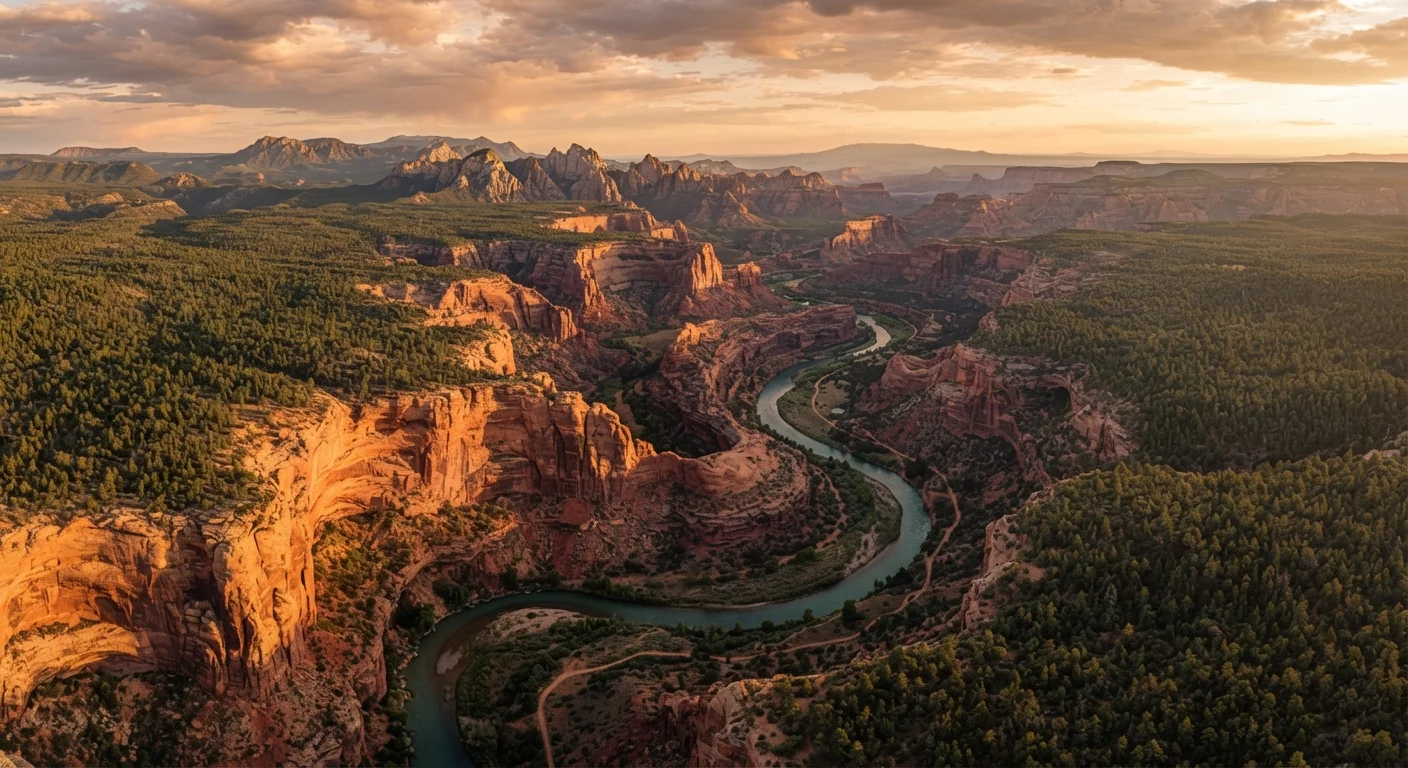
The Colorado Plateau anchors parks like Grand Canyon, Zion, Bryce Canyon, Arches, and Canyonlands. Visitors come for layered sandstone formations, slot canyon hikes, and high-desert stargazing. Summer temperatures routinely exceed 100°F on canyon floors, making spring (March–May) and fall (September–October) the most accessible windows. Water scarcity is a real planning factor — services inside parks are limited, and flash flooding in narrow canyons can occur with little warning. Entrance reservations have become standard at the most-visited Southwest parks; check the National Park Service (NPS) website before finalizing any itinerary.
The Southwest also includes Great Basin, Guadalupe Mountains, and Big Bend — parks that receive far fewer visitors despite offering compelling desert wilderness. Less-visited American places often deliver comparable scenery without peak-season crowds.
Backcountry
Undeveloped wilderness areas within a park, away from roads and visitor facilities. Backcountry travel typically requires a permit, self-sufficiency in navigation, and Leave No Trace practices.
Timed-entry reservation
A system requiring visitors to reserve a specific entry window in advance, used at high-traffic parks to manage congestion. Availability and requirements vary by park and season.
Colorado Plateau
A high desert region spanning parts of Utah, Arizona, Colorado, and New Mexico, known for layered sedimentary rock formations, deep canyons, and arid climate.
Leave No Trace
A set of outdoor ethics principles designed to minimize human impact on natural environments. Core guidelines include packing out all waste, staying on trails, and not disturbing wildlife.
The Pacific Northwest and Alaska: Rainforest, Glacier, and Wilderness
Olympic National Park on Washington's Olympic Peninsula packs three distinct ecosystems — temperate rainforest, alpine meadow, and Pacific coastline — into one unit. North Cascades offers serious backcountry terrain with limited road access. In Alaska, Denali, Katmai, and Wrangell–St. Elias operate on a different scale entirely: unpredictable weather, wildlife encounters (including bears), and minimal infrastructure are baseline conditions, not edge cases. Most visitors to Alaska's remote parks use small-plane access and should plan trip logistics months in advance. Seasonality here is compressed: the primary visitor window at many Alaska parks runs mid-June through mid-August.
The Rockies, Northern Plains, and the East
Rocky Mountain, Glacier, Grand Teton, and Yellowstone define the mountain West experience: geothermal features, wildlife watching (bison, wolves, elk, bears), and high-elevation hiking where altitude acclimatization matters. Glacier's Going-to-the-Sun Road is subject to seasonal closures; confirm current road status through the NPS site before any visit.
The eastern parks operate differently. Great Smoky Mountains National Park — the most-visited park in the system — requires no entrance fee and is accessible year-round, drawing peak crowds in October during fall foliage. Shenandoah offers Appalachian ridge hiking close to major East Coast cities. Acadia in Maine combines ocean, granite peaks, and coastal forest with a carriage road network ideal for cycling.
Across all regions, conditions and access details change. Always verify entry requirements, road status, and any reservation systems directly with the NPS before you travel. For a broader checklist of what to confirm before any significant trip, the approach outlined in pre-trip destination research applies even to domestic travel.
The content on this site is for informational purposes only and is not a substitute for professional advice. Always consult a qualified professional for guidance specific to your situation.