

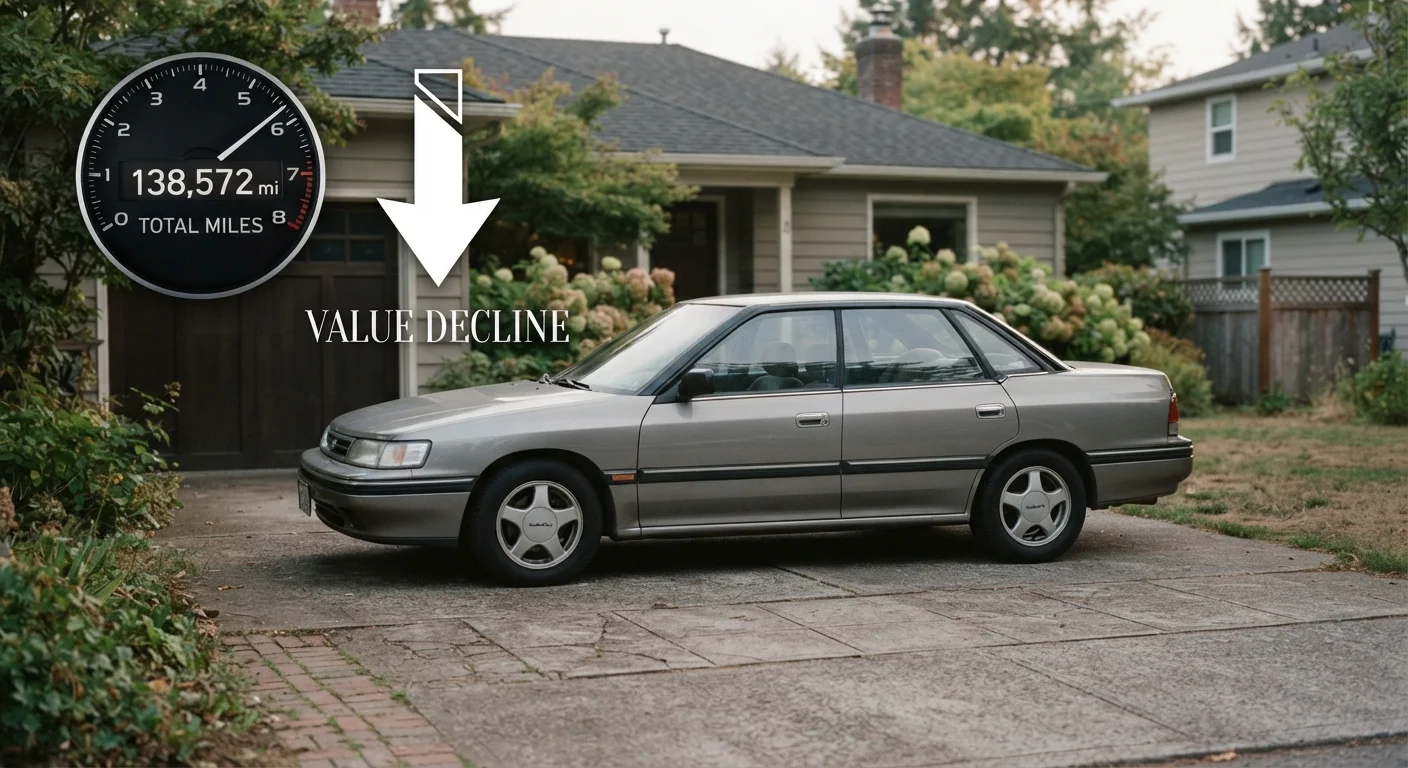
What Depreciation Actually Means for Your Wallet
When people think about the cost of owning a car, they tend to focus on the loan payment, gas, and insurance. But depreciation — the steady loss of your vehicle's value — is typically the single largest expense over the years you own it. The tricky part: it's invisible. There's no bill for it, but when you go to sell or trade in your car, you'll feel it immediately.
To put it plainly: if you buy a new vehicle for $35,000 and sell it five years later for $17,000, you've absorbed $18,000 in depreciation. That's roughly $3,600 a year, or $300 a month, that never appeared in your budget but was always there. See how depreciation fits into the full picture in our overview of total car ownership costs.
15–25%
Value lost in a new car's first year
Industry valuation data consistently shows the steepest depreciation drop occurs within the first 12 months of ownership.
~50%
Typical value remaining after five years
Many vehicles retain roughly half their original purchase price by the five-year mark, though rates vary significantly by make and model.
$3,000+
Average annual depreciation cost
For a mid-range new vehicle, annual depreciation commonly exceeds other recurring ownership costs like fuel or insurance.
Why New Cars Lose Value So Fast at First
The sharpest depreciation hit happens early. A new car often loses a significant chunk of its value within the first 12 months — some estimates put this drop between 15% and 25%. Part of this is simply the shift in category: a brand-new car becomes a used car the moment it leaves the dealership, and the used-car market prices things differently.
After that first year, the decline continues but slows. Many vehicles settle into a more gradual descent — losing roughly 10–15% annually — before leveling off somewhat around years five through seven. At that point, older age and accumulated mileage are the bigger value drivers, rather than the "newness" factor.
What Makes Some Cars Depreciate Faster Than Others
Not all vehicles age at the same rate. Several factors push depreciation up or down:
- Brand reliability reputation: Models with a long track record of dependability tend to hold value better, because buyers are willing to pay more for them on the used market.
- Fuel type: The rapid expansion of the electric vehicle market has created some uncertainty around used EV values, particularly as battery technology evolves quickly. Conventional gas vehicles follow more established depreciation patterns.
- Mileage: High annual mileage accelerates value loss. Most pricing benchmarks assume around 12,000–15,000 miles per year.
- Condition and service history: A vehicle with documented maintenance records and no accident history consistently fetches more at resale.
- Market demand: Trucks and larger SUVs have historically depreciated more slowly than sedans in the U.S. market, largely due to sustained buyer demand.
Understanding these variables matters whether you're buying, selling, or trying to decide between new and used. Our comparison of new vs. used ownership costs walks through how depreciation plays out across both scenarios.
Protect Resale Value From Day One
Keeping up with your manufacturer's recommended maintenance schedule, holding onto service records, and avoiding unnecessary modifications all help preserve your vehicle's resale value. A clean, well-documented car consistently commands more on the used market. See our car maintenance hub for practical guidance on staying on schedule.
How Depreciation Affects Your Ownership Decisions
Depreciation isn't just a selling-day problem — it ripples through several financial decisions during ownership.
Loans and equity: In the early years of a loan, you may owe more than the car is worth. This is called being "underwater" or having negative equity. If your vehicle is totaled or stolen during this period, your insurance payout — based on the car's current market value — could be less than your remaining loan balance. Gap insurance is designed to cover this difference; it's worth understanding before you finance a new vehicle.
Leasing: Lease payments are directly tied to projected depreciation. The more a car is expected to depreciate during your lease term, the higher your monthly payment. Our guide to leasing vs. buying breaks down how this math works in practice.
Buying used: Purchasing a vehicle that's already two to three years old means someone else absorbed the steepest depreciation. You're paying closer to what the car is genuinely worth in the current market, which can reduce the financial hit over your ownership period.
Depreciation is one of the costs that often catches new owners off guard. For a broader look at what else can surprise you, see our article on hidden car costs new owners miss.
This article is for general informational purposes only and does not constitute financial or investment advice. Consult a qualified financial professional for guidance specific to your situation.
Frequently Asked Questions
On average, a new car loses around 15–25% of its value in the first year, then roughly 10–15% per year after that. By year five, many vehicles are worth about half their original purchase price. The exact rate depends on the make, model, mileage, and condition.
Vehicles with strong reliability reputations, consistent demand, and lower production volumes tend to hold value better. Trucks and SUVs have historically depreciated more slowly than sedans, though this varies by brand and market conditions. Consulting a vehicle valuation guide can give you model-specific data.
Yes. Standard auto insurance pays out the actual cash value of your car at the time of a claim — meaning depreciation reduces what you'd receive if your car is totaled. Gap insurance can cover the difference between what you owe on a loan and what the insurer pays out.
Significantly. Higher mileage signals more wear and typically reduces resale value. Most valuation models assume around 12,000–15,000 miles per year; vehicles above that threshold depreciate faster, while low-mileage cars may hold value better.
Leasing can make depreciation more predictable — your monthly payment is partly based on the car's projected value drop during the lease term. However, at the end of a lease you own nothing. Whether leasing makes financial sense depends on your driving habits and long-term goals.
You can't stop it, but you can slow it. Keeping mileage reasonable, maintaining service records, avoiding accidents, and keeping the vehicle clean all help preserve resale value. Choosing a model with strong market demand from the start also matters.
The content on this site is for informational purposes only and is not a substitute for professional advice. Always consult a qualified professional for guidance specific to your situation.