

Why Standard Insurance Isn't Always Enough
When your car is totaled or stolen, your collision or comprehensive coverage pays you the vehicle's actual cash value — what the car is worth on the market that day, not what you paid for it or what you owe on it. See our breakdown of collision and comprehensive coverage for a fuller picture of what each coverage type does.
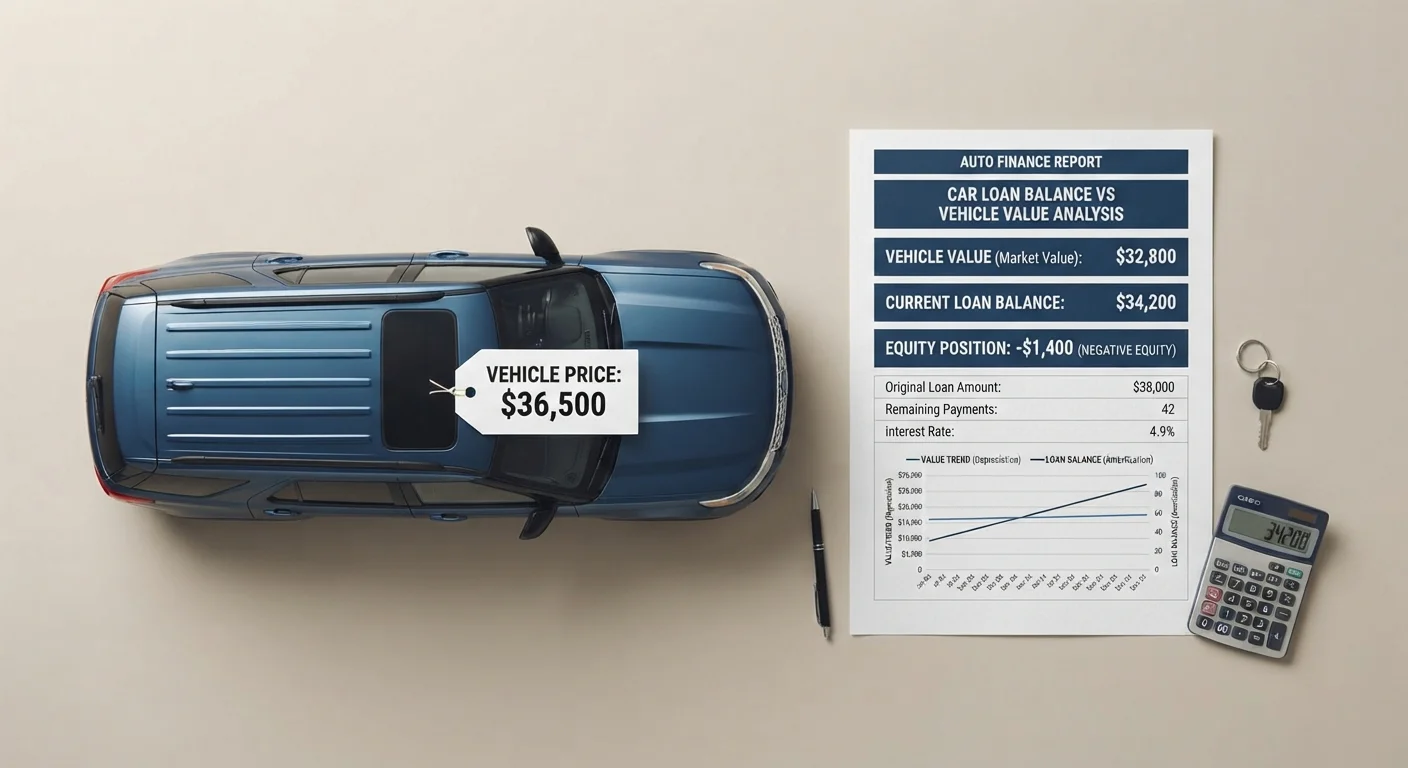
The problem is that cars depreciate fast. A new vehicle can lose a significant portion of its value in the first year alone. If you financed your purchase with a small down payment, stretched out your loan over five, six, or seven years, or rolled negative equity from a previous car into a new loan, there's a real chance you owe more than the car is worth — sometimes called being "upside down" or "underwater" on your loan.
If a total loss happens while you're in that position, your insurer's payout goes straight to your lender. Any remaining balance? That's still your responsibility — even though you no longer have the car.
~20%
Average first-year depreciation for new cars
Industry estimates from automotive valuation sources consistently show new vehicles lose roughly 15–25% of their value within the first 12 months.
~25%
New car buyers who are underwater on their loan
Automotive data firms have reported that a significant share of trade-in vehicles carry negative equity, reflecting how common loan-value gaps are.
72+ months
Average new car loan term for many U.S. buyers
Longer loan terms reduce monthly payments but slow equity build-up, increasing the period during which borrowers may owe more than the car is worth.
How Gap Insurance Fills That Hole
Gap insurance steps in to cover exactly that shortfall. Here's a simplified example of how it works in practice:
- You owe $22,000 on your auto loan.
- Your car is totaled, and your insurer values it at $17,500 (actual cash value).
- Your standard coverage pays the lender $17,500.
- You're still on the hook for $4,500 — plus potentially your deductible.
- Gap insurance covers that $4,500 balance.
Without gap coverage, you'd be paying off a loan for a car sitting in a salvage yard. That's the financial exposure gap insurance is designed to prevent.
It's worth noting that gap insurance typically does not cover your deductible, any loan payments you've missed, extended warranties rolled into the loan, or mechanical breakdowns. It's a narrow but specific protection for one particular scenario: total loss while you're upside down.
Check Your Loan Balance vs. Car Value Regularly
You can estimate your vehicle's current market value using free tools from automotive valuation resources. Compare that figure to your loan payoff amount (available from your lender). Once you're no longer upside down, you may be able to drop gap coverage and reduce your premium.
Who Should Seriously Consider Gap Coverage
Gap insurance isn't necessary for every driver. If you paid cash for your car, owe less than it's worth, or put a large down payment down, you probably don't need it. But for many buyers, the math makes a strong case for coverage.
You're a strong candidate for gap insurance if any of these apply to you:
- You financed with less than 20% down.
- Your loan term is 60 months or longer.
- You're leasing the vehicle.
- You rolled over negative equity from a previous car loan.
- You bought a vehicle that depreciates quickly.
The window where gap coverage is most useful is generally the first few years of ownership — while your loan balance is still outpacing depreciation. Once you've built enough equity that your loan balance is at or below the car's market value, gap insurance becomes less relevant and can be dropped.
Understanding how your deductible fits into the picture is also useful — see our guide on how auto insurance deductibles work for more context.
Where to Get It and What to Watch For
Gap insurance is sold through three main channels: your auto insurance company, the lender financing your vehicle, and the dealership. Each comes with different pricing structures.
Dealerships often bundle gap coverage into your loan — which means you pay interest on it over the life of the financing. Buying it as an add-on to your existing auto policy tends to be straightforward and may cost a relatively modest annual premium, but specifics vary widely by insurer and situation. Lender-sold gap products fall somewhere in between.
Before you agree to any gap product, read the terms carefully. Pay attention to caps (some policies limit the gap payout to a percentage of the car's value), what's excluded, and whether the coverage is refundable if you sell the car or pay off the loan early.
For a broader look at how different coverages work together and when you might be over- or under-insured, check out our guide on comprehensive vs. collision coverage.
This article is for general informational purposes only and does not constitute financial or insurance advice. Coverage terms, pricing, and availability vary by provider and state. Consult a licensed insurance professional to evaluate what coverage is right for your situation.
Frequently Asked Questions
Gap insurance pays the difference between your car's actual cash value at the time of a total loss and the remaining balance on your loan or lease. It does not cover your deductible, missed payments, or vehicle repairs from non-total-loss incidents.
Many lease agreements already include gap-like protection, but you should check your lease contract to confirm. If it's not included, adding gap coverage is generally worth considering since lessees rarely build equity in the vehicle.
Once the amount you owe on your loan is equal to or less than your car's actual cash value, gap insurance no longer serves a financial purpose. You can track this by comparing your loan payoff amount to your vehicle's estimated market value.
Yes — gap insurance applies when a vehicle is stolen and declared a total loss by your insurer after a comprehensive claim. Your standard comprehensive coverage would first pay the car's actual cash value, and gap would cover the remaining balance.
Gap coverage is available through your auto insurer, the lender financing your vehicle, or the dealership. Pricing and terms vary significantly, so it's worth comparing options rather than automatically accepting what's offered at the dealership.
No — gap insurance is not legally required anywhere in the United States. However, some lenders may require it as a condition of financing. Always review your loan agreement to understand any coverage requirements.
The content on this site is for informational purposes only and is not a substitute for professional advice. Always consult a qualified professional for guidance specific to your situation.