

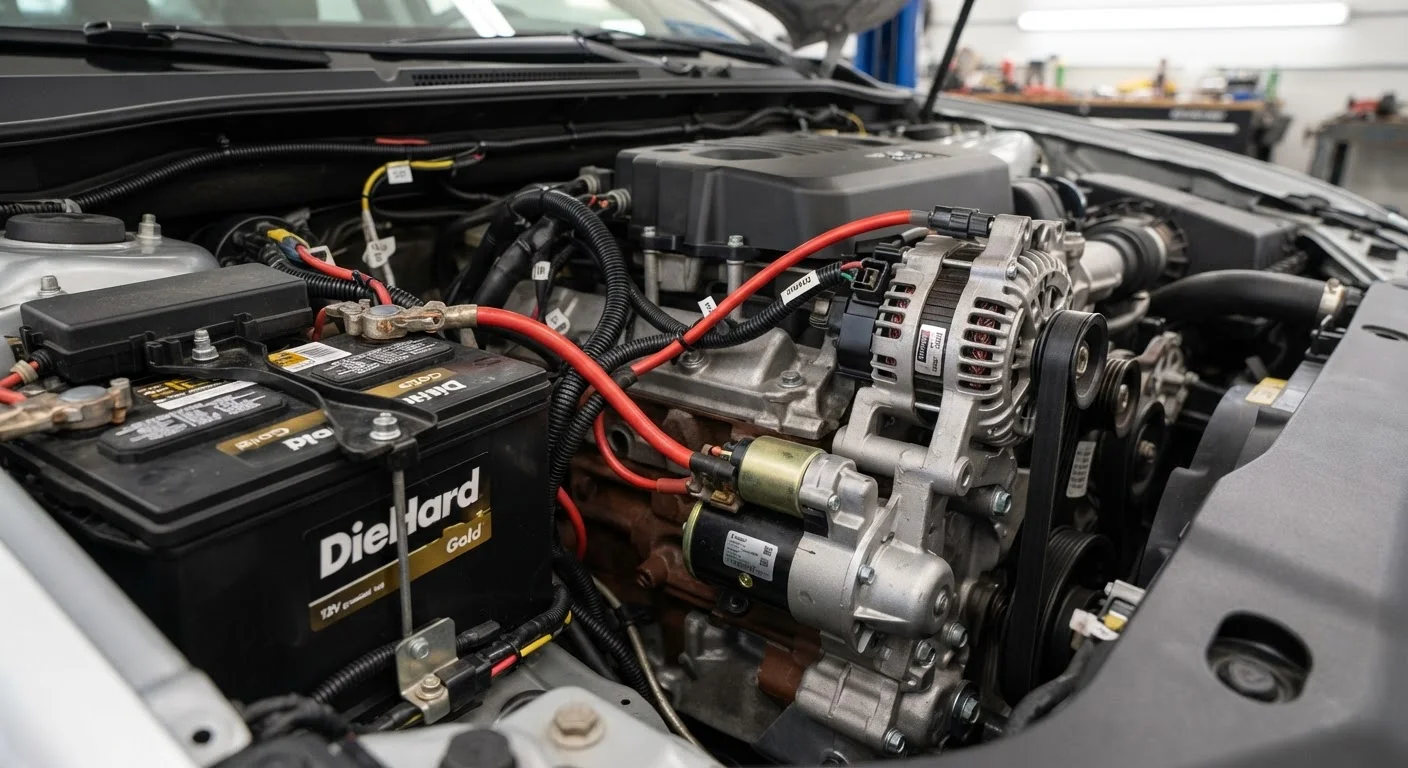
How the Three Components Work Together
Think of your car's electrical system as a relay race. Each component hands off to the next, and if one runner stumbles, the whole team suffers.
When you turn the key or press the start button, the battery delivers a concentrated burst of electrical energy to the starter motor. The starter uses that energy to spin the engine's flywheel, which gets the pistons moving — that's the cranking sound you hear. Once the engine catches and begins running on its own, the starter disengages.
From that point, the alternator — driven by a belt connected to the engine — takes over. It generates electricity to power your lights, radio, climate control, and other accessories, while simultaneously recharging the battery so it's ready for the next start. Without the alternator doing its job, the battery would run flat within a short drive.
Understanding this handoff matters: a problem that looks like a dead battery is often actually an alternator that stopped replenishing it.
3–5 years
Typical car battery lifespan
According to AAA, most car batteries need replacement within 3 to 5 years, with heat being a leading factor in early failure.
~80%
Of no-start calls traced to battery issues
AAA roadside assistance data has consistently found that battery-related problems account for the majority of no-start service calls each year.
80,000–150,000 mi
Typical alternator service life
Most alternators last well into high mileage, though driving conditions, heat, and electrical load can influence longevity.
Warning Signs You Shouldn't Ignore
Each component tends to give you clues before it quits entirely. Here's what to watch for:
- Battery: Slow or sluggish engine cranking, especially on cold mornings; a battery warning light on the dashboard; a car that needs a jump-start more than once.
- Alternator: Dimming or flickering headlights while driving; electrical accessories behaving erratically; a battery light that stays on after startup; a whining or grinding noise from the engine bay.
- Starter: A clicking sound when turning the key with no engine crank; intermittent starting failures; a grinding noise during startup (which may indicate worn starter gears).
None of these symptoms are guaranteed to point to a single cause — for example, dimming lights could signal a loose alternator belt rather than a failing alternator itself. That's why a professional electrical diagnosis is the most reliable next step rather than guessing.
Get All Three Tested at Once
If you bring your car in for a battery issue, ask your mechanic to test the alternator and starter at the same time. Most shops can run a full charging system test in just a few minutes. Catching a secondary problem early is far cheaper than getting stranded twice.
Maintenance and What to Expect from Each Component
You don't need to be a mechanic to stay ahead of electrical problems. A few simple habits help significantly.
Battery: Most batteries last 3–5 years. Have yours tested annually once it's three years old, especially before winter. Keep the terminals clean and free of corrosion — a buildup of white or bluish residue on the terminals can interfere with electrical connections. Your mechanic can clean them during a routine service visit.
Alternator: Alternators typically last 80,000–150,000 miles, but the serpentine belt that drives them wears out sooner. A worn or cracked belt can cause the alternator to underperform even if the unit itself is fine. Belt inspection is a standard part of routine maintenance.
Starter: Starters generally last the life of many vehicles but can fail earlier in high-mileage cars or those exposed to extreme heat. There's no standard replacement interval — they're usually replaced when they begin showing symptoms.
For a broader look at keeping your vehicle in good shape, see our complete car maintenance overview. And if you're budgeting for ownership, be aware that electrical repairs can be among the hidden costs that catch new owners off guard.
Frequently Asked Questions
A failing battery often causes slow engine cranking, especially in cold weather, or a car that won't start at all. A failing alternator typically drains the battery even after a jump-start, causes dimming headlights, or triggers a battery warning light on the dashboard. A mechanic can test both components quickly with a battery and charging system tester.
You can drive briefly, but it's not advisable. Without a working alternator, your car runs purely on battery power, which will deplete within 30–60 minutes. Once the battery dies, the engine will stall and electrical systems will shut down. Get it checked by a mechanic as soon as possible.
A failing starter often produces a clicking sound when you turn the key — either a rapid series of clicks or a single loud click with no engine cranking. You might also notice intermittent starting problems where the car starts fine sometimes and refuses other times.
Most car batteries last between 3 and 5 years, though climate, driving habits, and battery quality all play a role. Extreme heat actually shortens battery life more than cold does. It's worth having your battery tested annually once it's past the 3-year mark.
A jump-start can get you moving again if the battery is simply discharged, but it won't fix an underlying problem. If you need frequent jump-starts, the battery may be failing, or the alternator may not be charging it properly. Have the system tested rather than relying on jump-starts as a long-term solution.
The content on this site is for informational purposes only and is not a substitute for professional advice. Always consult a qualified professional for guidance specific to your situation.