

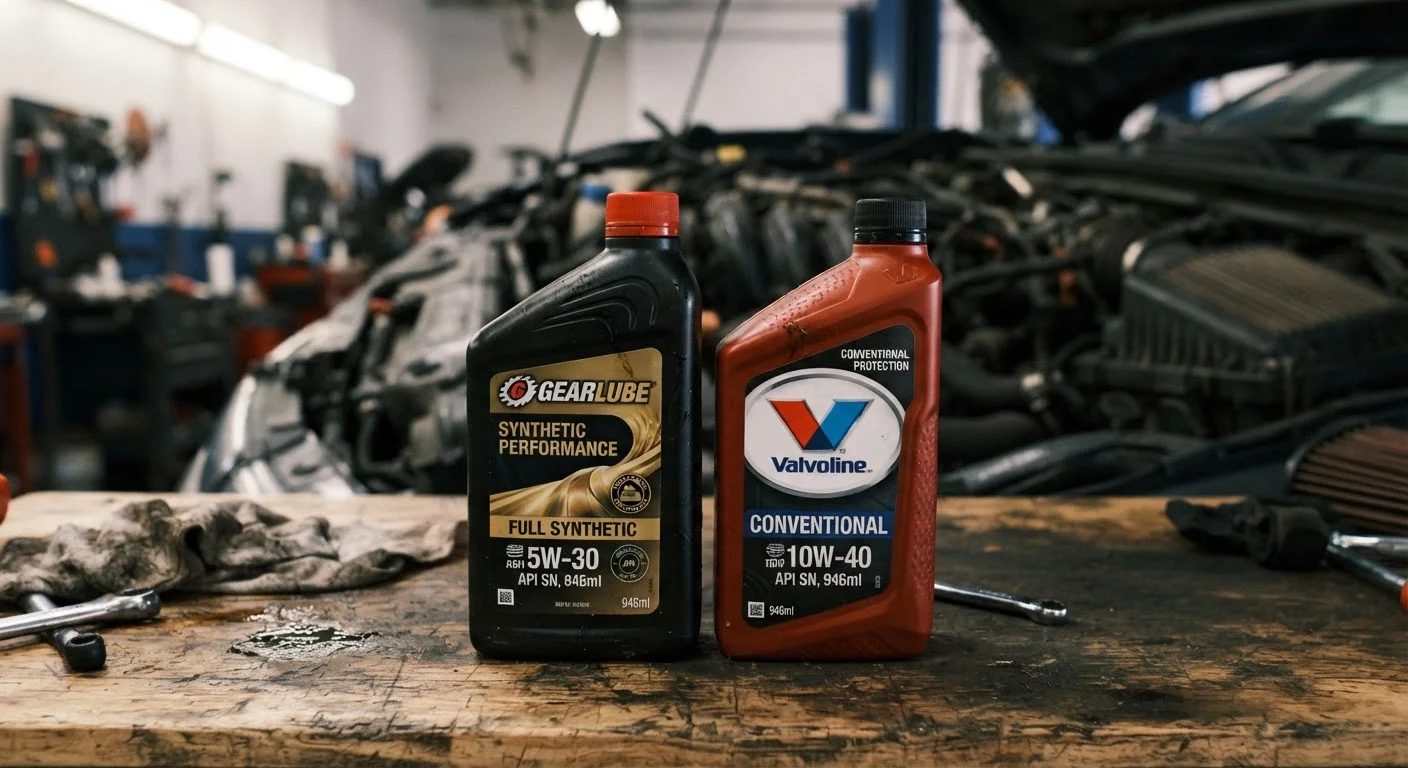
Option A
Synthetic Motor Oil
The engineered, high-performance option.
Best for: Drivers with newer vehicles, turbocharged engines, extreme climates, or those who want longer intervals between oil changes.
Option B
Conventional Motor Oil
The traditional, widely available standard.
Best for: Drivers with older or simpler engines, low annual mileage, or vehicles whose manufacturers specifically recommend it.
How the Two Oils Are Actually Made
The biggest difference between synthetic and conventional oil isn't a marketing claim — it starts at the molecular level. Conventional motor oil is refined from crude oil pumped out of the ground. That refining process removes many impurities, but it can't eliminate all of them, and the molecules left behind vary in size and shape.
Synthetic oil, by contrast, is either built from scratch in a lab using chemical processes or heavily re-engineered from base crude oil. The result is a product with highly uniform molecules, fewer impurities, and properties that can be precisely tuned for performance. Think of it as the difference between rough-cut lumber and precision-machined parts — both work, but one is engineered for tighter tolerances.
This structural difference is why synthetic oil generally performs better under stress: it resists breaking down at high temperatures, flows more freely when it's cold outside, and leaves less sludge inside an engine over time. For a deeper look at what those differences mean day-to-day, see our complete vehicle maintenance overview.
| Criterion | Synthetic Oil | Conventional Oil |
|---|---|---|
| Origin | Chemically engineered or heavily processed | Refined from crude oil |
| Molecule uniformity | Highly uniform | Variable sizes and shapes |
| Cold-weather flow | Flows readily in low temps | Can thicken more in cold |
| Heat resistance | Breaks down more slowly | Degrades faster under heat |
| Typical change interval | 7,500–10,000+ miles (varies by vehicle) | 3,000–5,000 miles (varies by vehicle) |
| Cost per change | Generally higher | Generally lower |
| Sludge buildup | Less prone to deposits | More prone over time |
What It Means for Your Engine and Your Schedule
Engine protection is where the two oil types diverge most noticeably. Because synthetic oil's molecules are more uniform and stable, they form a more consistent lubricating film between metal parts. That matters most during cold starts — the moments when most engine wear happens — and during prolonged high-load driving like highway travel or towing.
Conventional oil does the job for many engines, but it begins to degrade faster under heat and friction. As it breaks down, it becomes thicker, flows less freely, and can leave deposits that build up over time.
~50%
Of engine wear occurs at cold start
Industry engineers have long noted that the majority of engine wear happens in the first moments after ignition, before oil fully circulates — an area where synthetic oil's cold-flow properties offer an advantage.
7,500–10,000 mi
Typical synthetic oil change interval
Many automakers specify full synthetic oil with intervals in this range; always verify the exact interval in your vehicle's owner's manual.
3,000–5,000 mi
Typical conventional oil change interval
Traditional guidance places conventional oil changes in this range, though manufacturer specifications vary and some modern engines running conventional may go longer.
The practical result shows up in oil change intervals. Many vehicles running conventional oil are serviced every 3,000 to 5,000 miles. Vehicles using full synthetic oil — per manufacturer guidance — may go 7,500 to 10,000 miles or more between changes, depending on the vehicle and driving conditions. That longer interval can offset some of synthetic oil's higher upfront cost.
A word of caution: change intervals should always come from your owner's manual, not rules of thumb. Driving conditions matter too — frequent short trips, dusty environments, and stop-and-go traffic can shorten any interval. Don't let the myths around oil changes push you toward unnecessary service or cause you to skip it when it's due.
Making the Right Call for Your Vehicle
The honest answer to "which oil should I use?" is: whatever your owner's manual specifies. Automakers engineer engines with a specific oil type and viscosity grade in mind. Using the wrong one — even a higher-quality one — can potentially affect performance or void a warranty.
If your manual calls for synthetic, don't cut corners with conventional to save a few dollars. If it permits conventional and your engine has high mileage, switching to synthetic without guidance isn't automatically a good idea — a mechanic familiar with your vehicle is the right person to ask.
For drivers managing vehicle costs over the long haul, understanding oil choices is just one piece of the puzzle. Our guide on keeping car costs manageable over the life of a vehicle covers how maintenance decisions connect to your overall ownership expenses.
This article is for general informational purposes only. Always consult your vehicle's owner's manual and a qualified mechanic before making changes to your maintenance routine.
The content on this site is for informational purposes only and is not a substitute for professional advice. Always consult a qualified professional for guidance specific to your situation.