

Our Verdict
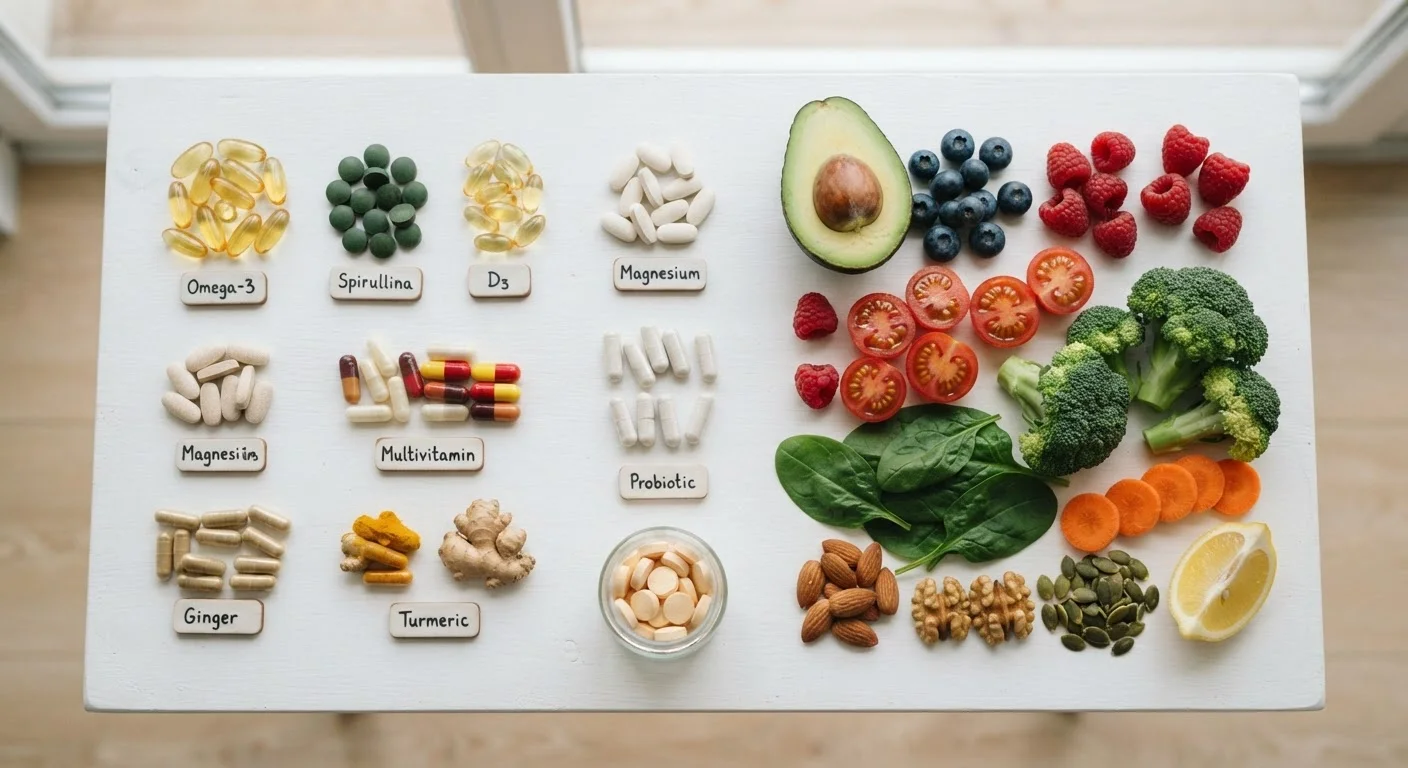
Daily dietary supplements can serve a genuine purpose when a specific, documented nutritional gap exists — particularly for people with restricted diets, absorption issues, or increased physiological demands. However, routine supplementation without professional guidance carries real risks, from wasted money to potential harm from excess intake or drug interactions. Whole foods remain the foundation of sound nutrition, and supplements work best as a targeted complement, not a catch-all solution.
People with a confirmed deficiency, a medically recognized increased need (such as during pregnancy), or a dietary pattern that reliably limits access to certain nutrients — and who are working with a healthcare provider to monitor their use.
What Daily Supplements Are — and What They Are Not
Dietary supplements include vitamins, minerals, herbal extracts, amino acids, enzymes, and other substances sold in capsule, tablet, powder, or liquid form. In the United States, they are regulated by the Food and Drug Administration (FDA) under the Dietary Supplement Health and Education Act (DSHEA) — a framework that is notably less rigorous than the one applied to prescription or over-the-counter drugs. Manufacturers are not required to prove safety or efficacy before products reach store shelves.
This regulatory context matters. Unlike a medication that must clear clinical trials before approval, a supplement can be sold based on the manufacturer's own assessment of safety. The FDA can act only after a product is already on the market if problems emerge. Understanding this baseline shapes how critically consumers should evaluate marketing claims.
Supplements are legally prohibited from claiming to treat, cure, or prevent disease. What they can do — when evidence supports it — is address a nutritional shortfall that diet alone isn't meeting. Our guide to essential vitamins and minerals explains which nutrients the body cannot produce on its own and where food sources fit in.
The Genuine Benefits of Targeted Supplementation
When used appropriately, supplements offer real advantages for specific groups and circumstances.
Corrects documented nutritional deficiencies effectively
When a deficiency is confirmed through clinical testing, targeted supplementation can restore levels efficiently. Iron supplementation for iron-deficiency anemia and folic acid during pregnancy are well-established examples supported by robust clinical evidence.
Supports groups with higher physiological demands
Pregnancy, breastfeeding, advanced age, and certain medical conditions increase the body's need for specific nutrients. Prenatal folate supplementation, for instance, is a public health recommendation backed by strong evidence linking it to reduced neural tube defect risk.
Bridges gaps in restrictive or limited diets
People following plant-based, elimination, or medically restricted diets may reliably fall short on nutrients concentrated in excluded food groups. Vitamin B12 and calcium are common shortfalls for those avoiding all animal products.
Convenient and consistent delivery of specific nutrients
Supplements provide a predictable dose that can be easier to track than estimating intake across varied meals, which is valuable when managing a specific, documented nutritional target under medical supervision.
57%
U.S. adults who report taking a dietary supplement
According to the National Institutes of Health (NIH) Office of Dietary Supplements, more than half of American adults use at least one dietary supplement, with multivitamins being the most commonly reported.
~42%
U.S. adults estimated to be vitamin D insufficient
Research published in nutrition and clinical journals suggests vitamin D insufficiency is widespread in the U.S., particularly among people with limited sun exposure, darker skin tones, and older adults.
Beyond deficiency correction, supplements can support people whose diets structurally exclude whole food groups. Those following a strict plant-based diet, for example, may fall short on vitamin B12, which occurs almost exclusively in animal products. Similarly, individuals with limited sun exposure face a higher risk of vitamin D insufficiency — a widespread concern in northern climates and among those who work primarily indoors. Our article on plant-based versus omnivore nutritional trade-offs explores these dietary gaps in more depth.
The Real Risks and Limitations Worth Knowing
Supplementation carries trade-offs that are often underplayed in popular health discussions.
Minimal regulation increases quality variability
Because supplements reach the market without pre-approval for safety or efficacy, product quality varies widely. Independent testing has found that some supplements contain less — or more — of an ingredient than stated on the label, and a small proportion have been found to contain unlisted substances.
Fat-soluble vitamins can accumulate to harmful levels
Vitamins A, D, E, and K are stored in body fat and the liver rather than being excreted, meaning excessive intake over time can lead to toxicity. Vitamin A toxicity, for example, can cause liver damage and, during pregnancy, fetal harm.
Significant potential for drug-supplement interactions
Several commonly used supplements interfere with the absorption, metabolism, or effectiveness of prescription medications. Fish oil and vitamin E, in high doses, can affect blood clotting — a serious concern for anyone on anticoagulant therapy.
Evidence for broad-spectrum supplementation in healthy adults is weak
Multiple large-scale trials, including the Physicians' Health Study II, found that daily multivitamin use did not significantly reduce rates of major chronic disease in well-nourished adults. Marketing claims frequently outpace the science.
Cannot replicate the full complexity of whole foods
Whole foods deliver fiber, phytonutrients, and combinations of compounds that interact synergistically in ways supplements cannot replicate. Isolating a single nutrient may miss the broader nutritional context that gives whole foods their health associations.
Ongoing cost without confirmed benefit is a real trade-off
Supplements represent a substantial out-of-pocket expense that, for people without a documented gap, may offer no measurable health return. Redirecting that spending toward a more varied whole-foods diet often delivers better nutritional value.
One of the most persistent misconceptions is that supplements are inherently safe because they are "natural." In reality, fat-soluble vitamins such as A, D, E, and K accumulate in body tissue and can reach toxic levels with excess intake. Herbal supplements, meanwhile, carry their own interaction risks — St. John's Wort, for instance, is well-documented to reduce the effectiveness of certain medications including some antidepressants and anticoagulants.
It is also worth noting that the evidence base for many popular supplements — from multivitamins to antioxidant blends — is considerably weaker than marketing suggests. Several large, well-designed trials have found that broad-spectrum supplementation in generally healthy adults produces no significant benefit and, in some cases, shows potential for harm at higher doses. For a broader look at how evidence maps onto popular nutrition claims, see our piece on nutrition myths and what the evidence shows.
Third-Party Testing: What to Look For
Certifications from organizations such as USP, NSF International, or Informed Sport indicate that a supplement has been independently tested for label accuracy and contaminant screening. These marks do not validate health claims, but they offer a meaningful quality checkpoint in an otherwise loosely regulated market. Look for these seals on the product label before purchasing.
Making an Informed Decision
Before adding any supplement to your daily routine, the most useful step is to establish whether you actually have a gap worth addressing. A healthcare provider can order bloodwork to identify genuine deficiencies rather than leaving you guessing. This removes the guesswork — and the cost — of supplementing nutrients your body is already getting in adequate amounts from food.
Quality verification is also worth prioritizing. Look for products that carry third-party testing certifications from organizations such as USP (United States Pharmacopeia) or NSF International, which independently verify that a product contains what its label claims and is free from certain contaminants. These seals do not guarantee medical benefit, but they do add a meaningful layer of quality assurance in an otherwise loosely regulated space.
If you take any prescription medications, a conversation with a pharmacist or physician about potential interactions is essential before starting a new supplement. This is particularly important for people managing chronic conditions, those who are pregnant, older adults, and children — populations for whom supplementation decisions carry heightened consequences.
This article is for general informational and educational purposes only and does not constitute medical advice. Consult a qualified healthcare professional before making decisions about your diet, supplements, or health management.
The content on this site is for informational purposes only and is not a substitute for professional advice. Always consult a qualified professional for guidance specific to your situation.