

Our Verdict
Neither plant-based nor omnivore diets hold an across-the-board nutritional advantage. Plant-based patterns excel in fiber and phytonutrient density; omnivore patterns offer more straightforward access to certain critical micronutrients. The most meaningful factor is not which category a diet falls into, but how well-planned and food-quality-focused it is within that category.
| Best for | Recommended |
|---|---|
| Those prioritizing high fiber intake and phytonutrient variety | Well-planned plant-based diet |
| Those seeking straightforward access to B12, heme iron, and complete protein | Omnivore diet |
| Those with higher protein needs or absorption concerns (older adults, athletes) | Omnivore diet or carefully supplemented plant-based diet |
| Those committed to plant-based eating who want to close nutrient gaps | Well-planned plant-based diet with targeted supplementation |
What Each Dietary Pattern Actually Involves
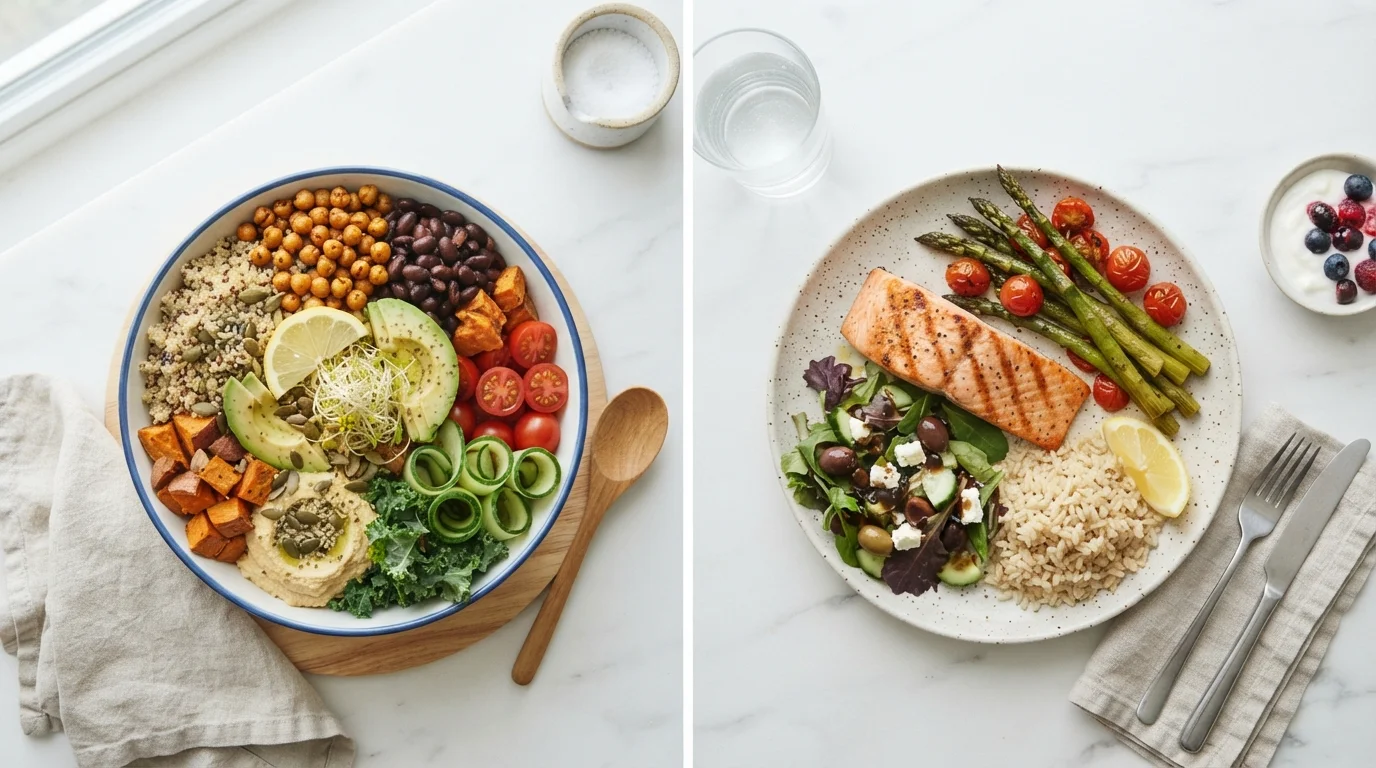
The term plant-based diet covers a wide spectrum — from fully vegan (no animal products) to flexitarian (mostly plants, with occasional meat or dairy). What these approaches share is a primary reliance on vegetables, fruits, legumes, whole grains, nuts, and seeds. An omnivore diet, by contrast, incorporates both plant and animal foods — meat, poultry, fish, dairy, and eggs alongside plant staples.
The nutritional consequences of each pattern flow from that structural difference. It's worth noting upfront that the quality of food choices within each pattern matters enormously. A heavily processed plant-based diet and a vegetable-rich omnivore diet may be more similar in health outcomes than their labels suggest. For a grounding in what balanced eating looks like before diving into comparisons, see our foundation guide to everyday nutrition.
Where Plant-Based Diets Have a Nutritional Edge
Well-constructed plant-based diets consistently deliver higher intakes of dietary fiber, which supports digestive health and is associated with reduced risk of certain chronic conditions, according to multiple large dietary studies. Plant foods are also concentrated sources of phytonutrients — compounds like flavonoids and carotenoids that have antioxidant and anti-inflammatory properties. These are largely absent from animal foods.
Plant-based eaters also tend to have lower intakes of saturated fat and dietary cholesterol, nutrients linked to cardiovascular risk when consumed in excess. Research published in journals such as the Journal of the American Heart Association has found associations between predominantly plant-based eating and lower rates of heart disease, though causality is difficult to establish in dietary studies.
Legumes Are a Plant-Based Powerhouse
Beans, lentils, and chickpeas deliver both protein and fiber in a single serving — two nutrients that plant-based diets need to prioritize. They're also inexpensive and shelf-stable. Rotating through different legume varieties helps cover a broader amino acid profile across the week.
Legumes — beans, lentils, chickpeas — are one of the most nutrient-dense plant foods available, providing both protein and fiber in a single source. Including them regularly is one of the simplest ways to strengthen a plant-based eating pattern.
Where Omnivore Diets Have a Nutritional Edge
Animal foods provide several nutrients that are either absent or poorly absorbed from plant sources. Vitamin B12 is found almost exclusively in animal products; deficiency among those avoiding all animal foods is well-documented and can have serious neurological consequences if left unaddressed. Heme iron, found in red meat and poultry, is absorbed at significantly higher rates than the non-heme iron in plant foods.
Animal proteins are also complete proteins, meaning they supply all nine essential amino acids in ratios the body uses efficiently. Plant proteins, with limited exceptions like soy and quinoa, typically lack or are low in one or more essential amino acids — though this is manageable by eating a variety of plant protein sources throughout the day. Other nutrients more bioavailable from animal foods include zinc, omega-3 fatty acids (particularly EPA and DHA from fatty fish), and vitamin D3 from fatty fish and eggs.
Key Nutritional Trade-Offs at a Glance
The table below summarizes how the two dietary patterns compare across commonly discussed nutritional dimensions. These are general patterns; individual diets vary considerably.
| Nutritional Factor | Plant-Based Diet | Omnivore Diet | |
|---|---|---|---|
| Dietary Fiber | Typically high | Often lower; varies widely | |
| Vitamin B12 | Absent; supplementation required | Readily available from animal foods | |
| Iron | Non-heme only; lower absorption | Heme iron; higher bioavailability | |
| Complete Protein | Requires varied plant sources | Readily available from meat, eggs, dairy | |
| Omega-3 (EPA/DHA) | Limited; algae supplements can help | Good from fatty fish | |
| Phytonutrients | Abundant | Lower unless plant intake is high | |
| Saturated Fat | Generally lower | Can be higher depending on choices | |
| Calcium | Possible shortfall without dairy alternatives | Well-supplied via dairy |
Understanding these trade-offs is one piece of the puzzle. For a deeper look at how food processing affects nutritional value across both patterns, our article on whole foods vs. processed foods is a useful companion read.
Managing the Gaps in Either Pattern
Both diets carry gaps that can be closed with thoughtful planning. For plant-based eaters, the most clinically important nutrients to monitor include vitamin B12 (supplementation is generally considered necessary for vegans), vitamin D, long-chain omega-3s, calcium, iodine, and zinc. Pairing vitamin C-rich foods with iron-containing plant foods can meaningfully improve non-heme iron absorption.
Omnivore eaters, meanwhile, may underachieve on fiber — the average American falls well short of recommended intakes — as well as certain antioxidants and phytonutrients. Simply increasing vegetable and legume intake within an omnivore framework can address these shortfalls without any dramatic dietary shift.
Supplements can play a role in filling genuine gaps for either pattern, though they come with their own considerations. Our overview of daily dietary supplements covers the benefits, risks, and limitations in more detail.
Don't Assume 'Plant-Based' Means Nutritionally Complete
Highly processed plant-based products — meat substitutes, packaged snacks, and convenience foods — can be high in sodium, refined starches, and additives while being low in the fiber and micronutrients that make whole-food plant eating beneficial. Reading ingredient lists and nutrition labels carefully matters regardless of which dietary pattern you follow. Our guide on reading a nutrition label can help.
Making a Decision That Works for You
There is no universal answer about which dietary pattern is nutritionally superior — the evidence does not support that conclusion, and individual variation is significant. Life stage matters too: nutritional needs shift from childhood through older adulthood, and a diet well-suited to a 30-year-old may need adjusting at 65. Explore how those shifts unfold in our article on nutrition through the life stages.
Before making major dietary changes — especially for those who are pregnant, managing a chronic condition, or caring for children — consulting a registered dietitian is strongly recommended. A professional can assess your specific nutritional status and help design an eating pattern that works for your circumstances, whether that's plant-based, omnivore, or somewhere in between.
This article is for general informational and educational purposes only and does not constitute medical or dietary advice. Always consult a qualified healthcare professional or registered dietitian before making significant changes to your diet.
The content on this site is for informational purposes only and is not a substitute for professional advice. Always consult a qualified professional for guidance specific to your situation.