

Why the Envelope Method Still Makes Sense
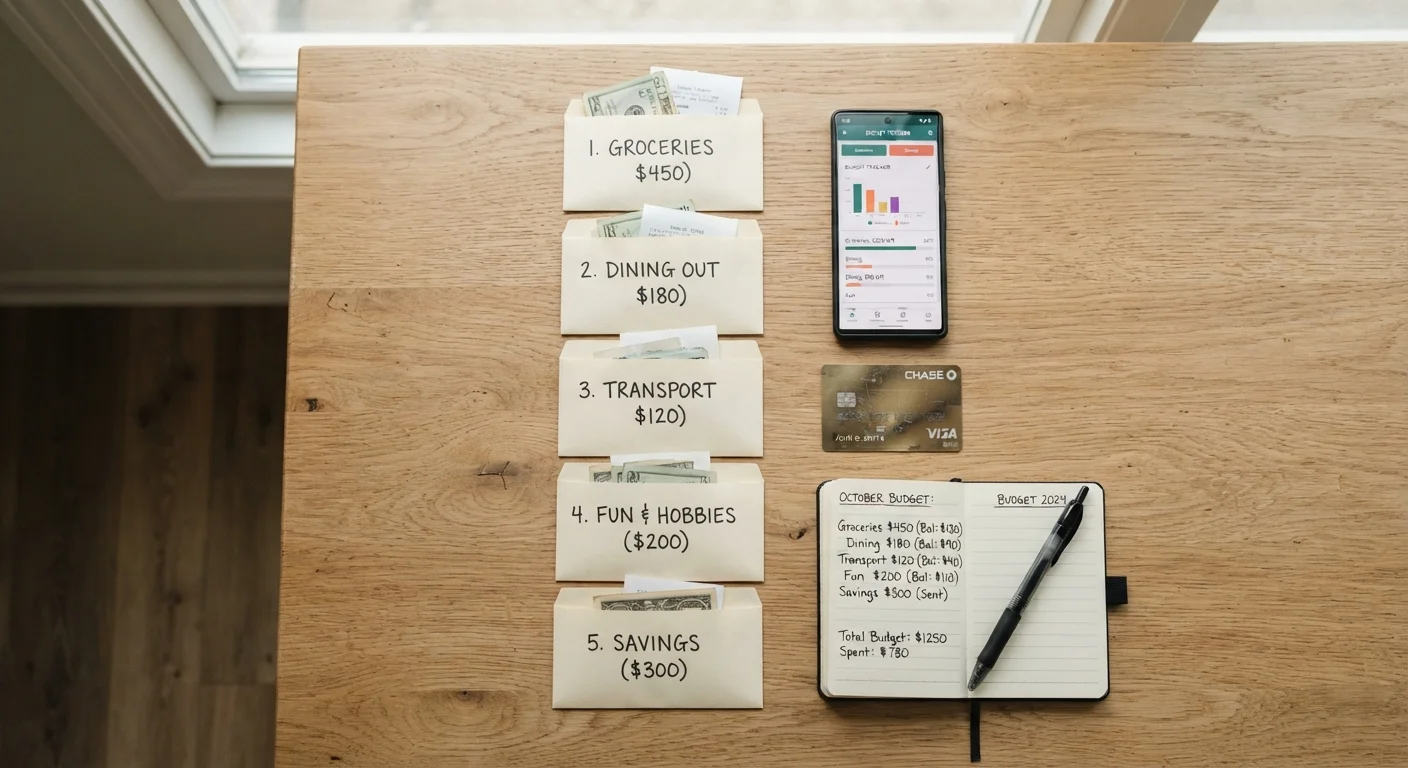
The envelope budgeting system is simple by design: you divide your take-home pay into labeled envelopes — groceries, gas, dining out, entertainment — and spend only what's inside each one. When the cash is gone, spending stops. That physical constraint is what makes the method so effective at curbing overspending.
The problem today is that most spending happens through debit cards, bank apps, and digital wallets. Carrying cash for every category is impractical for many households. But the underlying principle — a hard limit per category with no silent borrowing across buckets — is just as relevant as ever.
Adapting the method means replacing physical cash with digital boundaries that deliver the same stopping power. Before diving into the steps, it helps to have your spending categories mapped out. The budget categories reference guide is a practical starting point for deciding what envelopes you actually need.
Start With Fewer Envelopes
New budgeters often create too many categories upfront, which makes the system feel burdensome. Begin with five or six broad envelopes covering your biggest spending areas. Once the habit is established — typically after two or three months — you can divide categories further if needed.
Tools and What You'll Need
You have two main options for creating digital envelopes, and both can work well depending on your banking setup and comfort level with technology.
Bank sub-accounts or savings buckets
Create one account per spending category so funds are physically separated and balances serve as natural spending limits.
Envelope-style budgeting app
Digitally allocates income to named categories and tracks spending against each limit without requiring separate bank accounts.
Spreadsheet
Manually tracks envelope balances after each transaction — useful for people who prefer full control without third-party apps.
Recent bank and card statements (2–3 months)
Provides actual spending data to set realistic envelope amounts rather than optimistic estimates.
Whichever approach you use, the goal is the same: each category gets a fixed dollar amount, and that amount does not silently refill mid-month just because you swiped a card.
Step-by-Step: Setting Up Your Digital Envelopes
List your monthly income after tax
Write down the total take-home pay you expect this month from all sources. This is your starting number — every dollar you allocate across envelopes must come from this figure and no more.
Identify your spending categories
Review two to three months of bank and card statements and group purchases into categories: housing, utilities, groceries, transportation, dining out, personal care, subscriptions, and so on. Keep the list practical — overly granular categories become hard to track.
Assign a dollar limit to each category
Allocate a specific dollar amount to each category so that the total equals your monthly income. Fixed expenses like rent and utilities get their exact amount first; then divide the remainder across variable spending categories based on what you actually need — not what you hope to spend.
Choose your digital container
Decide whether you'll use sub-accounts at your bank (one account per envelope), a budgeting app with virtual envelope or category features, or a simple spreadsheet you update after each purchase. Set up the structure before the month begins.
Fund your envelopes on payday
On the day you receive income, transfer or allocate the designated amount to each digital envelope immediately. Treat this as a non-negotiable first step — not something to do later in the week.
Track spending against each envelope in real time
Every time you make a purchase, record it against the relevant envelope — either by checking your sub-account balance or updating your app or spreadsheet. The entire system depends on knowing your remaining balance before you spend, not after.
Review and reset at month-end
At the end of the month, compare what you allocated to what you actually spent in each envelope. Adjust next month's limits based on real patterns — not guesses. Any unspent funds should be deliberately directed: to savings, the following month's tight category, or a specific financial goal.
Once your envelopes are running, the system works best when you treat it as a live tool rather than a set-and-forget spreadsheet. If grocery spending feels consistently tight, adjust the allocation — don't quietly ignore the limit. For a deeper look at managing grocery budgets specifically, see building a grocery budget that holds.
Moving Money Between Envelopes Has a Cost
The envelope method only works if transfers between categories are deliberate and visible. When you move money from dining out to cover an overage in groceries, record it as a conscious trade-off — not a silent fix. Over time, consistent transfers away from the same envelope signal that its original allocation doesn't reflect your real life and needs to be adjusted.
Troubleshooting Common Pitfalls
Credit cards and the envelope method: Credit cards don't draw down an account in real time, which makes the natural stopping signal disappear. If you pay with credit, you must log each purchase manually or use a budgeting app that imports transactions daily. Pay the card in full at month-end using only the funds already allocated — never let a balance carry over as a workaround for overspending.
Irregular income: If your paycheck varies, set envelope amounts based on your lowest typical month rather than an average. In stronger months, direct extra funds to savings or a buffer category first. The savings habit guide covers practical ways to save even when cash flow feels unpredictable.
Comparing methods: The envelope system is a form of zero-based budgeting — every dollar gets assigned a job. If you're weighing it against other frameworks, zero-based budgeting vs. the percentage method walks through how the two approaches differ in practice.
This article is for general informational and educational purposes only and does not constitute personalised financial advice. Consider consulting a qualified financial professional for guidance tailored to your individual circumstances.
The content on this site is for informational purposes only and is not a substitute for professional advice. Always consult a qualified professional for guidance specific to your situation.