

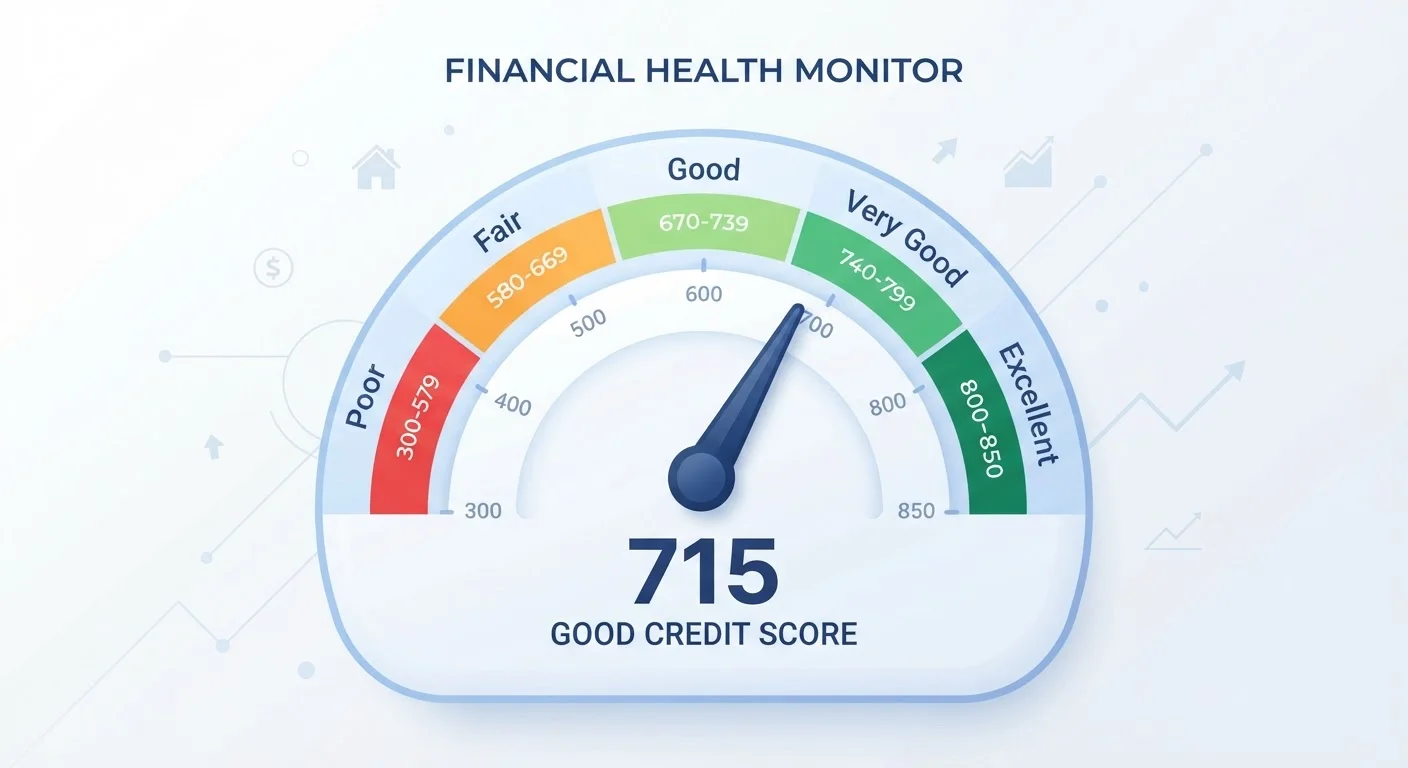
What a Credit Score Actually Represents
A credit score is not a judgment of your overall financial health — it's a narrow, specific measurement of how you've handled credit obligations in the past. Think of it as a track record summary: have you paid on time? How much of your available credit do you use? How long have you been managing credit accounts?
Lenders use this number because reviewing every applicant's full financial history would be impractical. A three-digit score lets them make faster, more consistent decisions about whether to extend credit and at what interest rate. It's a risk-assessment tool, not a moral grade.
It's also worth knowing what a credit score does not include: your income, your job title, your bank account balance, or your net worth. Two people with identical incomes can have very different credit scores based solely on how they've used credit products over time.
~35%
Weight of payment history in FICO score
According to FICO, payment history is the single largest factor in most standard credit score calculations.
300–850
Standard credit score range
Both the FICO Score and VantageScore 3.0/4.0 use a 300–850 scale, the most widely recognized range among U.S. lenders.
~30%
Weight of amounts owed (utilization)
FICO identifies amounts owed — including your credit utilization ratio — as the second most influential scoring factor.
The Five Factors That Shape Your Score
Most major credit scoring models — including FICO® — calculate scores using five categories of information, each weighted differently:
- Payment history (approximately 35%): Whether you've paid past accounts on time. Even one missed payment can have a noticeable negative effect.
- Amounts owed (approximately 30%): How much of your available credit you're currently using, often called your credit utilization ratio. Keeping balances well below your credit limits generally helps your score. See our guide on credit utilization and why it matters for a deeper look.
- Length of credit history (approximately 15%): How long your accounts have been open. Older accounts, on average, benefit your score.
- Credit mix (approximately 10%): The variety of credit types you manage — credit cards, installment loans, mortgages — shows you can handle different kinds of debt responsibly.
- New credit (approximately 10%): Recent applications for new credit. Multiple applications in a short window can signal financial stress to lenders.
Understanding these weights helps you focus your energy. Paying on time and managing your balances are the highest-leverage habits for most people.
Focus on the Two Biggest Levers First
Payment history and credit utilization together account for roughly 65% of most credit scores. If you can do only two things, make every payment on time and keep credit card balances well below your limits — ideally under 30% of each card's credit limit. These habits have the greatest impact on your score over time.
Where Credit Score Data Comes From
Your credit score is calculated from the information contained in your credit report — a detailed record maintained by each of the three major credit bureaus: Equifax, Experian, and TransUnion. Lenders, credit card companies, and collection agencies report your account activity to these bureaus, typically on a monthly basis.
Because your score is only as accurate as the underlying data, errors in your credit report can directly harm your score. You're entitled to a free credit report from each bureau once per year through AnnualCreditReport.com, the federally authorized source. Reviewing those reports periodically lets you catch mistakes — like accounts you don't recognize or incorrectly reported late payments — before they cause lasting damage.
Your score may also vary slightly across bureaus because not every lender reports to all three, meaning each bureau may have slightly different account information on file.
Your Score Can Vary by Model and Bureau
It's normal to see different scores depending on which bureau's data is used and which scoring model was applied. When a lender checks your credit, they may use a version of FICO tailored to their industry — such as an auto-specific or mortgage-specific model — which can weigh factors somewhat differently than a general consumer score. Don't be alarmed by small variations; focus instead on the underlying factors that all models have in common.
How Lenders Use Your Score — and What Else They Consider
When you apply for a mortgage, auto loan, credit card, or personal loan, lenders pull your credit score as part of their evaluation. The score helps them place you in a risk tier, which often determines both whether you're approved and what interest rate you're offered. Borrowers with higher scores generally qualify for lower rates, which can translate into meaningful savings over the life of a loan.
However, your credit score is rarely the only thing a lender reviews. Most lenders also consider your debt-to-income ratio, employment history, and the size of the loan relative to the asset (for secured loans). A strong credit score improves your position but doesn't guarantee approval on its own.
Beyond traditional lenders, landlords may check your credit before renting to you, and some employers in certain industries review credit history as part of background screening. Understanding what the number signals — and what it doesn't — gives you a clearer picture of how to protect and grow it over time. For a look at common misunderstandings that hold people back, see our article on credit score myths.
This article is for general informational and educational purposes only and does not constitute personalized financial or legal advice. Consult a qualified financial professional for guidance specific to your situation.
Frequently Asked Questions
Most scoring models consider 670–739 a good score, 740–799 very good, and 800 or above exceptional. Scores below 580 are generally considered poor and may limit access to mainstream credit products or result in higher interest rates.
Your credit score can change whenever new information is reported to the credit bureaus, which typically happens monthly as lenders submit updated account data. Major changes — like a missed payment or a large new balance — can shift your score within a single reporting cycle.
No. Checking your own score is a soft inquiry and has no effect on your credit score. Only hard inquiries — made by lenders when you apply for credit — can temporarily lower your score. Learn more about the <a href="/money-basics/credit-essentials/hard-inquiries-vs-soft-inquiries-on-your-credit-report">difference between hard and soft inquiries</a>.
The three major credit bureaus — Equifax, Experian, and TransUnion — collect data independently, and not all lenders report to all three. If one bureau has slightly different information than another, your score calculated from that bureau's data will differ accordingly.
Yes. Credit scores are based on all types of credit accounts, including installment loans like auto loans or student loans. However, you need at least one account that has been open for six months and has been reported to a bureau within the past six months to generate a score.
No. Your income, savings, and net worth do not factor into your credit score. Scores are calculated solely from credit-related data in your credit report. Income may be considered separately by lenders when evaluating a loan application, but it does not appear in the score calculation itself.
The content on this site is for informational purposes only and is not a substitute for professional advice. Always consult a qualified professional for guidance specific to your situation.