

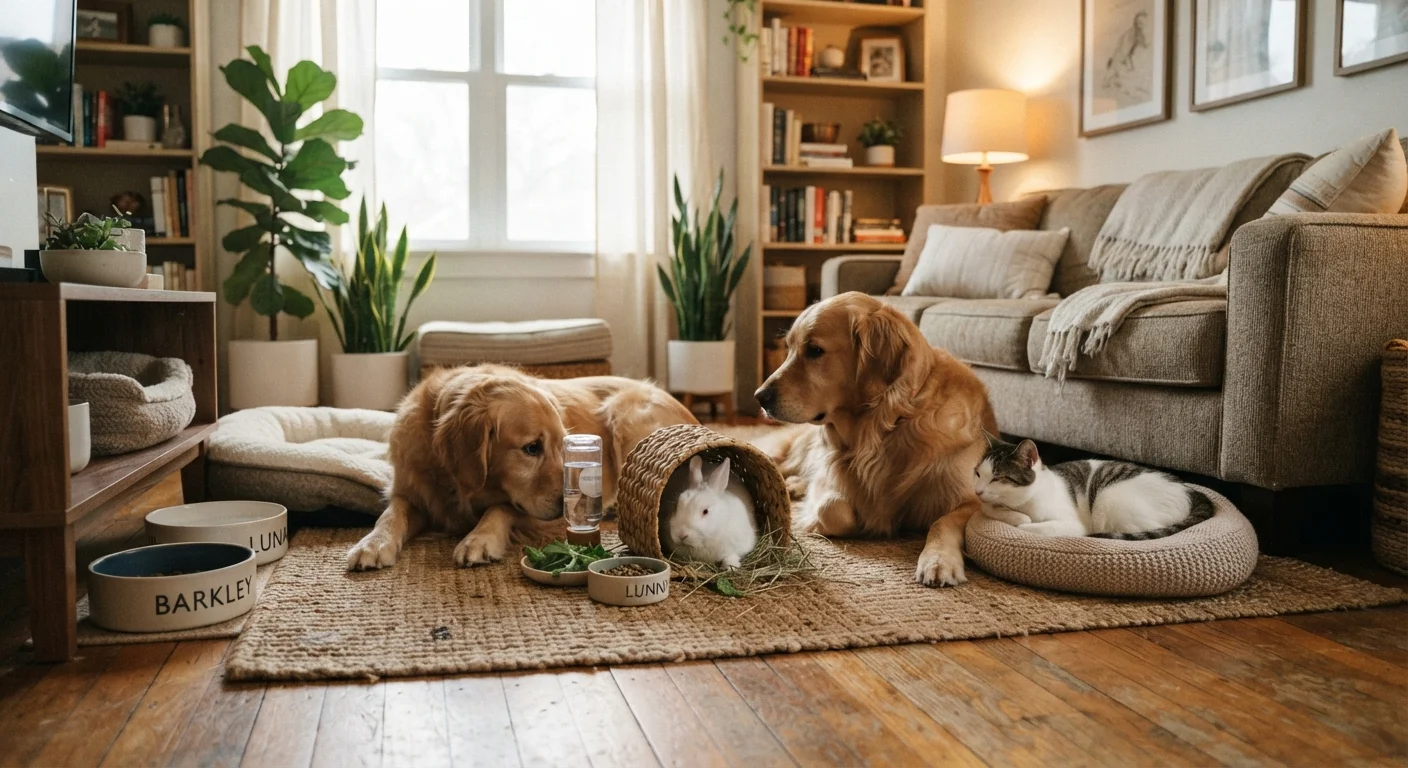
Why Multi-Pet Routines Need Their Own Strategy
Managing one pet's daily needs is a learnable habit. Managing two, three, or more animals — each with different species requirements, feeding needs, energy levels, and personalities — is a coordination challenge that benefits from deliberate structure. Without it, care tends to become reactive: you respond to whoever demands attention most loudly, and quieter or less assertive pets quietly get less.
The fix isn't more time — most multi-pet owners are already stretched. It's a smarter system. Research on animal behavior consistently shows that predictable daily structure reduces stress across species, which in turn supports better physical health, calmer behavior, and stronger human-animal bonds. For a deeper look at the mechanisms behind this, see our article on why pets thrive on routine.
The steps below are designed to help you build that system from scratch — or audit and strengthen one you already have.
What you will need
What You'll Need Before You Start
Written or digital daily schedule
Tracks each pet's feeding times, exercise windows, medications, and observation checks in one place.
Separate, clearly identified food bowls
Prevents cross-feeding between pets with different dietary needs or caloric requirements.
Timed automatic feeders
Useful for households where feeding windows are tight or pets need to eat at different times without supervision.
Baby gates or room dividers
Allow safe physical separation during feeding or rest periods, especially for pets with size or temperament differences.
Individual health logs
A simple notebook or app entry per pet to record appetite, energy level, and any behavioral changes noticed during daily checks.
Post Your Schedule Where You Can See It
A simple written chart — even a handwritten note on the fridge — listing each pet's feeding times, medications, and exercise windows reduces the chance of skipped tasks. It also helps other household members or pet sitters step in without confusion. Digital calendar reminders work equally well if that fits your workflow.
Step-by-Step: Building Your Multi-Pet Daily Routine
Map out each pet's individual needs before building a shared schedule
Before you can manage a routine for multiple animals, you need a clear picture of what each one actually requires. Write down, for every pet: how many meals per day, what food type and quantity, how much exercise or active play, any medications or supplements, and known behavioral sensitivities (such as anxiety around other animals or territorial behavior around food).
This step often reveals conflicts you hadn't noticed — for example, a dog that needs two walks and a cat that needs two separate quiet feeding windows may compete for your attention at the same times. Seeing it on paper makes scheduling much more deliberate.
Establish separate, consistent feeding arrangements for each pet
Feeding is the most common flashpoint in multi-pet households. Even friendly animals can develop competitive or anxious eating habits when meals feel unpredictable or shared. Feed each pet from their own bowl, in a consistent location, at consistent times.
Physical separation during meals — different rooms, or at least opposite ends of a space — is often necessary, particularly when pets have different diets or widely different eating speeds. For more on how feeding structure affects animal wellbeing, see our guide to feeding schedules vs. free feeding for a breakdown of which approach suits different animals.
Build a written daily schedule that covers all animals
Once individual needs are mapped, build a single master schedule that layers all pets' routines onto your day. Aim for anchor points — fixed times that don't shift — for feeding and any medications, since predictability matters for animal wellbeing. Research consistently links stable daily schedules to lower stress responses in pets; our article on why pets thrive on routine explains the physiological reasons behind this.
Stagger tasks where possible. If two dogs both need a morning walk, back-to-back walks may work better than simultaneous ones if they pull or react to each other on leash.
Carve out individual attention time for each pet
In a multi-pet home, it's easy for group interaction to substitute for one-on-one time — but the two serve different purposes. Individual attention gives each animal a chance to engage with you without competition for resources or your focus. Even 10–15 minutes of dedicated solo play, grooming, or training per pet per day makes a meaningful difference in bonding and behavioral health.
For ideas on making that solo time more mentally stimulating, see our piece on mental enrichment as part of the daily routine — structured enrichment activities are particularly valuable for pets that spend long hours in the same environment.
Do a brief daily health observation for every animal
With multiple pets, subtle health changes are easy to miss — especially in quieter or less demanding animals. Build a quick daily visual check into your routine: is each pet eating and drinking as usual? Any changes in energy, coat or skin condition, litter box or elimination habits, or social behavior toward the other animals?
A simple individual health log — even just a few words per pet per day — gives you a baseline that makes genuine changes easier to spot over time. The daily pet care checklist can serve as a practical starting framework for what to look for.
Revisit and adjust the routine as your pets' needs change
A routine that works well for a household of young adults and energetic dogs will need revision as animals age, health conditions develop, or new pets join the family. Schedule a brief routine review every few months — particularly after any veterinary visit that brings new health information.
New pet owners who are still building foundational habits may also find it useful to revisit daily pet care from day one to ensure the core practices are sound before adding complexity.
Separate Medications and Supplements Always
In multi-pet homes, medication mix-ups are a real risk. Never leave one pet's prescribed medications, supplements, or therapeutic foods where another animal can access them. Always confirm with your veterinarian which treatments are species-specific — something safe for a dog may be toxic to a cat or rabbit. Store all medications in a secure, labeled location.
Watch for Resource Guarding Between Pets
Even animals that coexist peacefully can develop resource guarding around food, water, or resting spots. Signs include stiffening, growling, or one pet consistently avoiding a shared space. If you notice these behaviors, consult a veterinary behaviorist or certified trainer rather than attempting corrections on your own.
Troubleshooting Common Multi-Pet Routine Problems
Even well-designed routines run into friction. Here are three common scenarios and how to approach them:
- One pet is monopolizing your attention: This often happens when one animal is more vocal, more anxious, or more recently acquired. If you find yourself consistently giving one pet more solo time, a written log of per-pet interactions can make the imbalance visible and correctable.
- Pets aren't staying in their feeding zones: Consistency here requires patience and, sometimes, physical barriers. Baby gates, closed doors, or timed feeding with supervision are more reliable than hoping learned behavior will hold under the pressure of food proximity.
- You're missing tasks on busy days: This is usually a sign the schedule is too dense. Identify the non-negotiable tasks (fresh water, feeding, any medications) and protect those above all else. Lower-priority enrichment tasks can flex without harm on difficult days.
For owners who suspect that routine disruption may be driving anxiety in a specific pet, the article on why your pet seems anxious at the same time every day offers useful context on how schedule inconsistency affects animal stress responses.
This article provides general pet care information and is not a substitute for advice from a licensed veterinarian. If any of your pets have health conditions, dietary restrictions, or behavioral concerns, always consult your vet before making significant changes to their daily care routine.
The content on this site is for informational purposes only and is not a substitute for professional advice. Always consult a qualified professional for guidance specific to your situation.