

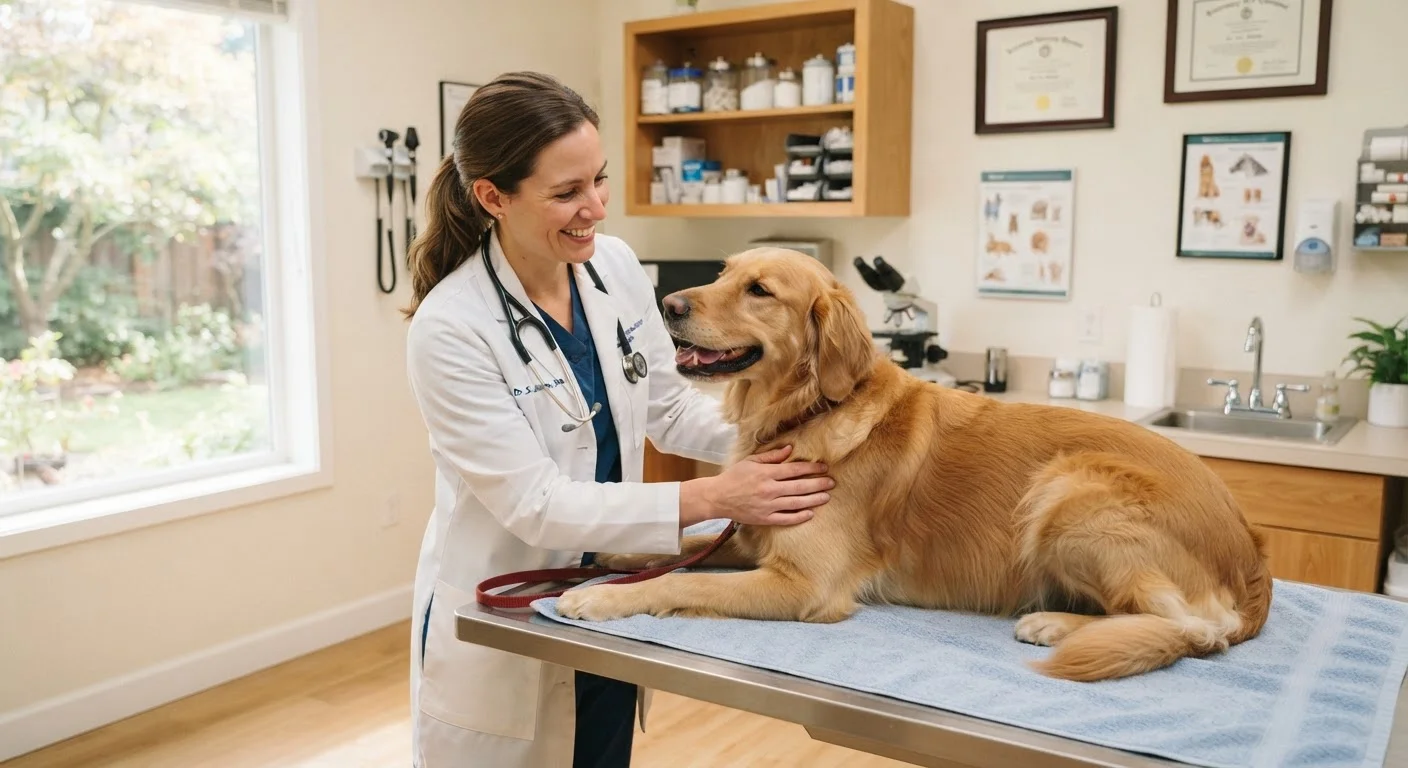
Option A
Annual Wellness Exam
The proactive, scheduled foundation of preventive care.
Best for: Healthy pets due for routine screenings, vaccinations, and a full nose-to-tail checkup.
Option B
Sick Visit
The focused, as-needed response to a specific health concern.
Best for: Pets showing signs of illness, injury, pain, or sudden behavioral change that needs prompt evaluation.
What Happens at an Annual Wellness Exam
A wellness exam is a scheduled, comprehensive checkup designed for pets that appear healthy. The goal isn't to treat a problem — it's to establish a baseline, detect subtle changes over time, and stay ahead of conditions before they become serious.
During a typical wellness visit, your veterinarian will perform a full physical examination: checking weight, teeth, eyes, ears, coat, lymph nodes, heart, and lungs. Depending on your pet's age and history, the appointment may also include:
- Core and non-core vaccinations (see our guide to vaccine schedules)
- Heartworm and flea/tick prevention review
- Blood or urine screenings (especially for senior pets)
- Dental health assessment
- Nutritional and weight counseling
These exams are also your best opportunity to ask questions about your pet's behavior, diet, or any minor concerns you've noticed. Wellness visits form the backbone of a solid preventive care routine — and skipping them carries real risks that aren't always obvious until much later.
| Criterion | Annual Wellness Exam | Sick Visit |
|---|---|---|
| Scheduling | Planned in advance, routine | As needed, often urgent |
| Primary purpose | Prevention and baseline monitoring | Diagnosing a specific problem |
| Exam scope | Full nose-to-tail review | Focused on symptom or concern |
| Vaccinations | Typically administered | Usually deferred until recovery |
| Ideal pet status | Apparently healthy | Showing illness or injury signs |
| Frequency | Once or twice a year | Only when a concern arises |
| Replaces the other? | No | No |
What Happens at a Sick Visit
A sick visit — sometimes called a problem-focused exam — is an appointment driven by a specific, observable concern. Unlike a wellness exam, the vet's attention is concentrated on evaluating and resolving that particular issue rather than reviewing overall health from scratch.
Common reasons pet owners schedule sick visits include:
- Vomiting, diarrhea, or loss of appetite lasting more than 24 hours
- Limping, favoring a limb, or reluctance to move
- Sudden lethargy or personality changes
- Discharge from eyes, ears, or nose
- Suspected ingestion of a toxin or foreign object
- Skin irritation, lumps, or unexplained hair loss
The vet will focus their exam on the affected area or system, and may recommend diagnostic tests such as X-rays, blood panels, or urinalysis based on what they find. Be ready to describe when symptoms started, how they've changed, and any relevant context — this detail helps the vet narrow down causes efficiently.
When to Seek Emergency Care Instead
Some symptoms shouldn't wait for a standard sick visit — they require emergency attention. These include difficulty breathing, collapse, uncontrolled bleeding, suspected poisoning, seizures, or inability to urinate. If your pet shows any of these signs, contact an emergency veterinary clinic immediately rather than scheduling a routine appointment.
This article is for general informational purposes and does not constitute veterinary medical advice. Always consult a licensed veterinarian for your pet's individual health needs.
Key Differences — and Why They Matter
One of the most common misconceptions is that a sick visit can substitute for a wellness exam, or vice versa. In practice, these appointments serve fundamentally different functions.
At a wellness visit, your vet has the time and context to conduct a thorough head-to-tail review and compare findings against your pet's prior records. A sick visit, by contrast, is time-sensitive and symptom-driven — the vet is triaging and diagnosing, not conducting a routine review.
If your pet happens to be due for vaccines during a sick visit, some clinics will administer them, but others will defer until the pet has recovered — every practice handles this differently, so it's worth asking. Similarly, if a concerning finding turns up at a routine wellness exam, that appointment may shift into diagnostic territory.
For a deeper look at how all these pieces connect, explore the annual pet health checklist or browse our daily pet care hub for practical routines that keep your pet healthy between visits. If you're preparing for your pet's very first appointment, here's what to expect.
1 in 3
Pets visit a vet for illness or injury each year
According to the American Veterinary Medical Association, a significant share of pet owners seek care reactively rather than proactively.
~50%
Of pets over age 3 have some degree of dental disease
Veterinary dental disease is commonly detected during routine wellness exams before owners notice visible symptoms.
The content on this site is for informational purposes only and is not a substitute for professional advice. Always consult a qualified professional for guidance specific to your situation.