

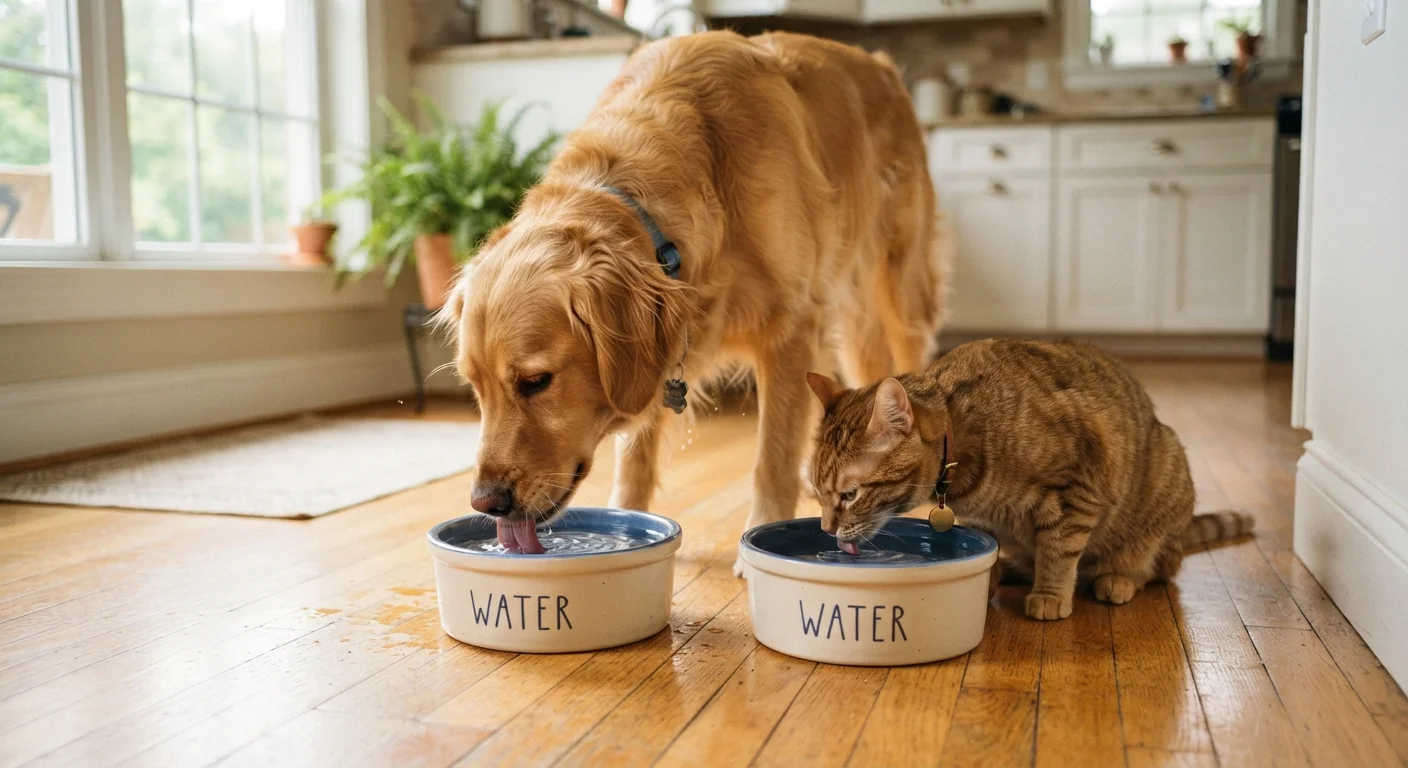
Why Hydration Is a Moving Target for Different Animals
There is no single universal answer to how much water a pet needs. Unlike a simple feeding schedule, hydration requirements shift based on a combination of factors: the animal's species, its size, the type of food it eats, its age, activity level, and even the ambient temperature in your home or yard.
For everyday pet owners, the most helpful starting point is to understand why these variables matter — because that understanding makes it far easier to spot when something is off. As part of a broader daily pet care routine, monitoring water intake is one of the simplest and most revealing health checks you can do at home.
70–80%
Moisture content in wet/canned pet food
Veterinary nutrition references consistently note that canned food contains roughly 70–80% water, making it a meaningful source of daily moisture for pets.
~1 oz/lb
General daily water guideline for dogs
This commonly cited veterinary reference point — approximately 1 ounce of water per pound of body weight — is used as a rough daily baseline, with adjustments for diet, activity, and environment.
50–150 ml/kg
Typical daily water intake range for rabbits
Veterinary small-animal references cite this range as a general guideline for rabbit hydration needs, noting that intake varies with diet moisture content and ambient temperature.
Water Needs by Species: Dogs, Cats, and Small Animals
Dogs are relatively straightforward hydrators. A widely used veterinary reference point is approximately 1 ounce of water per pound of body weight per day. An active, large-breed dog outdoors in summer may need considerably more; a small, sedentary indoor dog may need slightly less. The key is consistent access to fresh water and familiarity with your individual dog's normal drinking pattern.
Cats present a more nuanced picture. Because cats have a naturally low thirst drive — a trait rooted in their desert-origin ancestry — they often do not drink enough water when fed exclusively dry kibble. Cats on wet food diets receive a substantial portion of their moisture through meals (wet food is typically 70–80% water), while cats on dry-only diets must compensate through bowl drinking. This distinction matters: chronic low-level dehydration is a recognized contributor to urinary tract problems in cats.
Small animals such as rabbits, guinea pigs, and hamsters also have specific needs. Rabbits, for instance, typically drink between 50–150 ml of water per kilogram of body weight daily, and water deprivation can cause rapid health deterioration. For a closer look at how hydration fits into small pet nutrition overall, see small pet nutrition basics.
Encourage Cats to Drink More Water
If your cat seems reluctant to drink, try placing multiple water sources in different locations around the home. Some cats strongly prefer running water — a pet water fountain can meaningfully increase daily intake. Keeping bowls away from the food dish may also help, as cats instinctively avoid water near their food source.
Key Factors That Change How Much Water a Pet Needs
Beyond species, several day-to-day factors influence how much water your pet needs at any given time:
- Diet composition: Dry food increases drinking needs; wet food reduces them. Mixed feeding falls somewhere between.
- Activity level: A dog that runs off-leash for an hour needs significantly more water afterward than one who took a leisurely walk. If you're thinking about how exercise patterns affect your pet's daily needs, indoor vs. outdoor exercise for pets offers useful context.
- Age and health status: Puppies, kittens, senior animals, and pets managing health conditions may have different hydration requirements. Nursing mothers, for example, need substantially more water to produce milk.
- Temperature and environment: Warmer weather and heated indoor environments increase evaporative water loss and drive higher water intake needs.
- Body size: Larger animals generally need more water in absolute terms, though smaller animals may have proportionally higher needs relative to their weight.
Recognizing Adequate Hydration — and When to Be Concerned
Signs of good hydration include bright eyes, moist gums, normal energy levels, and regular urination with pale yellow urine. A pet that is drinking steadily throughout the day and whose gum tissue feels slick (not sticky or dry) when touched is generally well-hydrated.
Signs that warrant attention include: lethargy, dry or tacky gums, sunken-looking eyes, loss of normal skin elasticity, and infrequent or very dark urination. A pet that has been vomiting, experiencing diarrhea, or refusing to eat is at elevated risk for dehydration and should be evaluated by a veterinarian.
Equally important: increased thirst can be a symptom rather than a sign of good health. A pet that is suddenly drinking noticeably more than usual — without an obvious cause like hot weather or increased exercise — should be checked by a vet to rule out conditions such as kidney disease, diabetes, or hormonal imbalances.
When to Call Your Vet About Drinking Habits
Any significant or sustained change in your pet's drinking behavior — whether dramatically more or less than usual — is worth a veterinary conversation. These changes can be among the earliest visible signals of underlying health conditions that are far easier to manage when caught early. Do not wait for other symptoms to appear if something seems different.
See the daily pet care checklist for a practical framework to monitor water intake alongside other key daily observations.
This article provides general educational information about pet care and is not a substitute for professional veterinary advice. If you have concerns about your pet's health or hydration, consult a licensed veterinarian.
Frequently Asked Questions
A commonly cited guideline is about 1 ounce of water per pound of body weight daily, though this is a rough estimate. A 50-pound dog would need roughly 50 ounces, or about 6 cups. Activity level, climate, and diet type all affect actual needs, so monitor your dog's habits and consult your vet if concerned.
Cats generally drink less water than dogs, partly because they evolved from desert-dwelling ancestors who obtained much of their moisture from prey. Cats eating wet food receive a significant portion of their daily water through their meals, which can reduce how much they drink from a bowl.
Common signs include lethargy, dry or tacky gums, sunken eyes, and loss of skin elasticity — a gentle skin-tent test (gently lifting the skin between the shoulder blades; it should spring back quickly) can be a rough indicator. If you suspect dehydration, contact your veterinarian promptly rather than attempting home treatment.
Increased thirst can signal underlying health issues such as kidney disease, diabetes, or infections. A noticeable and persistent change in drinking behavior warrants a veterinary evaluation. Do not assume it is simply hot weather or activity-related without ruling out medical causes.
Yes. Wet or canned pet food typically contains 70–80% moisture and meaningfully contributes to daily water consumption. Pets on exclusively dry diets need to compensate by drinking more from their water bowl, making bowl access and freshness especially important for those animals.
Many pets — particularly cats — are attracted to moving water and may drink more when using a fountain. Whether a fountain or a bowl works best depends on the individual animal. The most important factors are that the water is fresh, clean, and consistently available regardless of the container type.
The content on this site is for informational purposes only and is not a substitute for professional advice. Always consult a qualified professional for guidance specific to your situation.