

Why Small Pet Nutrition Gets Misunderstood
Walk into any pet store and you'll find colorful pellet mixes, seed blends, and treat packs all marketed for small pets. The packaging looks balanced and complete — but for rabbits, guinea pigs, and hamsters, the reality of good nutrition is quite different from what's on the shelf. Many well-meaning owners unknowingly underfeed critical nutrients or overfeed foods that cause long-term harm.
These three species are often lumped together, but their dietary needs are genuinely distinct. A hamster is an omnivore. A rabbit is a strict herbivore whose digestive system depends on fiber to function. A guinea pig, like a human, cannot synthesize its own vitamin C and will develop scurvy without a reliable dietary source. Getting these differences right is the foundation of small pet health.
For a broader look at the health essentials new owners should know, see Pet Health From Day One.
Rabbits: Hay Is the Non-Negotiable
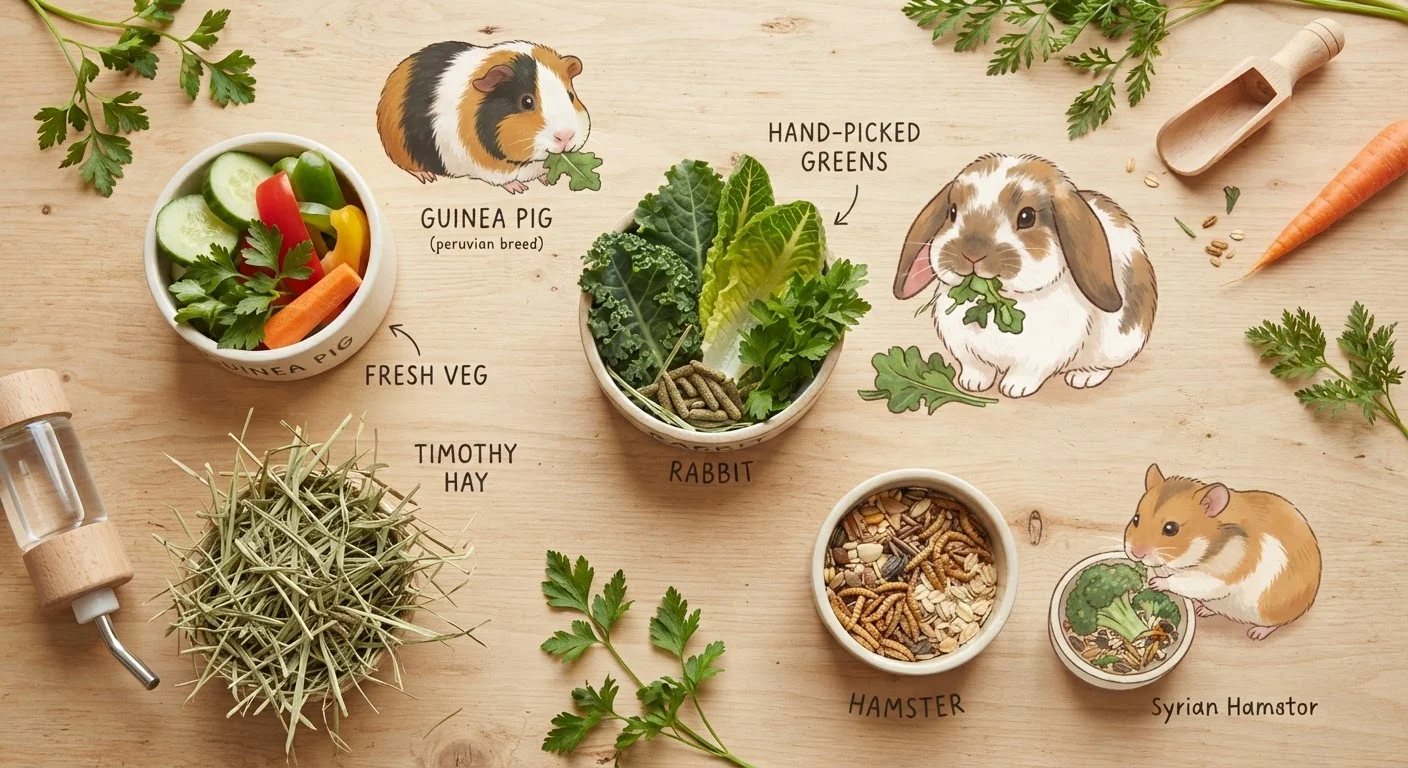
For rabbits, grass hay — primarily timothy hay for adults — should make up roughly 80% of their daily intake. Hay is not a supplement or bedding material; it is the dietary cornerstone. The long fiber strands support gut motility (the movement of food through the digestive tract) and help wear down continuously growing teeth. A rabbit without constant access to fresh hay is at serious risk of GI stasis, a life-threatening slowdown of the digestive system.
Fresh leafy greens make up most of the remaining diet — think romaine lettuce, cilantro, and kale in moderate amounts. Pellets, despite being commonly overfed, should be offered in small quantities (roughly a quarter cup per five pounds of body weight daily for adults). High-sugar fruits and starchy vegetables should be reserved as rare treats, if offered at all.
Common mistakes include relying on pellets as the main food source and feeding muesli-style mixes that allow selective eating. Both result in fiber deficiency over time. For guidance on structuring mealtimes, feeding schedules vs. free feeding covers how different approaches affect small pets.
Guinea Pigs and Hamsters: Key Differences to Know
Guinea pigs share the rabbit's herbivore profile but have one unique and critical nutritional requirement: vitamin C. Unlike most mammals, guinea pigs lack the enzyme needed to produce it internally. Without enough dietary vitamin C, they develop scurvy — marked by joint pain, poor wound healing, and lethargy. Bell peppers, leafy greens, and small amounts of citrus are reliable dietary sources. Note that vitamin C degrades quickly in water, so drops added to a water bottle are generally not an effective delivery method. Fresh food daily is the dependable approach.
Like rabbits, guinea pigs need unlimited grass hay and moderate fresh vegetables. Pellets formulated specifically for guinea pigs (and containing added vitamin C) can supplement the diet but should not be the centerpiece.
Hamsters are omnivores, meaning they naturally eat both plant matter and small amounts of protein. In the wild, they forage for seeds, grains, insects, and plant material. A quality hamster diet typically includes a seed and grain mix, small amounts of fresh vegetables, and occasional protein sources like plain cooked egg or mealworms. Unlike rabbits and guinea pigs, hamsters also have cheek pouches for storing food — so monitoring actual intake can be tricky. Remove perishables daily to prevent spoilage.
Dull coat, low energy, or digestive irregularities in any small pet may signal a nutritional gap. Signs your pet's diet might be missing something can help you identify what to look for.
Hydration and Foods to Avoid
Fresh, clean water should be available at all times for all three species. Rabbits and guinea pigs generally drink more than owners expect, especially when eating less fresh produce. Hamsters drink less by volume but still require a reliable, clean water source. Both sipper bottles and heavy ceramic bowls work — the key is daily cleaning and refilling. For a fuller picture of what adequate hydration looks like, see how much water small pets actually need.
Several foods are unsafe across all three species and should never be offered: onions, garlic, chives, chocolate, caffeinated foods, and avocado. Iceberg lettuce is not toxic but is nearly devoid of nutrition and contributes to loose stools. High-sugar fruits and processed human snacks disrupt gut balance and contribute to obesity, particularly in hamsters.
If you're considering preparing food at home, be cautious — nutritional imbalances are more common than most owners realize. Homemade pet food: what goes wrong is worth reading before making any major dietary changes. And for ongoing daily care routines beyond feeding, Daily Pet Care is a practical starting point.
This article provides general educational information about small pet nutrition and is not a substitute for personalized veterinary advice. Always consult a qualified veterinarian for guidance specific to your pet's health and dietary needs.
The content on this site is for informational purposes only and is not a substitute for professional advice. Always consult a qualified professional for guidance specific to your situation.