

Start here
Why Seeds Alone Fall Short
Next
The Building Blocks of a Balanced Avian Diet
Then
Foods to Avoid Entirely
Apply it
How to Structure Your Bird's Feeding Routine
Final step
When to Talk to an Avian Vet
Why Seeds Alone Fall Short
Walk into any pet store and you'll find row after row of colorful seed mixes marketed for parakeets and parrots. It's easy to assume they're all your bird needs. In reality, seeds are high in fat and relatively low in essential vitamins, minerals, and amino acids. A bird eating a seed-only diet is, in nutritional terms, surviving rather than thriving.
In the wild, parrots and parakeets consume a rotating menu of seeds, fruits, vegetables, flowers, and occasionally insects — all of which together provide a complete nutritional profile. A bowl of sunflower and millet seeds at home replicates only a slice of that variety. Over time, deficiencies in vitamin A, calcium, and other key nutrients can contribute to feather problems, immune suppression, and organ disease.
This doesn't mean seeds are off the table entirely. Offered as a small portion of a varied diet, they can still play a role. The problem is treating them as the whole meal. Understanding this distinction is the first step toward giving your bird a genuinely healthy life. For a broader look at foundational nutrition principles, see Pet Health From Day One.
Formulated pellets
Commercially produced bird food compressed into small pellets that are nutritionally balanced to meet a bird's daily vitamin and mineral requirements in a single food source.
Avian veterinarian
A veterinarian who specializes in the care and treatment of birds, with training specific to avian anatomy, behavior, and health conditions.
Vitamin A deficiency
A common nutritional problem in seed-fed pet birds that can lead to respiratory infections, skin problems, and changes around the eyes and beak due to insufficient vitamin A intake.
Persin
A naturally occurring compound found in avocado leaves, skin, pit, and flesh that is toxic to birds and can cause serious organ damage.
Crop
A pouch-like structure in a bird's throat that temporarily stores food before it moves to the stomach for digestion.
The Building Blocks of a Balanced Avian Diet
Avian nutrition experts and veterinarians generally recommend a diet built around three core components for pet parrots and parakeets:
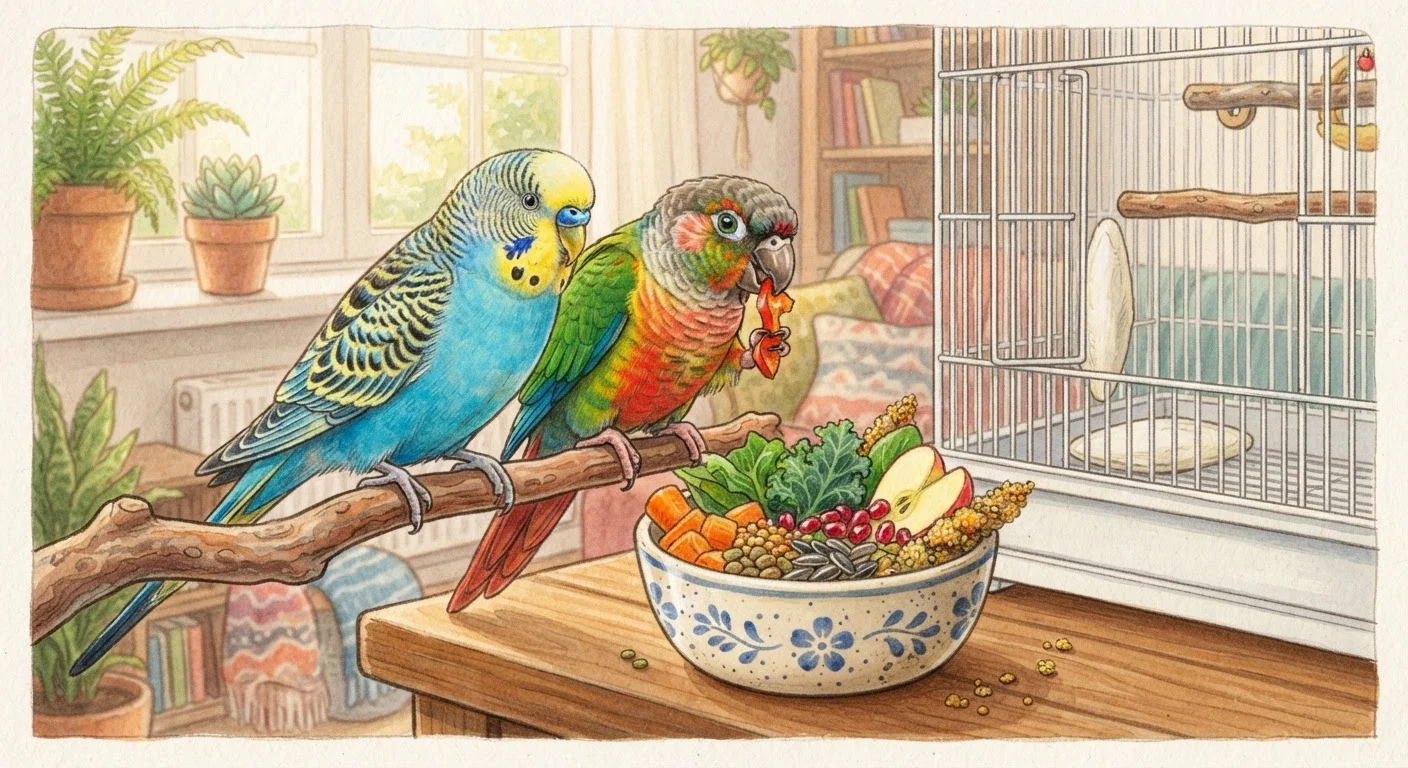
- Formulated pellets (50–70% of the diet): Pellets are nutritionally balanced and designed specifically for birds. Unlike seeds, they deliver consistent vitamins and minerals in every bite. Look for options without artificial dyes or excess sugar, and select a size appropriate for your bird's species.
- Fresh vegetables (20–30% of the diet): Dark leafy greens like kale, romaine lettuce, and chard are nutrient-dense choices. Bell peppers (rich in vitamin C and vitamin A precursors), broccoli, and carrots are also well-tolerated by most birds. Rotate vegetables regularly to provide variety.
- Limited fruit and treats (10% or less): Fruit provides natural sugars, which birds enjoy but can overconsume. Berries, apple slices (seeds removed), and mango pieces are popular options. Offer fruit sparingly rather than as a daily staple.
Seeds can remain part of the diet as an occasional reward or enrichment tool — just not the foundation. Similarly, small amounts of cooked legumes, grains like quinoa, or plain cooked egg can be offered as protein-rich additions, particularly for larger parrots.
Make Vegetables More Appealing
Many birds are initially suspicious of new foods. Try hanging leafy greens from a clip inside the cage rather than placing them in a bowl — the novelty often sparks curiosity. Offering vegetables alongside a familiar food can also help your bird associate the new item with something it already trusts.
Foods to Avoid Entirely
Some foods that seem harmless — or even healthy — for humans are genuinely dangerous for birds. Keeping this list visible in your kitchen is a practical safety measure.
- Avocado: All parts of the avocado plant contain persin, a compound toxic to birds that can cause respiratory distress and heart problems.
- Chocolate: Contains theobromine and caffeine, both of which are harmful to birds' nervous and cardiovascular systems.
- Onions and garlic: These can damage red blood cells and lead to anemia in birds, even in small amounts.
- Alcohol: Even trace amounts can be harmful and should never be offered.
- Caffeinated beverages: Coffee, tea, and energy drinks can cause cardiac issues.
- High-sodium foods: Chips, crackers, and processed snacks can disrupt your bird's fluid and electrolyte balance.
- Apple, cherry, and peach seeds/pits: These contain compounds that break down into cyanide. Always remove pits and seeds from any fruit you offer.
When in doubt about a specific food, consult an avian veterinarian before offering it. It's a simple step that can prevent serious harm.
How to Structure Your Bird's Feeding Routine
Consistency in feeding times helps birds feel secure and makes it easier for you to monitor how much they're actually eating. Most avian care guidelines suggest offering fresh food twice daily — morning and early evening — and removing uneaten fresh produce after a few hours to prevent spoilage.
Pellets can be available throughout the day in a clean dish. Refresh them daily to maintain palatability and hygiene. Fresh water should always be accessible and changed every day, as birds often drop food into their water bowls.
If your bird is accustomed to a seed-heavy diet, switching to pellets takes patience. Abrupt changes often result in hunger strikes. Gradually blend pellets into the seed mix over several weeks, slowly increasing the pellet ratio. Weigh your bird regularly during transitions — a kitchen scale works well — to catch any unintended weight loss early.
For more on structuring meal timing for pets, Feeding Schedules vs. Free Feeding offers a useful comparison of approaches. Building a complete daily care routine for your bird also ties into broader habits covered in Daily Pet Care From Day One.
Don't Skip the Weigh-Ins During Transitions
Birds can lose weight quickly and quietly — they are instinctively good at masking signs of weakness. If your bird is transitioning to a new diet, weigh it at least every few days using a small kitchen or postal scale. A consistent downward trend in weight is a reason to slow the transition and consult your avian vet.
When to Talk to an Avian Vet
General nutrition guidelines are a solid starting point, but bird care is genuinely species-specific — and sometimes individual-specific. A cockatiel's needs differ from those of an African grey or an Amazon parrot. Body weight, age, reproductive status, and any existing health conditions all influence what a balanced diet looks like for a particular bird.
Schedule a baseline wellness exam with an avian veterinarian soon after bringing a new bird home. At that visit, ask about species-appropriate diet proportions, appropriate body weight ranges, and signs of nutritional deficiency to watch for. Symptoms such as feather discoloration, flakiness around the beak, lethargy, or changes in droppings can all signal dietary or health problems.
Routine checkups — typically once a year for healthy birds — give you an opportunity to course-correct feeding habits before small problems become serious ones. Think of your avian vet as your primary partner in your bird's long-term health. This fits within the broader framework of Pet Health Basics that every responsible owner should build.
This article is for general informational and educational purposes only and does not constitute veterinary or medical advice. Always consult a qualified avian veterinarian for guidance specific to your pet's health and dietary needs.
Frequently Asked Questions
Many foods overlap, but portion sizes and some preferences differ by species. Both benefit from pellets, leafy greens, and limited fruit. Always check whether a specific food is safe for your bird's species before offering it.
A general guideline is roughly 1/4 cup of pellets plus a similar volume of fresh produce daily for small-to-medium parrots, but needs vary by species and size. Your avian vet can help you set appropriate amounts for your specific bird.
Fruit is safe in moderation, but its natural sugar content means it should make up only a small portion of the diet — generally no more than 10 to 15 percent. Offer it as an occasional treat rather than a staple.
Most birds resist change initially. Gradual introduction works best — mix a small amount of pellets into their seed mix, slowly increasing the pellet ratio over several weeks. Monitor weight throughout to ensure your bird is eating adequately.
High-quality pellets are formulated to be nutritionally complete, so additional vitamin supplements are often unnecessary and can even cause imbalances. Discuss supplements with an avian vet before adding them to your bird's diet.
Leafy greens like kale, romaine, and spinach are excellent choices, along with bell peppers, carrots, and broccoli. Wash all produce thoroughly and avoid any vegetables from the list of bird-unsafe foods.
The content on this site is for informational purposes only and is not a substitute for professional advice. Always consult a qualified professional for guidance specific to your situation.