

Option A
Feeding Schedules
The structured, portion-controlled approach.
Best for: Pets prone to overeating, multi-pet households, and owners who want clear visibility into their pet's appetite and health.
Option B
Free Feeding
The always-available, self-regulated approach.
Best for: Pets with naturally moderate appetites — particularly some cats — and owners with unpredictable daily schedules.
What Each Approach Actually Means
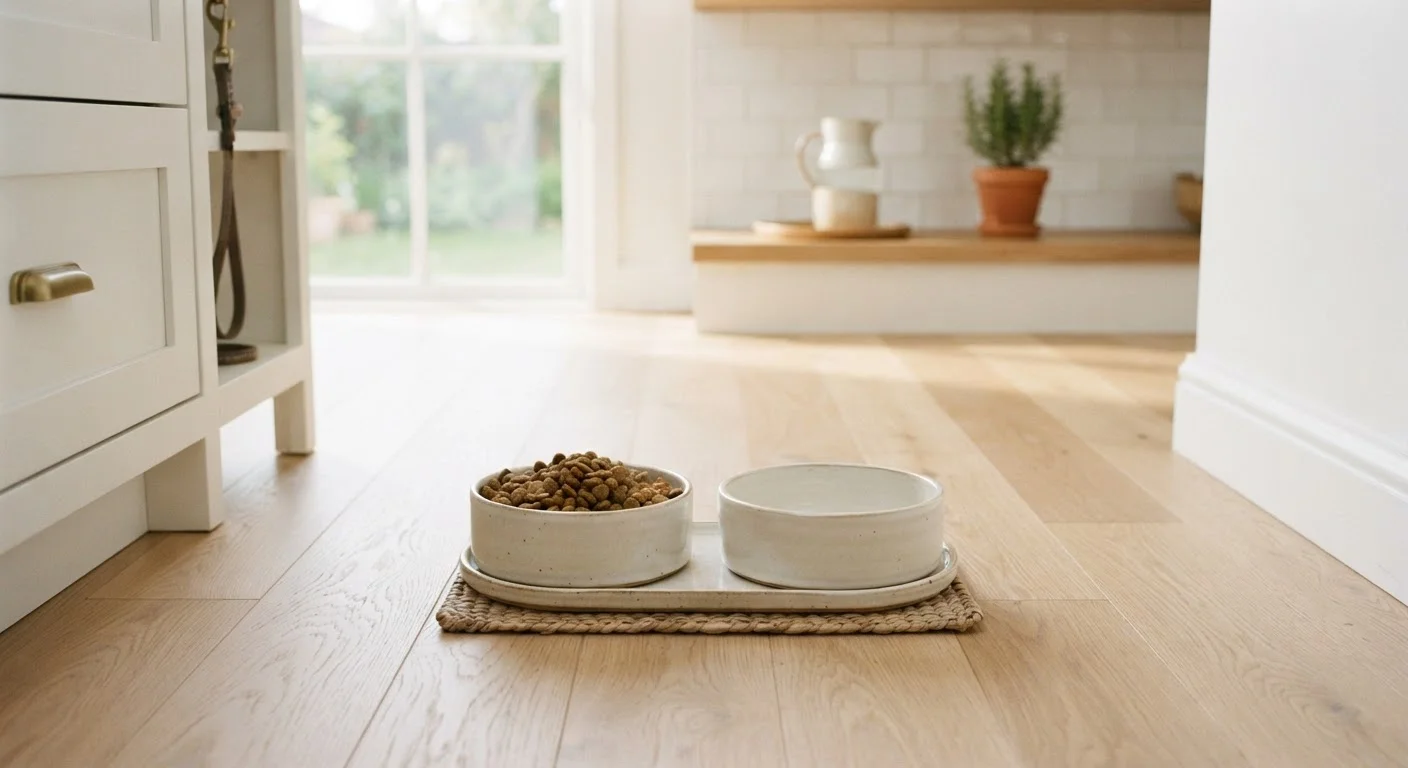
Feeding schedules (also called meal feeding or timed feeding) means offering food at fixed times each day — typically two meals — and removing any uneaten food after 20 to 30 minutes. Free feeding means keeping a bowl filled at all times, allowing the pet to eat whenever it chooses.
Neither approach is universally right or wrong. The better choice depends on your pet's species, age, health status, and temperament — and on how your household actually runs day to day. Understanding what each method does and doesn't offer is the first step toward making a sound decision.
For a broader look at how consistent daily structure supports pet health and behavior, see why pets thrive on routine.
Head-to-Head: Scheduled Meals vs. Free Feeding
The table below compares both approaches across key practical and health-related criteria.
| Criterion | Feeding Schedules | Free Feeding |
|---|---|---|
| Portion control | Easy — measured at each meal | Difficult — intake hard to track |
| Obesity risk | Lower with proper portions | Higher, especially in dogs |
| Early illness detection | Good — appetite changes visible immediately | Poor — changes may go unnoticed for days |
| Owner time commitment | Requires consistent daily availability | Minimal daily involvement needed |
| Suitability for dogs | Strongly recommended | Generally not advised |
| Suitability for cats | Works well for most cats | Works only for self-regulating cats |
| Multi-pet households | Easier to manage fairly | Risk of food competition and guarding |
| Food safety (wet food) | Safe — food not left out long | Risk of spoilage after ~2–4 hours |
One factor the table can't fully capture is observability. When you feed on a schedule, you see exactly how much your pet ate at each sitting. A sudden drop in appetite — one of the earliest signs of illness — is immediately obvious. With free feeding, a pet can quietly eat less for several days before anyone notices. This matters, as signs your pet's diet may be missing something are often first detected through changes in eating behavior.
Dogs: Why Scheduled Feeding Is Generally Recommended
Most dogs are opportunistic eaters — they will eat well beyond satiety if food is available. Veterinary guidance broadly favors two scheduled meals per day for adult dogs, with puppies and seniors often needing adjusted timing based on their specific needs.
Scheduled meals support weight management, make house-training more predictable (digestion becomes more regular), and create natural daily anchor points that dogs find reassuring. Research on canine behavior consistently links routine with reduced anxiety — a topic explored further in why pets show time-based anxiety.
For practical guidance on building meal timing around your dog's age and activity level, setting a feeding schedule that works for your dog is a useful next read.
~60%
Pet obesity prevalence in U.S. dogs and cats
According to the Association for Pet Obesity Prevention's annual surveys, roughly 60% of cats and over 55% of dogs in the U.S. are classified as overweight or obese.
2–3x
Increased diabetes risk in obese cats vs. healthy-weight cats
Veterinary endocrinology sources indicate obese cats face significantly elevated risk of developing Type 2 diabetes mellitus compared to lean cats.
Cats: A More Nuanced Picture
Cats are obligate carnivores that evolved as solitary hunters eating small, frequent meals throughout the day. This biology gives free feeding a stronger argument for cats than for dogs — but only under specific conditions.
Free feeding dry kibble to a lean, active cat who genuinely self-regulates can work reasonably well. The problem is that many cats don't self-regulate, and free feeding is strongly associated with feline obesity, which carries serious health consequences including diabetes and joint problems. Wet food left out all day also poses food safety risks, spoiling within a few hours at room temperature.
Scheduled meals — typically two to three per day — give owners clear insight into intake and work especially well with wet food. Life stage matters too: a kitten's nutritional needs differ substantially from a senior cat's. Feeding a cat from kittenhood to senior years covers those transitions in detail.
Multi-Pet Households and Special Circumstances
If you share your home with more than one pet, free feeding creates significant practical problems. Animals may guard food, eat each other's portions, or consume food formulated for a different species or life stage. Scheduled, supervised mealtimes remove most of these risks. Managing routines across multiple pets offers a practical framework for keeping things fair.
Pets with health conditions — including obesity, diabetes, kidney disease, or gastrointestinal issues — generally require precise portion control that free feeding cannot deliver. Always consult your veterinarian before choosing or changing a feeding method for a pet with a known condition. Your vet can factor in the specific food type too; how kibble and wet food differ in nutrition and spoilage is relevant here.
Transitioning Between Feeding Methods
If you're switching from free feeding to scheduled meals, expect an adjustment period of one to two weeks during which your pet may seem persistently hungry. Offer meals at the same times each day and remove uneaten food promptly. Most pets adapt within a few weeks. If your pet shows signs of distress or stops eating altogether, speak with your veterinarian before continuing.
This article is for general informational purposes only and does not constitute veterinary or medical advice. Always consult a licensed veterinarian for guidance specific to your pet's health and dietary needs.
The content on this site is for informational purposes only and is not a substitute for professional advice. Always consult a qualified professional for guidance specific to your situation.