

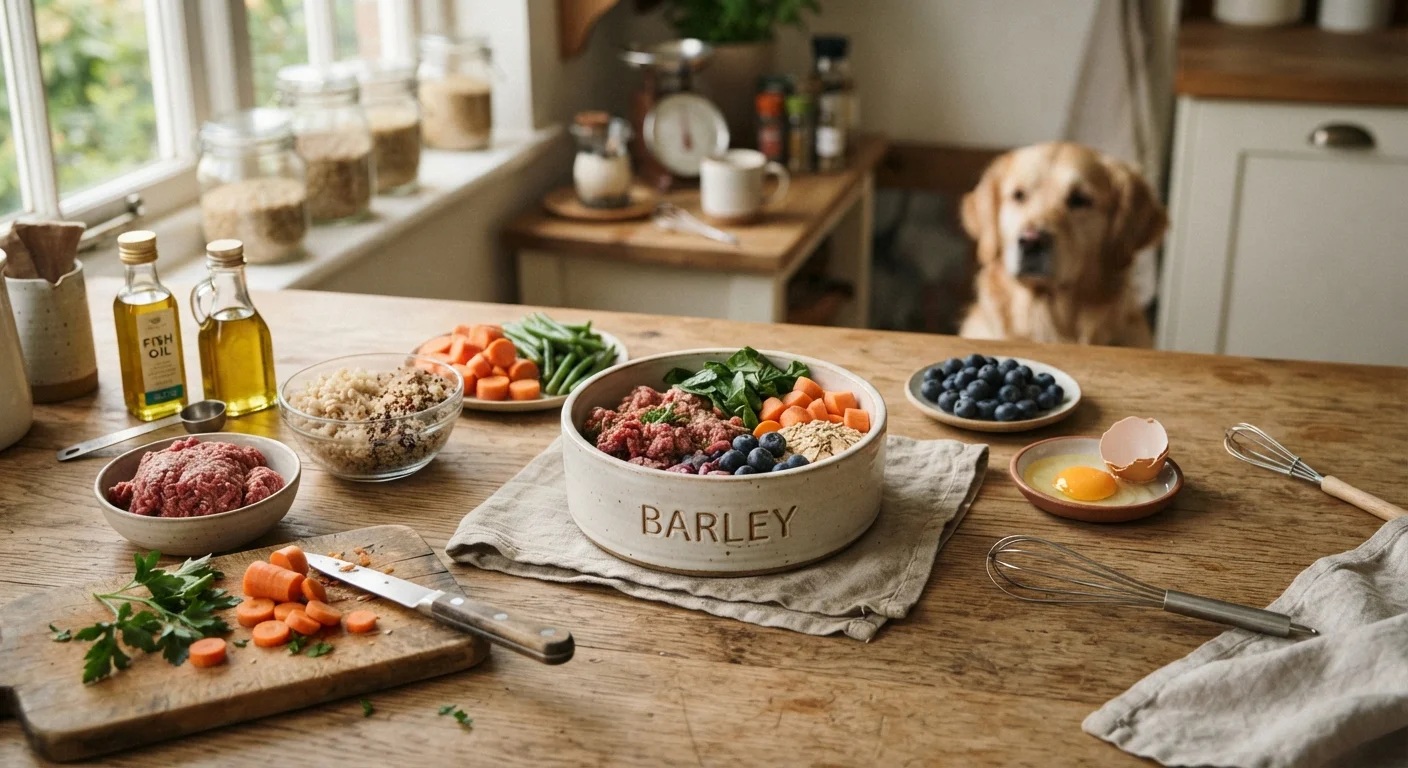
Why Homemade Sounds Simple but Isn't
The motivation behind homemade pet food is usually genuine. Owners want to know exactly what their pet is eating, avoid preservatives, or manage a specific health condition. That instinct isn't misguided — but the execution is far harder than it looks.
Pet nutrition is a specialized science. Dogs and cats have precise requirements for dozens of nutrients, and achieving the right balance through home cooking demands the kind of formulation knowledge that goes well beyond a list of wholesome ingredients. For context on what a well-rounded daily care routine looks like, see our Daily Pet Care hub.
The mistakes below are among the most common — and consequential — that veterinary professionals encounter when pets arrive with diet-related health problems. Understanding where things go wrong is the first step toward doing it right.
Relying on online recipes without veterinary nutritionist review.
Why it happens: The internet is full of appealing homemade pet food recipes that look thorough and trustworthy but are rarely formulated by credentialed experts. Owners assume a recipe with varied ingredients is automatically balanced.
Ignoring the calcium-to-phosphorus ratio, leading to skeletal damage over time.
Why it happens: Meat is naturally high in phosphorus and low in calcium. Owners who build meals around chicken breast, ground beef, or turkey without adding a calibrated calcium source inadvertently create a dangerous mineral imbalance.
Feeding the same recipe regardless of the pet's age, size, or health status.
Why it happens: Owners often treat a single recipe as universally appropriate, not realizing that a growing puppy, a senior dog, and a dog with kidney disease have fundamentally different nutritional needs.
Substituting ingredients without understanding nutritional equivalence.
Why it happens: Convenience drives swaps — ground turkey instead of chicken, sweet potato instead of white rice — without recognizing that different ingredients have meaningfully different nutrient profiles.
Skipping vitamin and mineral supplements under the belief that whole foods provide everything.
Why it happens: The 'whole foods are complete' logic that applies loosely to human diets does not translate directly to pet nutrition. Dogs and cats have specific requirements for nutrients like taurine, zinc, and certain B vitamins that are difficult to meet through food alone at appropriate quantities.
Failing to monitor the pet's health and body condition after switching to homemade food.
Why it happens: Many owners feel confident once they've established a routine, not realizing that nutritional deficiencies can take months to manifest visibly. By the time symptoms appear, significant damage may already have occurred.
Building a Safer Approach to Home Cooking for Pets
None of this means homemade feeding is impossible. For pets with specific allergies, intolerances, or medical conditions, a carefully formulated home-cooked diet can be genuinely valuable — when done under proper professional guidance.
Homemade Diets Require Professional Formulation
Preparing your pet's food at home without a recipe developed by a board-certified veterinary nutritionist carries real health risks. Nutritional deficiencies and toxicities from imbalanced homemade diets are a documented clinical concern. Always consult a veterinary professional before switching your pet to a homemade diet.
The most reliable path is a consultation with a board-certified veterinary nutritionist who can create a recipe specific to your pet's species, breed, weight, age, and health history. From there, the recipe should be followed precisely and revisited periodically as your pet's needs change.
If you're newer to thinking carefully about what goes into your pet's bowl, the guide to reading pet food labels is a useful starting point for understanding how commercial diets are evaluated — knowledge that also helps you ask better questions about homemade alternatives.
Some 'Healthy' Human Foods Are Toxic to Pets
Onions, garlic, grapes, and foods containing xylitol are dangerous to dogs even in small amounts. Never assume an ingredient is safe for your pet just because it is safe for humans. Our guide on human foods that are dangerous for dogs covers the most important ones to avoid.
For owners who aren't ready to commit to full home cooking, a hybrid approach — using a nutritionally complete commercial food as the base and adding limited whole-food toppers approved by your vet — carries far less risk than going fully homemade without guidance. Whatever path you choose, your veterinarian is the right partner for that conversation.
This article is for general informational purposes only and is not a substitute for personalized veterinary or nutritional advice. Always consult a qualified veterinary professional before making significant changes to your pet's diet.
The content on this site is for informational purposes only and is not a substitute for professional advice. Always consult a qualified professional for guidance specific to your situation.