

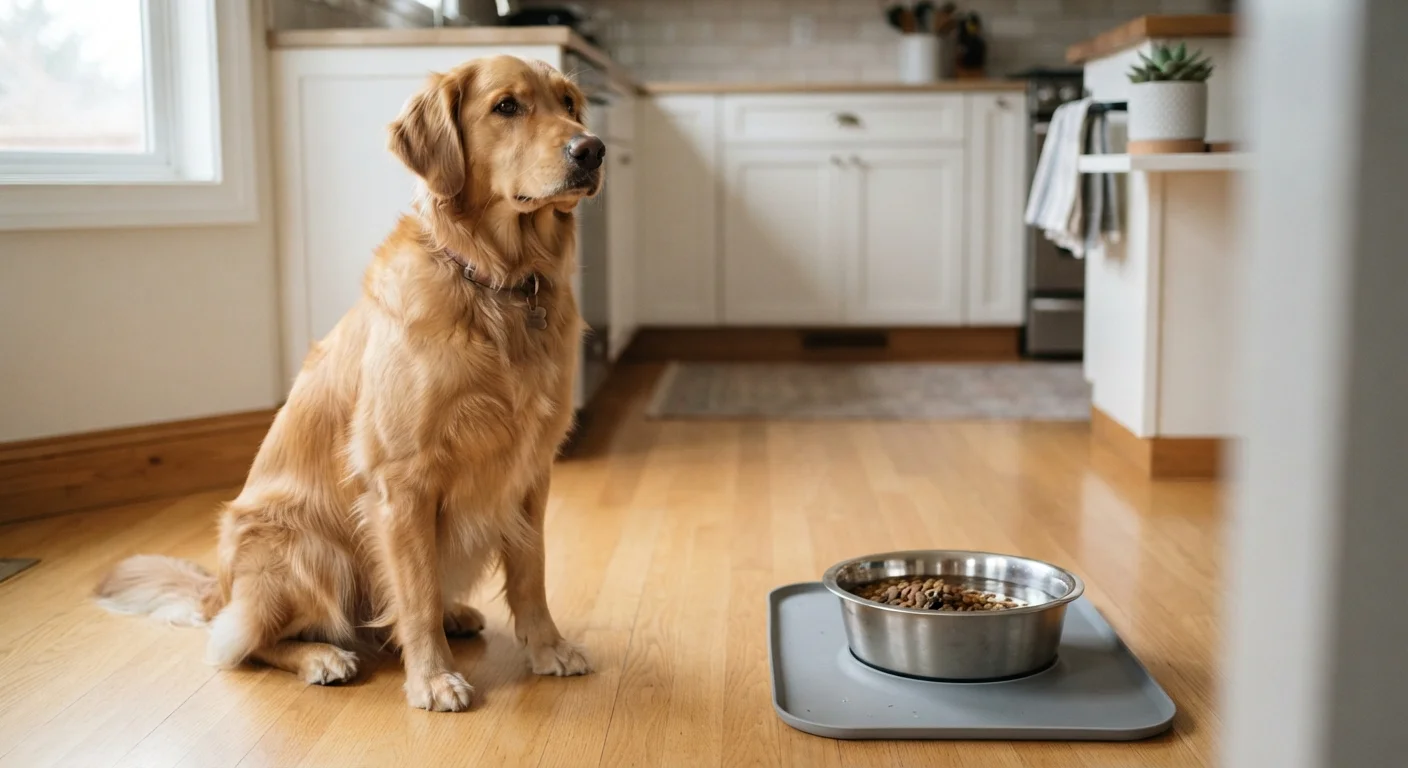
Why Diet Is the Controlling Variable in Canine Weight
Canine obesity is one of the most common preventable health conditions in American dogs, with estimates suggesting that more than half of adult dogs in the U.S. are overweight or obese. While regular activity matters for overall health, veterinary nutritionists consistently point out that caloric intake — not exercise — is the primary lever for weight control. A dog cannot out-walk a chronic caloric surplus. The math is straightforward: when more energy is consumed than expended, the body stores the excess as fat.
The effects of excess weight go well beyond appearance. Carrying extra body fat increases strain on joints, worsens heart and respiratory function, and is associated with a shorter lifespan. For a deeper look at what obesity actually costs a dog's health over time, see our article on how excess weight affects your pet's health. That context matters because it frames weight management not as an aesthetic goal but as a core part of routine pet health care.
The good news: because diet is the dominant variable, it's also the one owners have the most direct control over. You don't need to transform your lifestyle — you need to measure more carefully, understand what's in your dog's food, and make gradual, sustainable adjustments.
Always Consult Your Vet First
Weight loss in dogs must be approached carefully. Cutting calories too aggressively can cause muscle loss, nutritional deficiencies, and in some cases a dangerous condition called hepatic lipidosis in small breeds. Before changing your dog's diet, get a vet-confirmed target weight and a recommended rate of loss — typically no more than 1–2% of body weight per week.
What You'll Need Before You Start
Effective dietary weight management requires a few practical inputs before you change a single portion. Guessing at calorie targets or reducing food arbitrarily can lead to either no results or nutritional shortfalls. The steps below are built around having accurate baseline information.
What you will need
Digital kitchen scale
Measures food portions by weight for consistent, accurate daily intake.
Calorie tracking notebook or app
Logs daily food and treat calories to keep intake within the target range.
Body condition score (BCS) chart
A visual and tactile guide for assessing your dog's body fat level between vet visits.
Don't Rely on Bag Guidelines Alone
Feeding instructions printed on pet food packaging are general estimates designed for an average adult dog. They often overestimate caloric needs, especially for neutered, older, or low-activity dogs. Use them as a starting point only, and calibrate based on your dog's individual response over time.
Step-by-Step: Adjusting Your Dog's Diet for Weight Loss
Follow these steps in order. Each builds on the previous one, and skipping ahead — especially past the vet consultation — increases the risk of doing more harm than good. Weight loss in dogs should be gradual, deliberate, and monitored.
Get a current, accurate weight and vet-set target
Weigh your dog at the vet or on a reliable home scale. Ask your veterinarian to assign a body condition score (BCS) — a standardized 1–9 scale where 4–5 is ideal. The BCS tells you not just how heavy your dog is, but whether that weight reflects excess fat. Your vet can then set a realistic target weight and a safe weekly loss rate.
Calculate your dog's resting energy requirement (RER)
The resting energy requirement (RER) is the number of calories your dog needs just to maintain basic body functions at rest. A commonly used veterinary formula is: RER = 70 × (body weight in kg)0.75. For a 30 lb (13.6 kg) dog, this works out to roughly 590 kcal/day at rest. This is not the feeding target — it's the baseline before applying a multiplier for activity and life stage. For weight loss, many vets recommend feeding at 80% of the dog's ideal weight RER, not the current weight RER.
Find the caloric density of your dog's current food
Look for the kcal/cup or kcal/kg figure on the food label — it's often listed near the guaranteed analysis panel. If it isn't printed, check the manufacturer's website. Dry kibble can range from about 270 to over 500 kcal per cup depending on formulation. Wet food is usually far lower in caloric density. Knowing this number lets you convert a calorie target into a real-world portion size. See our guide to reading dog food labels for help interpreting nutritional information beyond calorie counts.
Calculate and measure daily portions by weight
Divide your dog's daily calorie target by the food's kcal-per-gram figure to get the total grams of food per day. Split that into two meals — morning and evening — and weigh each portion using a digital kitchen scale. Consistency matters more than precision to the gram; what you want to eliminate is the habit of eyeballing or free-scooping, which tends to creep upward over time.
Account for every treat and topper
Treats, table scraps, dental chews, pill pockets, and food toppers all carry calories. A single medium-sized commercial treat can contain 30–70 kcal. Track everything given outside of meals and subtract that amount from the daily food portion. Many owners find it helpful to pre-portion the day's treat allowance in the morning so there's no guesswork later. If treats are being used for training, consider reserving a small portion of the day's kibble to use as rewards instead of adding extra calories.
Reassess every 2–4 weeks and adjust as needed
Weigh your dog every two to four weeks and compare against the expected rate of loss. If your dog is losing weight too quickly — more than 2% of body weight per week — increase the daily portion slightly. If there's no progress after four weeks of consistent tracking, reduce the portion by 5–10% and reassess again. Keep a simple log: date, weight, daily portion size, and any notes on hunger or behavior. Share this log at follow-up vet visits. For a complete picture of how feeding timing interacts with weight management, see our article on building a feeding schedule that works.
Use a Kitchen Scale, Not a Cup
Measuring cups can vary by up to 20% depending on how food is scooped. A digital kitchen scale gives you accurate, repeatable portions every time. This small change can meaningfully close the gap between intended and actual caloric intake over weeks and months.
Common Pitfalls and How to Avoid Them
Even well-intentioned owners run into patterns that undermine progress. The most frequent issue is underestimating treat calories — a few generous handfuls of treats daily can easily add 10–20% on top of the meal caloric target, erasing any deficit created by portion reduction. A second common pitfall is inconsistency between household members; if one person is measuring carefully while another free-pours, the numbers won't hold. Agree on a household approach and designate one person to measure portions each day.
It's also worth understanding the limits of diet alone. While this guide focuses on food, physical activity does contribute to overall energy expenditure and plays a critical role in your dog's behavioral health. Our article on what happens when dogs skip daily walks explains the broader consequences of reduced activity — which can compound weight problems over time. For a full picture of daily pet care routines that support healthy weight, start with consistent feeding and layer in structured activity as your dog's fitness improves.
This article provides general educational information about canine nutrition and weight management. It is not a substitute for personalized veterinary advice. Always consult a licensed veterinarian before making changes to your dog's diet, especially if your dog has underlying health conditions.
The content on this site is for informational purposes only and is not a substitute for professional advice. Always consult a qualified professional for guidance specific to your situation.