

Why Value Buying Isn't the Same as Being Cheap
The frugality conversation in consumer culture often defaults to extremes — extreme couponing, no-spend challenges, DIY everything. That framing is more limiting than useful. Value-focused shopping is something different: it's applying consistent, informed judgment to spending decisions so that your money reflects your actual priorities.
If you're new to thinking about purchases through a budget lens, a foundational guide to budget shopping can help orient you before going deeper. For everyone else, the more useful starting point is understanding that value is relative — a higher-priced item that lasts five years often represents better value than a cheaper one replaced annually.
A key underlying skill is distinguishing what you actually need from what you want in a given moment. The distinction between needs, wants, and the gray area in between matters more than most budgeting frameworks acknowledge, because most overspending happens in that gray zone — not in obvious luxury categories.
Reframe Value Before You Shop
Before entering a store or opening a shopping app, ask one question: what is this purchase supposed to do for me? Connecting the item to a specific function or outcome — rather than a general want — makes evaluation much cleaner. It also makes it easier to walk away when something doesn't actually fit.
Understanding Unit Pricing
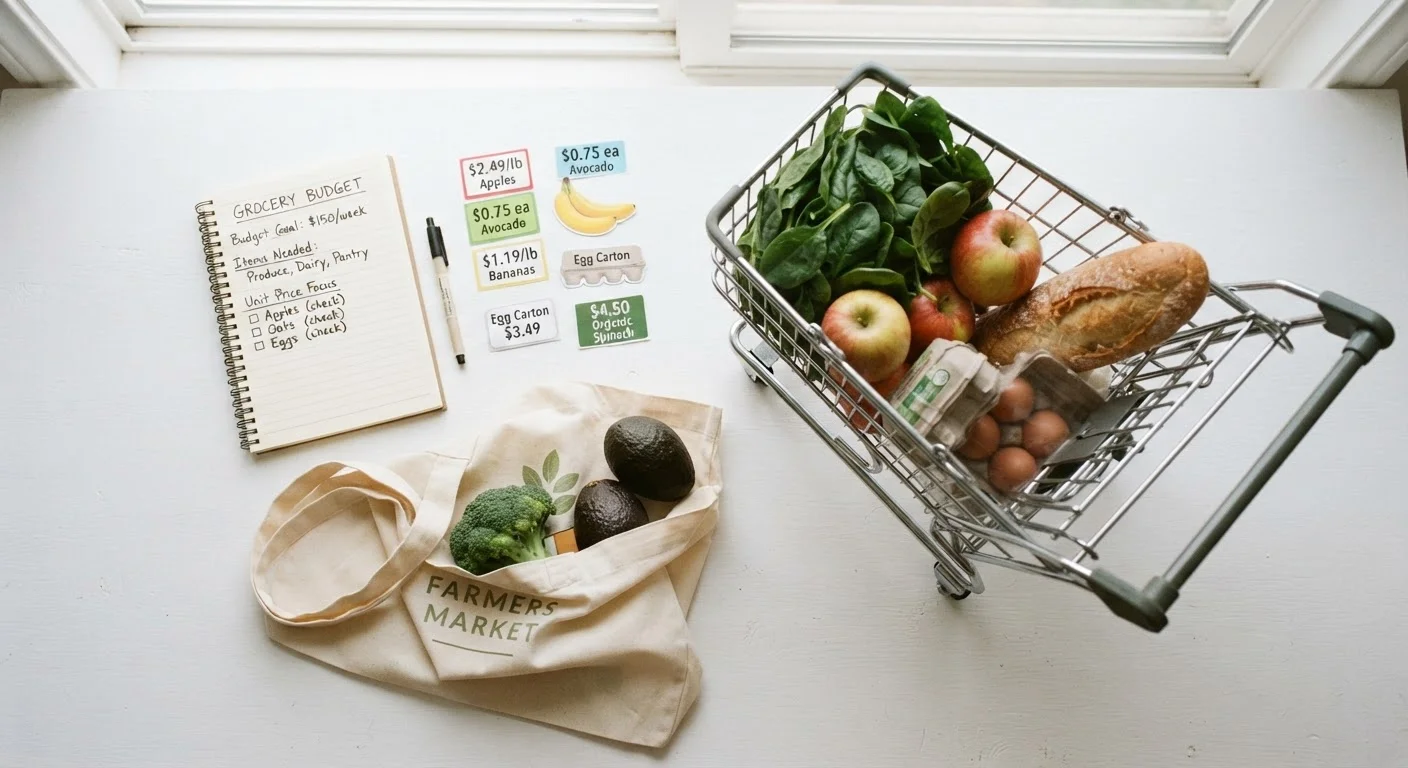
Unit pricing — the cost per ounce, per sheet, per serving, or per count — is one of the most underused tools available to everyday shoppers. Most major retailers in the US are required by state law to display unit prices on shelf tags, but they're easy to overlook when packaging is designed to obscure them.
A "family size" package isn't always the cheapest per unit. Promotional items on end caps may carry a higher unit price than the standard shelf version. Store-brand products are frequently lower per unit, but not always — comparing matters. The math is simple, but the discipline of actually checking before placing an item in a cart requires a conscious habit shift.
~$1,500
Estimated annual impulse spending per US household
Research from consumer finance studies suggests the average American household spends roughly this amount on unplanned purchases each year, highlighting the scale of in-store decision-making gaps.
30%+
Price variation for identical goods by store format
Consumer price research consistently finds that the same branded product can vary by 30 percent or more depending on store type, channel, and shelf placement — without any difference in the product itself.
Unit pricing also applies beyond the grocery store. When evaluating subscription services, clothing cost-per-wear, or even appliances, applying a per-use calculation gives you a more honest picture than sticker price alone.
How Retail Environments Are Designed
Retail store layouts are not neutral. They are constructed using decades of consumer behavior research to increase time-in-store and basket size. Understanding these mechanics doesn't require cynicism — just awareness.
- Essential items placed deep in the store — Staple goods like dairy, eggs, and bread are typically in the back, requiring shoppers to pass through more aisles. This increases exposure to discretionary items.
- Eye-level shelving — Higher-margin products are deliberately placed at eye level for adults (and sometimes children). The top and bottom shelves often hold equivalently useful items at lower prices.
- End caps aren't always deals — End-of-aisle displays create a visual cue associated with sales, but many end cap items are full price or only marginally discounted.
- Checkout lane merchandising — Small, low-cost items near the register are positioned to capture impulse decisions when shoppers are mentally fatigued.
For a broader look at how retail systems operate across channels, exploring retail mechanics is time well spent.
Seasonal Pricing Cycles You Should Know
Retail pricing is not random. Most categories follow recognizable markdown cycles tied to inventory management, model-year transitions, and holiday demand patterns. A few general principles hold across most product types:
- Post-holiday clearance — January and early February typically bring deep markdowns on seasonal goods, winter apparel, and holiday décor.
- Late-season apparel — Clothing is marked down most aggressively as a season ends — late August for summer, late January for winter.
- Major appliances — New model introductions in the fall often mean prior-year models are discounted, though this varies by brand and category.
- Electronics — While promotional events create short-term pricing windows, broader category markdowns often follow new product release cycles, not just calendar events.
It's worth noting that large promotional events come with their own complications. What to know before shopping a big seasonal sale — including how reference prices are set and restocking risk — is a necessary counterbalance to the excitement of a marked-down sticker.
Reference Prices Can Be Misleading
"Was" and "compare at" pricing is common in retail promotions, but the original price shown may reflect a briefly held price or a manufacturer's suggested retail price that was rarely charged. Before treating a markdown as a genuine saving, it's worth checking whether the current price is actually unusual for that item. Price history tools exist for many categories and can provide useful context.
Building a Pre-Purchase Research Habit
The moment of purchase is the worst time to evaluate a product. Retailers know this — it's why so much effort goes into creating urgency at the point of sale. A pre-purchase research habit moves your decision-making out of that environment entirely.
A lightweight research process for most purchases involves three steps:
- Define what problem the item needs to solve — Specificity here prevents over-buying. A blender that handles smoothies doesn't need commercial-grade power.
- Check independent sources — Consumer-focused publications, owner forums, and product category comparisons offer perspectives that manufacturer marketing won't. Product research resources can help structure this step.
- Set a decision window — Give yourself a fixed period (24 hours for small purchases, a week for larger ones) before committing. This interrupts impulse patterns without eliminating spontaneity.
Research doesn't need to be exhaustive to be effective. Even five minutes of price history review or reading a handful of long-form user reviews can shift the quality of a decision significantly.
When researching a product category you're unfamiliar with, look for discussions in owner communities or enthusiast forums rather than review aggregators alone. Owners tend to surface durability and long-term usability issues that short-term reviews miss.
Durability and real-world performance often diverge from first-impression reviews, which are submitted shortly after purchase before most failure modes emerge.
For recurring household purchases, track unit prices for your most-used items over several months before assuming bulk buying is always the better value. Prices fluctuate, and smaller quantities on sale can occasionally beat bulk pricing.
Bulk purchasing creates a savings assumption that isn't always supported by actual price-per-unit comparisons across time and purchase size.
Putting It All Together
Value-focused buying isn't a set of rules — it's a decision framework. The individual tactics described in this guide (unit pricing, layout awareness, seasonal timing, pre-purchase research) compound when practiced together. None requires meaningful time investment once they become habit.
The underlying principle across all of them is the same: the retail environment is designed to move product efficiently, and that efficiency isn't always aligned with your interests as a buyer. Understanding how pricing, placement, and promotion actually work gives you better tools to make decisions that reflect your own values — not the system's.
Start with whichever tactic feels most applicable to where you spend most. Unit pricing in the grocery aisle is probably the fastest win. Seasonal timing matters more for large or infrequent purchases. Research habits pay off most in categories where products vary widely in durability or performance. Build from there.
This article is for general informational and educational purposes only. It does not constitute financial or professional advice. Readers should use their own judgment or consult a qualified professional for decisions specific to their financial situation.
The content on this site is for informational purposes only and is not a substitute for professional advice. Always consult a qualified professional for guidance specific to your situation.