

Summary
18 items · 20–35 minutes
Why Seasonal Sales Deserve More Skepticism Than Excitement
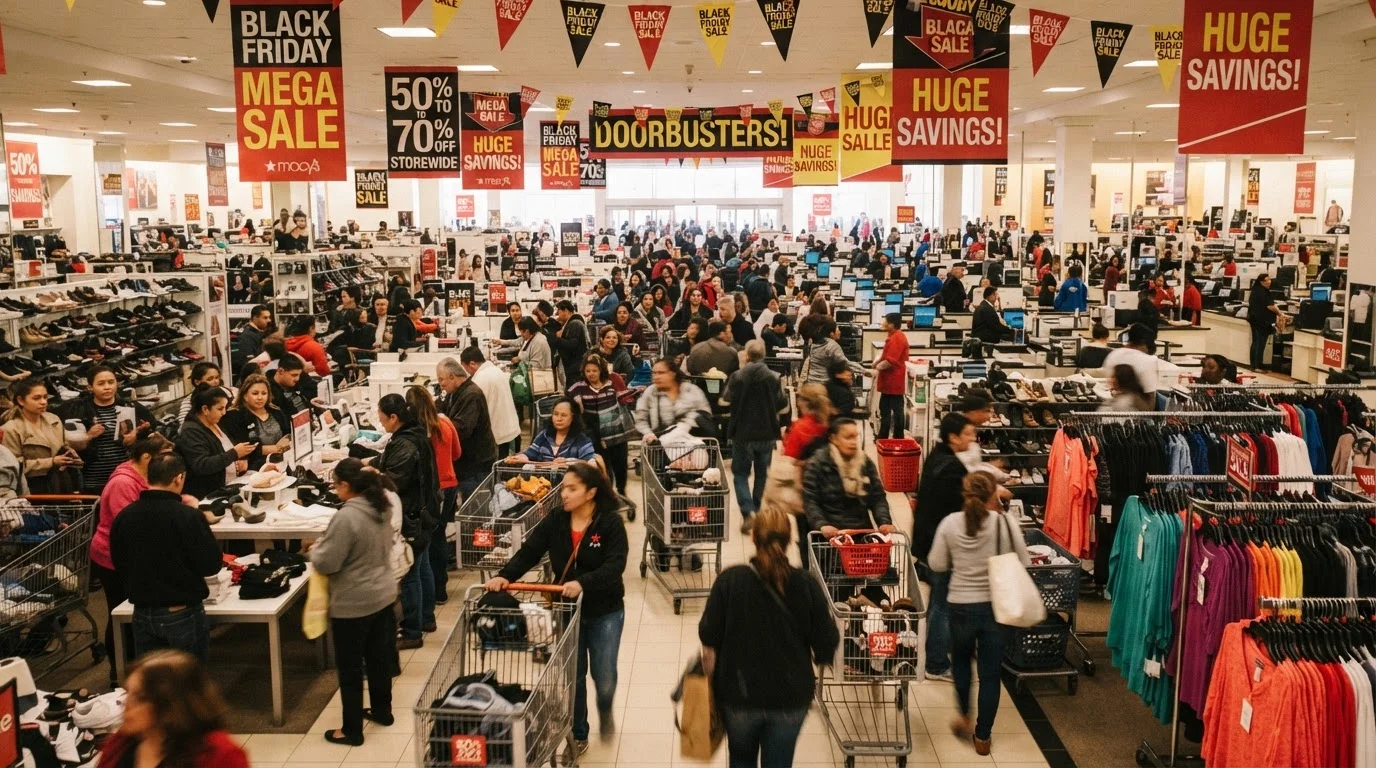
Big seasonal sales — the kind that come with countdown timers, door-buster labels, and weeks of pre-event marketing — are carefully engineered retail events. That doesn't mean there's no value to be found. It does mean that the conditions designed to help you buy quickly are not the same conditions that help you buy wisely.
Retailers invest heavily in creating urgency, anchoring perception around reference prices, and bundling promotions in ways that reward impulse over intention. Shoppers who arrive with a plan consistently make more deliberate decisions than those who browse reactively. This checklist is that plan.
Before working through the items below, it helps to understand the mechanics at play. Retail pricing myths that many shoppers still believe don't hold up under scrutiny — including the assumption that a percentage-off tag always reflects a genuine reduction from a price the store actually charged.
Before the Sale Starts
Evaluating the Discount
Assessing Product Integrity
Managing Pressure and Urgency
Tools and Resources to Have Ready
You don't need specialized software to shop a seasonal sale intelligently. A few widely available, free tools — used before you walk in or click through — can meaningfully change the quality of your decisions.
Price history tracker (browser extension)
Shows the historical pricing of a product on major retail sites so you can verify whether the sale price is genuinely lower than typical.
Retailer's return policy page (saved or printed)
Lets you confirm in real time whether special sale-period return restrictions apply before you complete a purchase.
Comparison shopping site or app
Pulls current prices from multiple retailers for the same model so you can identify whether a competing store is matching or beating the sale price.
Notepad or phone notes app
Used to record your pre-approved item list, model numbers, and target prices before you enter the sale environment.
Retailer loyalty account (logged in before the event)
Ensures any member-only pricing or stacking promotions are applied automatically at checkout without scrambling for codes mid-purchase.
If you're heading into a physical store, consider pairing this checklist with the budget shopper's pre-trip checklist to reduce in-store impulse spending as well.
What to Watch Out For During the Event Itself
Even well-prepared shoppers can encounter surprises once a sale is live. A few patterns show up repeatedly across major retail events:
- Modified return windows. Some retailers shorten return periods during sale periods or require original packaging for any item purchased at a discount. Return policies and warranties can tell you a lot about how much confidence a maker has in their own item — check the policy for sale-specific terms before checkout.
- Substitute or downgraded models. Some products promoted during large sale events are produced specifically for that event — built to a slightly lower specification than the standard model. Model numbers that differ from what's sold year-round are worth a quick search before purchasing.
- Bundled pricing that obscures unit value. Multi-item bundles make per-unit price comparison harder. Break bundles into their components and compare each piece against standalone pricing before assuming the bundle is a better deal.
Watch for Sale-Specific Product Variants
Some large retailers produce models with slightly different internal components or feature sets that carry the same brand name but a unique model number — and are sold exclusively during promotional events. These aren't necessarily inferior, but they are harder to find independent reviews for. Always search the full model number, not just the product name, before buying.
Urgency Language Is a Design Feature, Not a Warning
Phrases like 'Selling fast,' 'Only 3 left,' and 'Deal ends in 2 hours' are calibrated to accelerate decisions. Some are accurate; others are not. If the item is genuinely important to you, act on your research — not on the timer. If it's not on your list, urgency language is a reason to pause, not proceed.
For a broader view of the psychology and data retailers use when designing these events, what retailers know about you before you walk in provides useful context on how shopper data shapes the offers you see.
And if you're weighing whether to stock up on a high-volume item during a sale, bulk buying tradeoffs — the honest math depends on factors beyond the headline discount.
Reference Prices Are Not Neutral Information
The 'original' or 'regular' price shown next to a sale price is set by the retailer and may reflect a price that was charged only briefly, only in certain locations, or in some cases never at scale. Several states have regulations governing how reference prices must be established, but enforcement varies. Treat any 'was $X' figure as a starting point for your own research, not as a verified benchmark.
The content on this site is for informational purposes only and is not a substitute for professional advice. Always consult a qualified professional for guidance specific to your situation.