

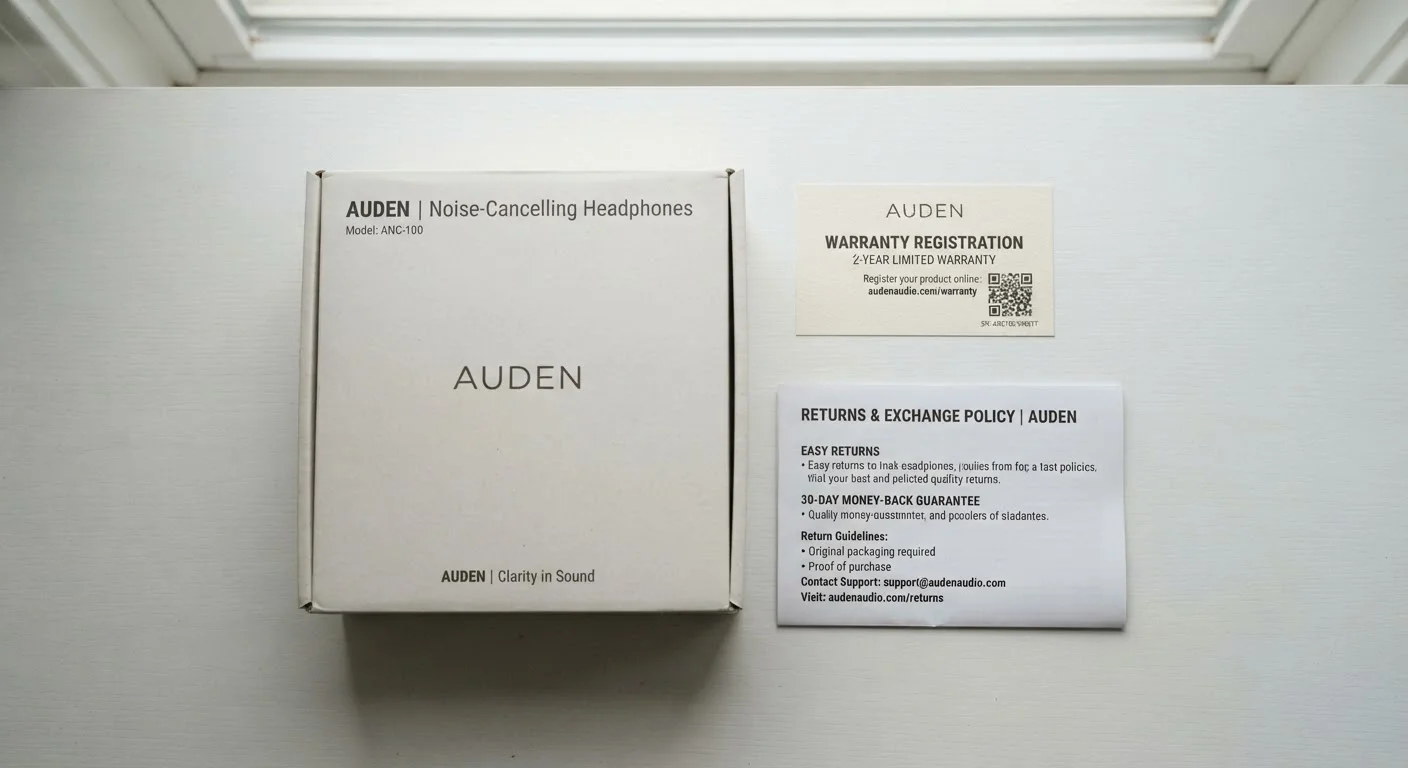
Why These Documents Matter More Than Marketing Copy
Product pages are written to sell. Return policies and warranties are written to define legal obligations — which makes them far more honest sources of product information than advertising language.
When a manufacturer offers a two-year warranty on a kitchen appliance, that commitment has a real cost attached to it. The longer the coverage period, the more the company is betting that the product won't fail. Short warranties on items marketed as durable goods are a mismatch worth noticing. They don't prove a product is bad, but they do invite a harder look.
Return policies operate on a similar logic. A generous, no-questions-asked return window costs retailers and manufacturers real money in logistics and restocking. Companies that absorb that cost willingly tend to have lower return rates — meaning they're confident fewer customers will need to use the policy. See our product research checklist for a complete framework to apply before any significant purchase.
Check the Policy Before You Need It
Look up the return policy before finalizing any significant purchase — not after something goes wrong. Policies can change, vary by product category, and often have conditions that don't appear in the checkout flow. Saving or screenshotting the relevant terms at the time of purchase gives you a clear reference point if a dispute arises later.
How to Read a Return Policy Like a Researcher
The headline — "30-day returns" or "free returns" — is the least informative part of a return policy. The details buried underneath tell the real story.
- Who pays return shipping? A policy requiring the buyer to pay return shipping reduces its practical value significantly on heavier or lower-cost items.
- Does the item need to be unopened? A return policy that only applies to sealed products is nearly useless for evaluating real-world performance.
- Are there restocking fees? Fees of 15–25% effectively penalize you for changing your mind, which shifts risk entirely onto the buyer.
- What counts as a "defect" vs. buyer's remorse? Some policies split these into separate tracks with different time windows and processes.
Policies that are hard to find, written in dense legal language, or buried in a footnote are themselves a signal — they may be designed to discourage use rather than facilitate it. Seasonal sale periods can bring additional return policy restrictions worth checking before you purchase.
Return Policies Can Change After Purchase
Retailer return policies are not contractually locked at the time of purchase in most cases — they can be updated. Some retailers honor the policy in effect at the time of purchase; others apply current policy at the time of return. If the return window is a meaningful factor in your decision, verify the retailer's specific stance on policy changes before buying.
Decoding Warranty Terms as a Quality Indicator
A manufacturer's warranty is a structured promise, and its structure tells you something. Here's what to look at beyond the coverage period:
- Parts vs. labor: Some warranties cover replacement parts but not the labor to install them, shifting hidden costs to the consumer.
- Who handles service? Warranties fulfilled directly by the manufacturer are generally more reliable than those routed through third-party service networks.
- Pro-rated vs. full replacement: A pro-rated warranty pays a declining portion of replacement cost over time. A full warranty replaces the item outright. These are meaningfully different protections.
- Registration requirements: Some warranties require product registration within a short window to activate. Missing that step can void coverage entirely.
Comparing warranty terms across two otherwise similar products is one of the most underused research moves available. It costs nothing and often reveals meaningful differences in how makers stand behind their work. Pair this approach with insights from trustworthy product reviews to build a fuller picture before committing.
What Neither Document Tells You
Return policies and warranties are useful signals, but they have limits. A generous policy doesn't guarantee a quality product — it may reflect a retailer's competitive strategy. A short warranty doesn't automatically mean something is poorly made; some product categories simply have shorter useful lifespans by nature.
These documents also say nothing about the experience of actually making a claim. The best warranty on paper is only as good as the company's willingness to honor it without friction. Reading independent reviews that specifically mention warranty or return experiences gives you a ground-level view that legal language never will. Our guide on reading product specifications covers how to cross-reference these signals with technical claims.
Use return policies and warranties as one input in a broader research process — not a shortcut that replaces reading specs, checking reviews, or comparing products on their own merits.
Frequently Asked Questions
A 30-day window is the retail industry standard, so it doesn't signal much on its own. What matters is what it doesn't cover: restocking fees, who pays return shipping, and whether the item must be unopened. Reading those conditions reveals more than the headline number.
Generally, yes — a longer manufacturer's warranty suggests higher confidence in durability. However, warranty length only matters if the terms are enforceable and the company will actually honor claims. Check whether service is handled by the maker directly or outsourced to a third party.
A manufacturer's warranty comes included with the product and reflects the maker's own quality commitment. An extended warranty is a paid service contract sold separately, usually by a retailer or insurer. The two are structurally different products and should be evaluated independently.
Yes. The manufacturer's warranty is consistent regardless of where you buy, but return policies are set entirely by the retailer. The same product may have a 15-day return window at one store and a 90-day window at another.
Look for what's explicitly not covered: cosmetic damage, water exposure, user error, and wear-and-tear are common exclusions. If the exclusion list is longer than the coverage list, the warranty may offer less protection than it appears to promise.
Not necessarily. Free returns can reflect a retailer's logistics strategy or competitive positioning rather than product quality. Treat free returns as a purchasing convenience, not a quality signal on their own.
The content on this site is for informational purposes only and is not a substitute for professional advice. Always consult a qualified professional for guidance specific to your situation.