

Why Destination Choice Matters More Than You Might Expect
East Africa is not one interchangeable region. Lumping Kenya, Tanzania, Rwanda, and Uganda together when researching a safari is a bit like treating the Florida Everglades and Yellowstone as the same trip. The wildlife differs. The terrain differs. So does the cost, the infrastructure, and the kind of traveler each destination rewards.
Before committing to an itinerary, it helps to clarify what you actually want from the experience — open plains with large mammal herds, dense forest encounters with primates, or a combination of both. That answer should drive your destination choice, not the other way around. For a broader framework on pre-trip research, the destination research checklist for American travelers covers entry requirements, health logistics, and practical groundwork worth completing well before departure.
~1,000
Mountain gorillas remaining in the wild globally
According to the World Wildlife Fund, the majority live across Rwanda, Uganda, and the Democratic Republic of Congo.
1.5M+
Wildebeest in the Great Migration
The Serengeti-Mara ecosystem hosts one of the largest overland animal migrations on Earth, according to the Serengeti National Park authority.
4
Distinct country experiences in one region
Kenya, Tanzania, Rwanda, and Uganda each offer fundamentally different wildlife, terrain, and infrastructure for visiting travelers.
Kenya: Big Sky, Open Plains, and Established Infrastructure
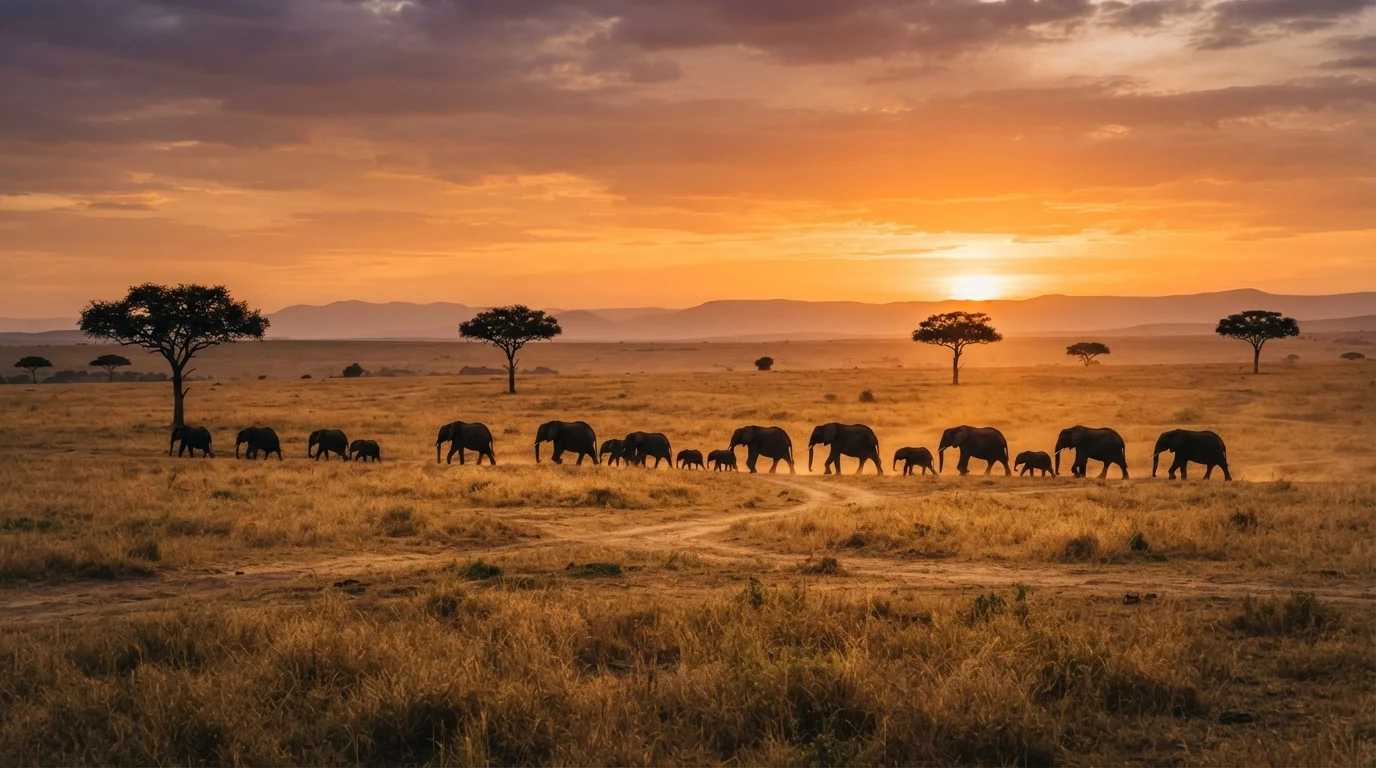
Kenya is where many American travelers form their mental image of an African safari — broad savanna, acacia-dotted horizons, and the Maasai Mara's iconic game-viewing. The Mara is the Kenyan extension of the greater Serengeti ecosystem, and it draws significant attention during the wildebeest river crossings that occur roughly between July and October, though timing varies year to year.
Beyond the Mara, Kenya offers substantial variety: Amboseli for elephant herds with Kilimanjaro backdrops, Samburu for species not commonly found further south, and the coastal corridor for travelers who want to combine wildlife with Indian Ocean beaches. English is widely spoken, tourism infrastructure is mature, and Nairobi functions as East Africa's primary international air gateway.
The trade-off is that Kenya's most famous reserves can feel busy at peak season, with multiple vehicles converging on sightings. Travelers who want more solitude often look beyond the headline parks or travel in the shoulder season.
Tanzania: The Serengeti, Ngorongoro, and Fewer Crowds
Tanzania holds what many wildlife ecologists consider the most intact large mammal ecosystem remaining on Earth: the Serengeti, which connects directly to Kenya's Mara. The wildebeest migration is continuous — calving happens in the southern Serengeti around January and February, and the dramatic Mara River crossings occur in the northern reaches mid-year.
Tanzania also contains Ngorongoro Crater, a collapsed volcanic caldera that functions as a self-contained wildlife sanctuary with high predator density. Tarangire National Park, often overlooked by first-timers, delivers exceptional elephant concentrations in the dry season.
Tanzania generally requires more internal travel between parks than Kenya and can involve longer drives or domestic flights. The northern circuit is well-established; the southern parks (Ruaha, Selous/Nyerere) offer a more remote, lower-density experience but are less convenient to reach. Swahili is the dominant language and English is widely used in the tourism sector.
Rwanda and Uganda: Primate Trekking in Mountain Forests
If open plains are what define Kenya and Tanzania, dense Afromontane forest defines Rwanda and Uganda. Both countries are the primary destinations for mountain gorilla trekking, one of the more singular wildlife experiences accessible to visitors anywhere in the world. Gorilla families are habituated — meaning accustomed to human presence — and trekking is managed under strict permit systems that limit the number of visitors per group per day.
Rwanda's Volcanoes National Park is compact and relatively accessible from Kigali, the country's capital, which has direct connections from several international hubs. Rwanda has made significant investments in tourism infrastructure and positions itself as a higher-end destination; permits are priced accordingly and require advance booking.
Uganda's Bwindi Impenetrable National Park hosts a larger share of the world's mountain gorilla population and generally offers permits at a lower price point than Rwanda, though the terrain is more demanding and logistics can involve longer overland travel. Uganda also provides chimpanzee trekking in Kibale Forest, a distinct draw for primate enthusiasts.
Both countries are smaller than Kenya or Tanzania and don't offer comparable open savanna wildlife experiences, though Uganda's Queen Elizabeth and Murchison Falls parks provide more traditional game viewing as a complement.
Choosing Your Destination — or Combining Them
The clearest way to narrow your choice is to identify your primary wildlife goal. Large mammal game drives on open savanna point toward Kenya or Tanzania. Mountain gorilla trekking points toward Rwanda or Uganda. Wanting both usually means a multi-country itinerary, which is common and logistically manageable with enough trip time — typically ten days or more.
Budget is a secondary filter. Rwanda's gorilla permits are among the priciest individual wildlife experiences in Africa. Tanzania's remote southern parks involve higher-cost fly-in logistics. Kenya and Uganda tend to offer a wider range of price points. None of these destinations is inexpensive for Americans once international airfare, park fees, and accommodation are factored in.
Trip length matters too. A week favors a single-country focus. Two weeks allows meaningful combination. Just as American national park regions reward different types of visitors — a framework explored in our piece on what each US national park region actually offers — East African destinations serve different travel priorities and shouldn't be treated as interchangeable.
“The most common mistake safari first-timers make is choosing a destination based on a photograph rather than on what kind of traveler they are. The right safari is the one that fits your pace, your priorities, and your tolerance for discomfort — not just the most famous name on the map.”
— A senior wildlife guide with two decades of experience in East Africa, Veteran safari guide and conservation educator, East Africa
This article provides general travel information for educational purposes. Entry requirements, permit availability, health recommendations, and safety conditions can change. Verify all details with official government sources and consult a travel health professional before booking.
Frequently Asked Questions
Kenya is often considered the most accessible starting point due to its well-developed tourism infrastructure, English as an official language, and range of accommodation options. Nairobi also serves as a major international hub with direct or one-stop flights from many US cities.
Yes, Americans generally require a visa for all four countries, though requirements and costs differ. Rwanda and Uganda have recently updated their entry systems. Always verify current requirements directly with each country's official immigration authority and the US State Department before booking.
The dry seasons — broadly June through October and January through February — are widely considered optimal for wildlife viewing across Kenya and Tanzania. Gorilla trekking in Rwanda and Uganda is possible year-round, though some trails are more accessible in drier months.
Yes, and many visitors do. Kenya and Tanzania pair naturally for savanna wildlife. Rwanda and Uganda are often combined for primate trekking. Adding Rwanda or Uganda to a Kenya or Tanzania itinerary is also a popular option for travelers with two or more weeks.
Gorilla trekking is conducted under structured permit systems managed by national park authorities in both Rwanda and Uganda, with guides accompanying all groups. Consult current US State Department travel advisories and your physician regarding health precautions before traveling.
For popular travel windows — especially the Great Migration season or gorilla trekking permits — many travelers book six months to a year in advance. Permit availability and accommodation at smaller, remote camps can be limited, so earlier planning generally offers more options.
The content on this site is for informational purposes only and is not a substitute for professional advice. Always consult a qualified professional for guidance specific to your situation.