

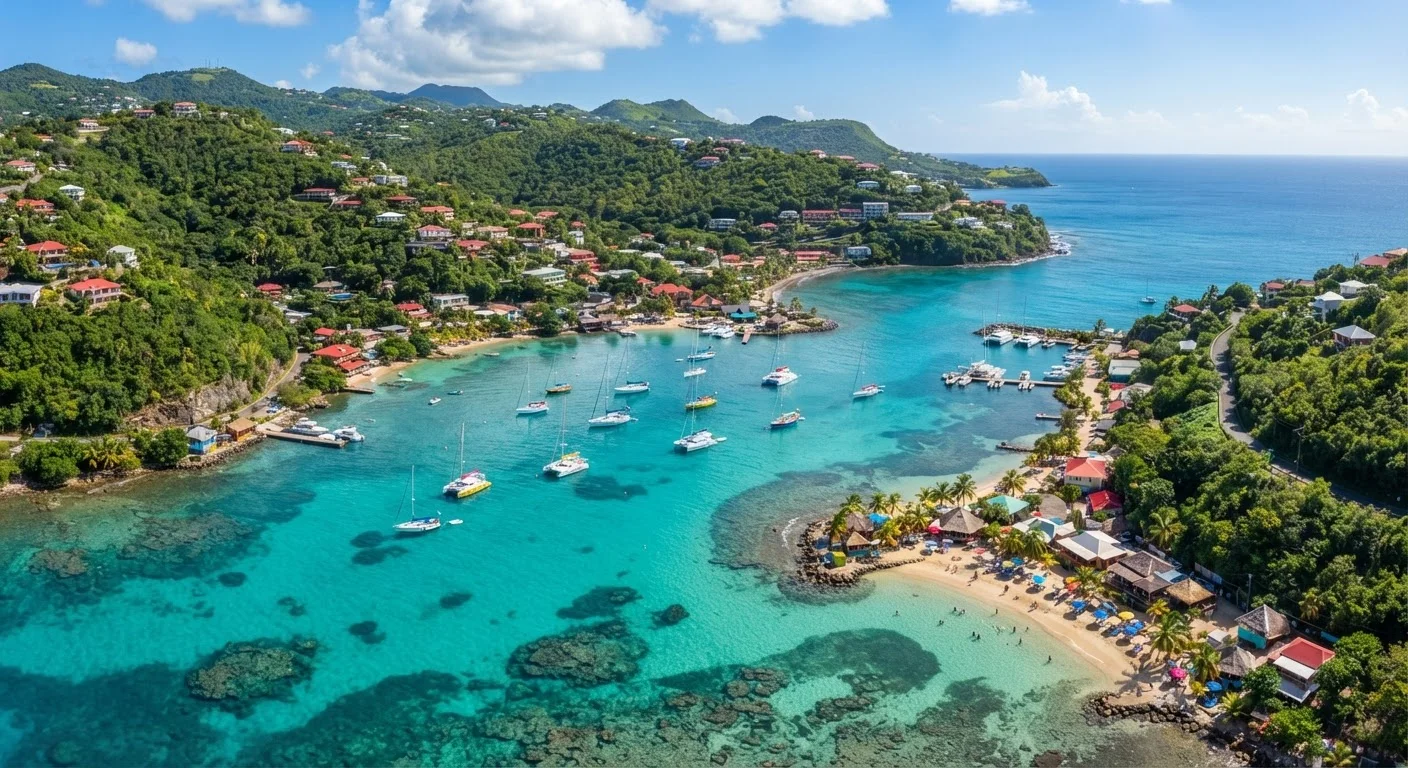
What Makes Caribbean Islands Different From One Another
The Caribbean is not a single destination — it's a collection of more than 700 islands spread across roughly 1 million square miles of ocean, grouped into sovereign nations, U.S. territories, British Overseas Territories, French overseas departments, and Dutch constituent countries. For American travelers, that variety matters practically: entry rules, currency, language, and tourism infrastructure differ significantly from island to island.
Island character breaks down along a few key lines:
- Terrain: Flat, low-lying islands like Aruba and Grand Cayman are coral-limestone formations with calm leeward waters but little elevation. Volcanic islands like St. Lucia, Dominica, and St. Kitts are dramatically mountainous, with rainforest interiors and rougher Atlantic-side coasts.
- Language: English is spoken in Jamaica, Barbados, Trinidad and Tobago, the Bahamas, and the U.S. Virgin Islands. Spanish dominates Cuba, the Dominican Republic, and Puerto Rico. French is primary in Martinique, Guadeloupe, and Haiti. Dutch is spoken in Curaçao, Sint Maarten, and Aruba alongside Papiamento, a local creole.
- Tourism infrastructure: Islands like St. Maarten, Nassau, and Punta Cana (Dominican Republic) have extensive resort zones, cruise terminals, and international airports. Smaller islands — Saba, Nevis, Bequia — offer limited but often more intimate experiences, with fewer flight connections and fewer resort-scale facilities.
Understanding these baseline differences helps you match an island to your travel goals before diving into booking logistics.
Climate Patterns and Best Travel Windows
The Caribbean has two broad seasons. The dry season (roughly December through April) brings lower humidity, less rainfall, and the most consistent beach weather — and the highest visitor volume. The wet season (May through November) includes afternoon showers, higher humidity, and, crucially, the Atlantic hurricane season, which runs June 1 through November 30.
Not all islands are equally hurricane-prone. The southern Caribbean — Aruba, Bonaire, Curaçao, Trinidad and Tobago, and Barbados — sits mostly outside the main hurricane belt and experiences fewer direct hits historically, though no location offers a guarantee. Travelers considering visits during hurricane season should review current forecasts and verify that their travel insurance covers weather-related disruptions. Always check official meteorological sources before travel.
Elevation also shapes local climate. Mountainous islands like Dominica and St. Lucia can be significantly cooler and wetter in their interiors year-round, even while coastal areas remain warm and sunny.
Hurricane Season Doesn't Mean Avoid the Region Entirely
Many travelers find good value in Caribbean trips during the shoulder months of May, June, or November, when weather is generally manageable and crowds are thinner. The key is monitoring forecasts closely, booking flexible or refundable arrangements where possible, and checking whether your travel insurance covers weather-related cancellations or interruptions. No season eliminates weather risk entirely, and travelers should plan accordingly.
Entry Basics: What Americans Need to Know
Entry requirements vary considerably across the region. Here's how the main categories break down for U.S. citizens:
- No passport required (U.S. territories): Puerto Rico and the U.S. Virgin Islands are domestic destinations. A government-issued ID suffices for air travel within the U.S. system, though a passport is always a reliable backup.
- Passport required, no visa for short stays: Most Caribbean nations — Jamaica, Barbados, Dominican Republic, St. Lucia, Bahamas, Turks and Caicos (British territory), and others — allow U.S. citizens to visit without a visa for tourism stays typically ranging from 30 to 90 days. A valid U.S. passport and a return or onward ticket are standard requirements.
- Cuba: Travel regulations between the U.S. and Cuba remain subject to ongoing policy. Americans traveling to Cuba must meet specific license categories under U.S. law. Verify current rules with the U.S. Treasury Department's Office of Foreign Assets Control (OFAC) before planning any trip.
- Health and entry forms: Many islands require online pre-registration, health questionnaires, or proof of travel insurance as a condition of entry. These requirements have changed frequently in recent years and should be verified directly through each destination's official government or tourism authority website before departure.
For a thorough destination research checklist covering entry documents, health considerations, currency, and local laws, see Information to Gather Before Visiting Any New Country. If you're weighing the Caribbean against other international regions for a first big trip, Southeast Asia vs. Central America: Choosing Your First Big International Trip offers a useful framework for comparing regions side by side.
Entry requirements, visa rules, and health regulations are subject to change. Always verify current requirements with the official embassy, consulate, or tourism authority of your destination and with the U.S. Department of State before traveling.
The content on this site is for informational purposes only and is not a substitute for professional advice. Always consult a qualified professional for guidance specific to your situation.