

Why Food Is the Budget Line Worth Paying Attention To
Flights and hotels tend to get all the pre-trip planning attention, but food is often where budgets quietly unravel. Three meals a day, plus drinks and snacks, can easily match or exceed accommodation costs in many destinations — especially when travelers default to tourist-district restaurants or airport convenience out of habit or exhaustion.
The good news: food spending is also one of the most flexible parts of any travel budget. Unlike flights or hotel rates, it responds directly to daily choices. Experienced travelers know this, and they develop a set of habits that let them eat well — sometimes very well — without letting the food line blow out the whole plan. For a broader view of how small expenses add up, see where trip budgets quietly bleed out.
Start with a food reconnaissance walk
On the first day in a new destination, take a walk specifically to scope out nearby eating options before you're hungry and rushed. Note the local lunch spots, markets, and bakeries. Travelers who do this tend to eat better and spend less throughout the trip because they're making choices from a menu of known options rather than defaulting to whatever's closest when hunger hits.
The approaches below aren't about deprivation. They're about spending intentionally so that the meals that matter get the money they deserve.
Eat where locals eat, not where tourists are directed
The single most effective food cost strategy is also the most obvious: avoid restaurants positioned around major tourist attractions. Prices at these spots often carry a significant premium, and the food quality rarely justifies it. Experienced travelers look a few blocks away from the main square, follow foot traffic from office workers at lunch, or ask hotel staff where they personally eat — not where they send guests.
Smaller, family-run spots in residential neighborhoods typically offer more authentic food at a fraction of the cost. This is especially true in cities across Southeast Asia, Southern Europe, and Latin America, where local lunch culture centers on affordable, filling set meals.
A few blocks from the tourist center can mean half the price for better food.
Make lunch the main meal of the day
In many countries, the midday meal is culturally the largest — and restaurants often offer a fixed-price lunch menu (called a menú del día in Spain, prix fixe in France, or a lunch set in Japan) that includes multiple courses for considerably less than an equivalent dinner. Seasoned travelers exploit this structure deliberately: have the bigger, more expensive experience at lunch, then keep dinner light and inexpensive.
This approach lets you experience quality cooking at a lower price point while aligning with local eating habits rather than fighting them.
Fixed-price lunch menus offer multi-course meals at a fraction of dinner prices.
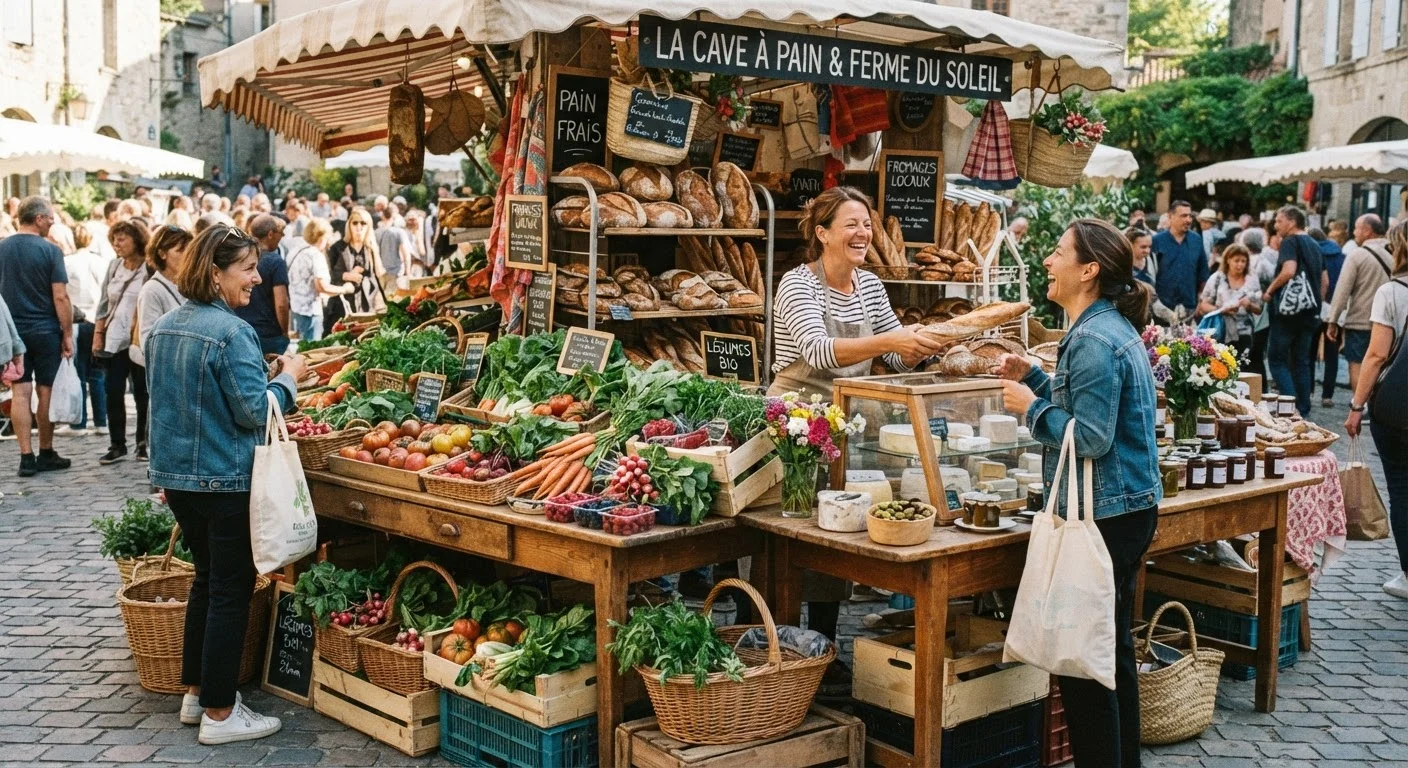
Use markets and grocery stores for at least one meal a day
Even without a full kitchen, a local supermarket or covered market can supply a solid breakfast or light dinner — yogurt, bread, fruit, cheese, cured meats — at a fraction of café prices. Many experienced travelers treat this as a default rather than a fallback, picking up breakfast staples at a market after arrival and keeping a few items on hand for days when a full restaurant meal isn't necessary or desired.
This isn't about eating badly. Many markets carry exceptional local products — olives, cheeses, pastries, prepared foods — that are genuinely worth eating and cost far less than a restaurant markup would suggest. For related strategies on smart food shopping, shopping on a tight budget without cutting nutrition has practical guidance.
One market meal a day can meaningfully reduce total food spend without any sacrifice in quality.
Be strategic about splurges rather than spontaneous
Budget-conscious doesn't mean never spending on a great meal. It means deciding in advance which meal is worth it, researching it before arrival, and treating it as a planned line item rather than an impulse. Travelers who blow the food budget usually do so gradually — slightly too expensive lunch here, tourist-trap dinner there — rather than on one deliberate, memorable experience.
Identifying one or two restaurants worth spending on — and keeping everything else modest around them — tends to produce better memories and a more manageable bill than spreading spending thinly across every meal. This is a core habit covered in habits that separate travelers who stretch a budget from those who blow it.
One planned splurge beats five mediocre meals charged to vague optimism.
Watch what you drink
Beverages are a quietly significant budget drain. In many destinations, a round of drinks — alcoholic or not — can cost as much as the food itself. Experienced travelers pay attention to drink pricing before sitting down, order tap water where it's safe to drink, and treat alcohol as an occasional addition rather than a default accompaniment to every meal.
This doesn't mean avoiding drinks. It means choosing where to have them. A beer at a local bar away from the tourist strip might cost a third of what the same drink costs at a terrace restaurant on the main square. For a fuller picture of where travel spending tends to leak, where trip budgets quietly bleed out is worth reviewing before departure.
Drink pricing varies dramatically by location — a short walk can cut the bill significantly.
Build a rough daily food budget and track it loosely
Travelers who have a number in mind — even a rough one — spend less than those who don't. You don't need a spreadsheet updated after every meal. A simple awareness of roughly what you've spent by day's end, compared to a daily target, is enough to catch drift before it becomes a problem. Many travelers use a notes app or a basic budgeting app to log meals once a day rather than in real time.
Setting a realistic daily food figure is part of the broader pre-trip process. Travel budgeting fundamentals covers how to build those estimates with enough accuracy to actually be useful on the road.
A rough daily food number, loosely tracked, prevents gradual overspend more effectively than strict accounting.
Putting It All Together
None of these strategies require extreme discipline or sacrificing the pleasure of eating while traveling. They just require a bit of awareness upfront. Build a rough daily food budget before you go — building a trip budget that doesn't fall apart mid-journey walks through how to do that realistically. Once you have a number in mind, these habits give you practical ways to stay near it without thinking too hard every time you're hungry.
Food abroad can be one of the richest parts of travel. The goal is to make sure the budget supports that experience rather than limits it. For a full framework covering every stage of affordable travel, budget travel from start to finish is a useful companion resource.
Food costs vary widely by destination
Daily food spending that feels frugal in Western Europe might feel generous in Southeast Asia — and vice versa. Research typical meal costs for your specific destination before setting a daily target. Travel forums, recent blog posts from independent travelers, and destination guides can give you a realistic ballpark. The strategies above apply broadly, but the numbers will differ considerably depending on where you're going.
The content on this site is for informational purposes only and is not a substitute for professional advice. Always consult a qualified professional for guidance specific to your situation.