

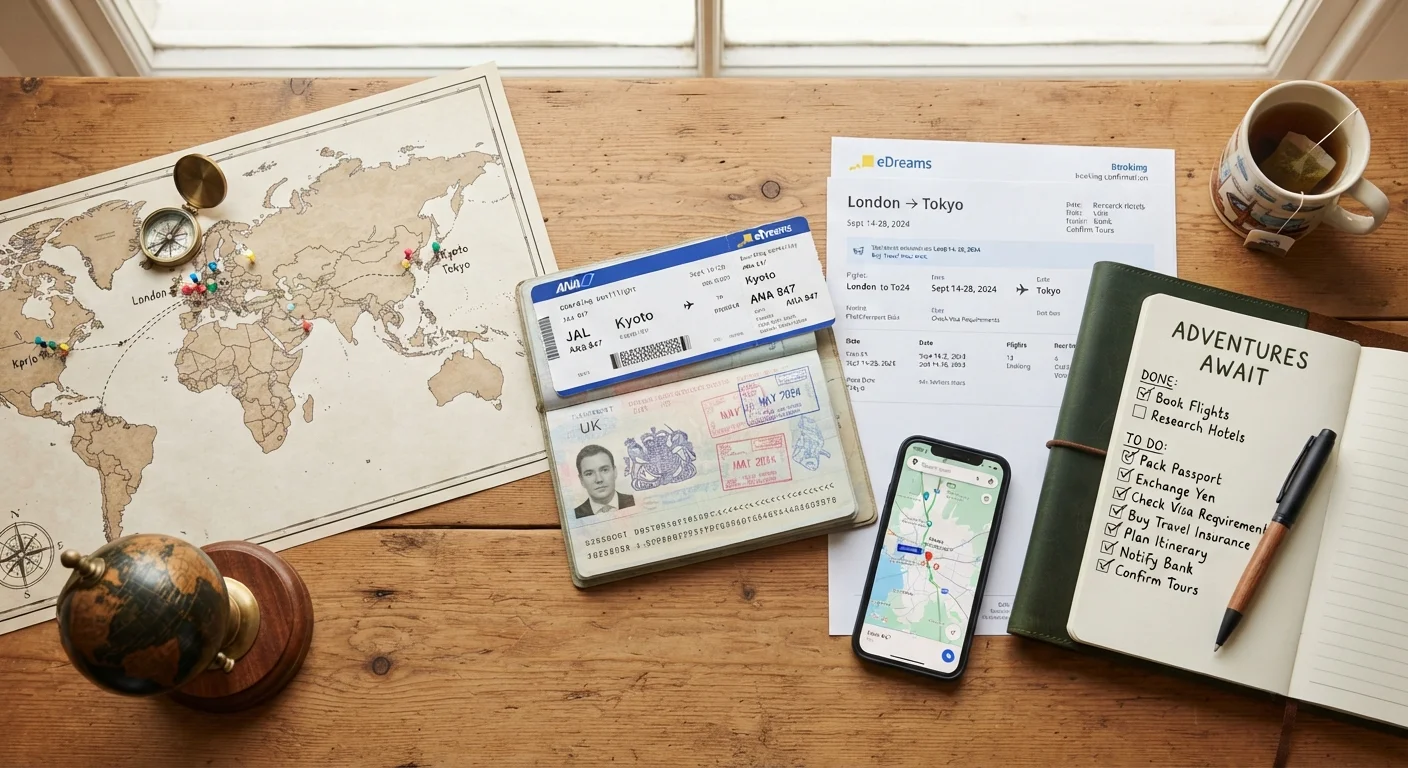
Start With Destination Research
Effective trip planning begins well before any booking is made. The first task is understanding whether your chosen destination aligns with your budget, travel style, health needs, and available time. This means looking beyond headline attractions to assess practical realities: seasonal weather patterns, local safety conditions, and how straightforward it is to get around once you arrive.
Use government travel advisory portals — such as the U.S. Department of State's travel.state.gov — to check advisories, entry restrictions, and health notices for your destination. Cross-reference with official tourism boards for seasonal guidance. Explore destination-specific traveler insights to understand what conditions look like on the ground.
For each destination, answer three core questions: What is the ideal travel window given weather and crowds? What is the realistic daily cost including accommodation, food, and transport? Are there any entry requirements, vaccinations, or documentation needs that require advance preparation? Building answers to these before booking prevents mismatched expectations later.
Build a single master planning document — a shared spreadsheet or notes file — that holds every confirmation number, address, contact, and deadline in one place. Update it as bookings are made.
Scattered information across emails, apps, and paper slips is one of the most common sources of avoidable stress during travel. Centralizing everything reduces search time and errors under pressure.
When researching destinations, look at traveler forums and community boards for posts from the past three to six months — conditions on the ground change faster than most guidebooks update.
Recent firsthand accounts capture closures, price shifts, and safety nuances that static guides miss, giving planners a more accurate picture of what to expect.
The Booking Sequence That Saves Headaches
Experienced travelers follow a deliberate booking order: flights first, accommodation second, activities last. Locking in flights establishes firm arrival and departure dates around which everything else is organized. Booking accommodation before flights often means paying to change reservations when flight options shift.
When evaluating flights, compare total travel time including layovers — not just ticket price. A connection under 60 minutes on an international itinerary introduces unnecessary risk if a delay occurs. Aim for layovers of at least 90 minutes domestically and two hours or more internationally. Unfamiliar with fare classes and what they mean for changes or refunds? Our travel terms reference guide breaks down the key distinctions.
For accommodation, prioritize cancellation flexibility, especially when booking months in advance. Conditions change — political situations, health advisories, personal circumstances. A fully refundable rate often justifies a modest premium.
Book high-demand activities, guided tours, or popular restaurants well in advance, particularly for peak season travel. Many in-demand experiences sell out weeks or months ahead.
Documentation and Entry Requirements
Documentation errors are one of the most preventable causes of disrupted travel. Start with your passport: most countries require at least six months of validity beyond your planned return date. Check expiration well in advance — U.S. passport renewal times can vary significantly depending on processing demand.
Never Rely on Secondhand Visa Information
Visa requirements change without broad public notice, and rules can differ based on your nationality, purpose of travel, and point of entry. Always verify current requirements directly through the official embassy or consulate of your destination country before booking. Errors discovered at check-in or the border can result in denied boarding or denied entry with limited recourse.
For international travel, research visa requirements specific to your nationality and destination. Some countries offer visa-on-arrival or electronic travel authorization (eTA) systems; others require applications weeks or months ahead. Never rely on secondhand information — verify requirements directly through the destination country's official embassy or consulate website.
Beyond passport and visa, compile a documentation checklist: flight confirmations, accommodation reservations, travel insurance policy details, emergency contacts, and any required vaccination records. Store digital copies in a cloud service you can access offline, and carry one physical copy set separately from originals. For a deeper look at the full planning sequence, see the core phases of trip planning.
Packing With Purpose
The most common packing mistake is treating luggage space as unlimited. A useful framework: build a core capsule of clothing items that mix and match across your trip duration, then add destination-specific items (rain gear, formal attire, hiking footwear) only as needed. This approach works for most trip types of five to fourteen days.
Organize packing around categories: clothing, toiletries, electronics and cables, documents, medications, and miscellaneous. Check airline baggage policies before finalizing — carry-on dimensions and weight limits vary by carrier and route. Overpacking often creates more stress than it solves, especially with connections or public transit.
For medications, carry a sufficient supply for the trip duration plus a few extra days, kept in original labeled containers. A brief note from your prescribing provider describing the medication is worth carrying for international travel. Consult your healthcare provider and check the destination country's rules on any controlled substances well ahead of departure.
Steps that experienced travelers never skip include packing a small first-aid kit and photographing all packed items for insurance purposes before zipping up.
On-Trip Contingency Planning
No itinerary survives contact with reality entirely intact. Flight delays, illness, weather disruptions, and unexpected closures are all normal parts of travel. The goal of contingency planning is not to prevent every problem — it is to reduce the cost, stress, and time involved in solving them.
Travel insurance is a core contingency tool. Policies vary significantly in what they cover; read the terms carefully before purchasing, paying attention to trip cancellation triggers, medical evacuation coverage, and coverage limits. This is general information — consult a licensed insurance professional and your policy documentation for decisions specific to your situation.
Establish a communication plan: know how to reach your accommodation if a flight is delayed, keep your airline's customer service number accessible, and identify the nearest U.S. embassy or consulate at your destination in case of a serious emergency. Download offline maps for your destination before departure — many navigation apps support this feature.
Set aside a contingency budget — commonly estimated at 10–15% of total trip costs — to cover unexpected expenses without derailing the trip. For a full framework on managing costs throughout a trip, see budget travel from start to finish.
Budgeting and Spending on the Road
A realistic travel budget accounts for more than flights and hotels. Daily spending categories — meals, local transportation, entry fees, tips, and incidentals — often add up to as much as or more than accommodation costs, especially in high-cost destinations.
Before departure, research average daily costs for your destination using publicly available travel cost databases. Build your budget from the bottom up: estimate each expense category, total them, add your contingency reserve, then compare against your available funds. If there's a gap, adjust scope — destination, duration, or activity level — rather than under-budgeting and scrambling on the road.
Notify your bank and credit card issuers of travel dates to prevent fraud holds on foreign transactions. Understand the foreign transaction fees on your cards; some travel-oriented cards waive these, but that is a decision based on your individual financial situation. For currency exchange, avoid airport kiosks when possible — rates at those locations are typically less favorable than alternatives. Withdraw local currency in modest amounts rather than large sums to limit exposure.
Smart ways to travel more while spending less offers additional strategies for stretching a travel budget without sacrificing the experience.
This article provides general travel planning information for educational purposes. Entry requirements, visa rules, health advisories, and travel conditions change frequently — always verify current requirements with official government sources and relevant service providers before traveling.
The content on this site is for informational purposes only and is not a substitute for professional advice. Always consult a qualified professional for guidance specific to your situation.