

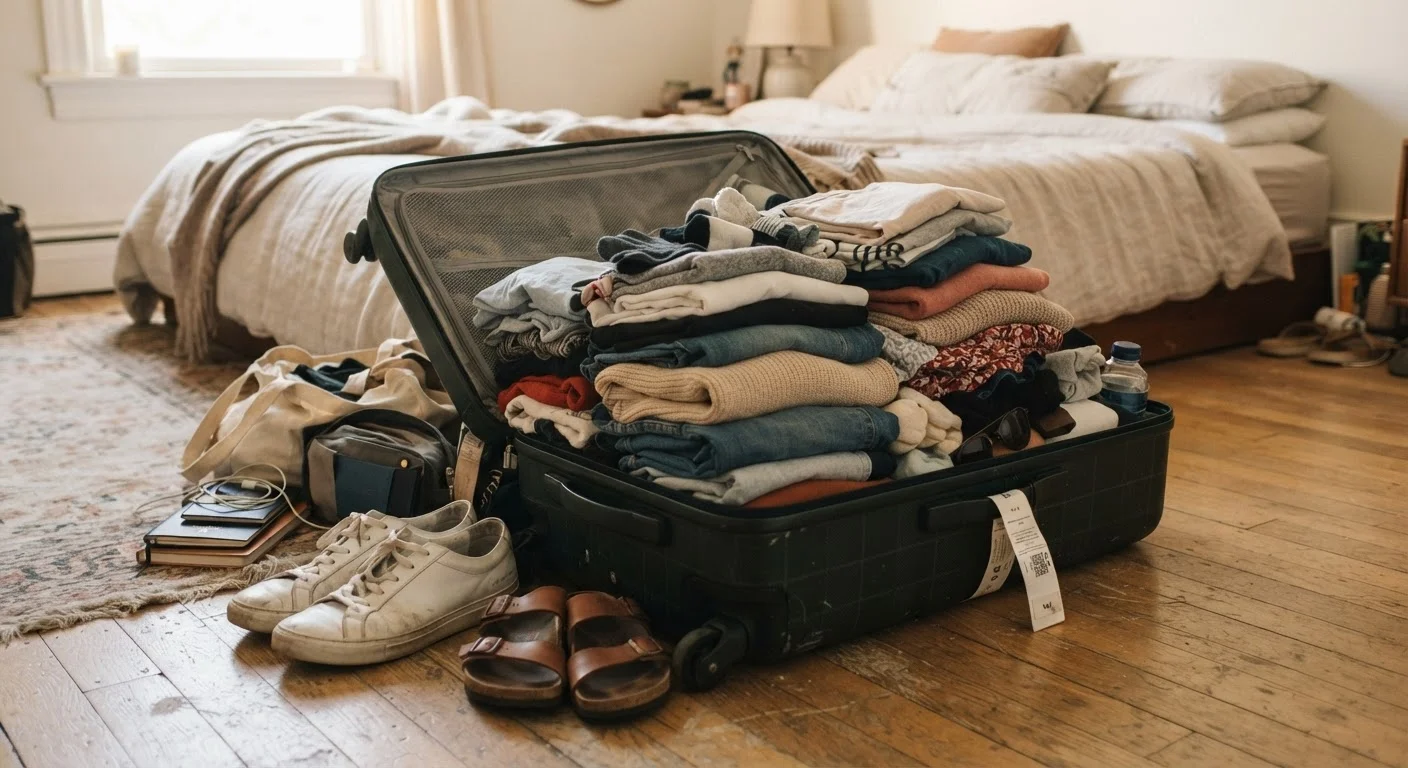
Why Overpacking Is a Planning Problem, Not a Packing Problem
Most travelers approach the bag too late in the process. The suitcase comes out the night before departure, and items get added based on memory, habit, and anxiety rather than any systematic review of what the trip actually requires. The result is predictable: too much of the wrong things and not enough confidence in what's there.
Overpacking isn't solved by packing more carefully — it's solved by planning more deliberately. When you understand what you'll actually be doing each day, what the weather will realistically be, and how much access you'll have to laundry or local stores, the bag almost fills itself at the right level. See our trip planning framework for a structured approach to building that foundation before you ever touch a suitcase.
The mistakes below aren't about carelessness. They're rooted in predictable thinking patterns that most travelers default to under time pressure and uncertainty. Recognizing them is the first step to changing them.
Packing without a destination-specific plan, defaulting instead to 'everything I might need.'
Why it happens: Most travelers start by pulling out a suitcase and filling it from memory rather than building a list around the actual activities, climate, and duration of the specific trip.
Packing duplicate or backup versions of items already being brought.
Why it happens: The fear of running out — a second pair of jeans, a backup phone charger, an extra set of toiletries — feels like smart preparation but quickly adds pounds without adding real value.
Choosing a bag that is too large for the actual trip length.
Why it happens: Travelers often select luggage based on availability or habit rather than trip duration. A large checked bag creates psychological pressure to fill the space.
Never reviewing what was actually used after returning from a trip.
Why it happens: Post-trip unpacking is a chore most people want to finish quickly, so nothing gets evaluated — meaning the same unused items get repacked on the next trip.
Treating toiletries and liquids as unlimited cargo.
Why it happens: Full-size bottles are already at home and feel wasteful to leave behind, but they add significant weight and often exceed carry-on liquid rules.
Building Habits That Stick Across Every Trip
Fixing overpacking once is relatively easy. The harder task is building a repeatable process that works regardless of destination, season, or trip length. That requires treating packing as a system rather than a one-off task.
Don't Pack for Every Worst-Case Scenario
Planning for every possible emergency — a formal dinner, a sudden cold snap, a beach day that wasn't on the itinerary — results in a bag packed for six trips instead of one. Most destinations have pharmacies, laundromats, and stores. Buying a forgotten item locally is almost always cheaper and easier than hauling it from home.
Start by keeping a master packing list — a living document you refine after each trip based on what you actually used. This list becomes your baseline, and you subtract from it depending on destination rather than starting from scratch each time. Pairing this habit with preparation steps experienced travelers rely on creates a more complete pre-departure routine.
For travelers considering the shift to carry-on-only, it's worth understanding the real tradeoffs involved. Our honest look at carry-on-only travel covers what changes — and what you give up — when you ditch the checked bag entirely. Packing lighter also has meaningful financial implications: fewer or no baggage fees is one of the more consistent ways to reduce trip costs, which fits into the broader picture of traveling affordably from start to finish.
The travelers who pack consistently well aren't minimalists by nature — they've just built a feedback loop that gets more accurate over time. A little structure before every trip is the habit that makes the difference.
~50%
Travelers who report overpacking regularly
Travel industry surveys consistently find that roughly half of leisure travelers say they pack more than they actually use on most trips.
$70+
Average round-trip checked bag fee on major US carriers
Domestic round-trip baggage fees on major US airlines commonly range from $60 to $100+ per bag, depending on the carrier and fare class.
The content on this site is for informational purposes only and is not a substitute for professional advice. Always consult a qualified professional for guidance specific to your situation.