

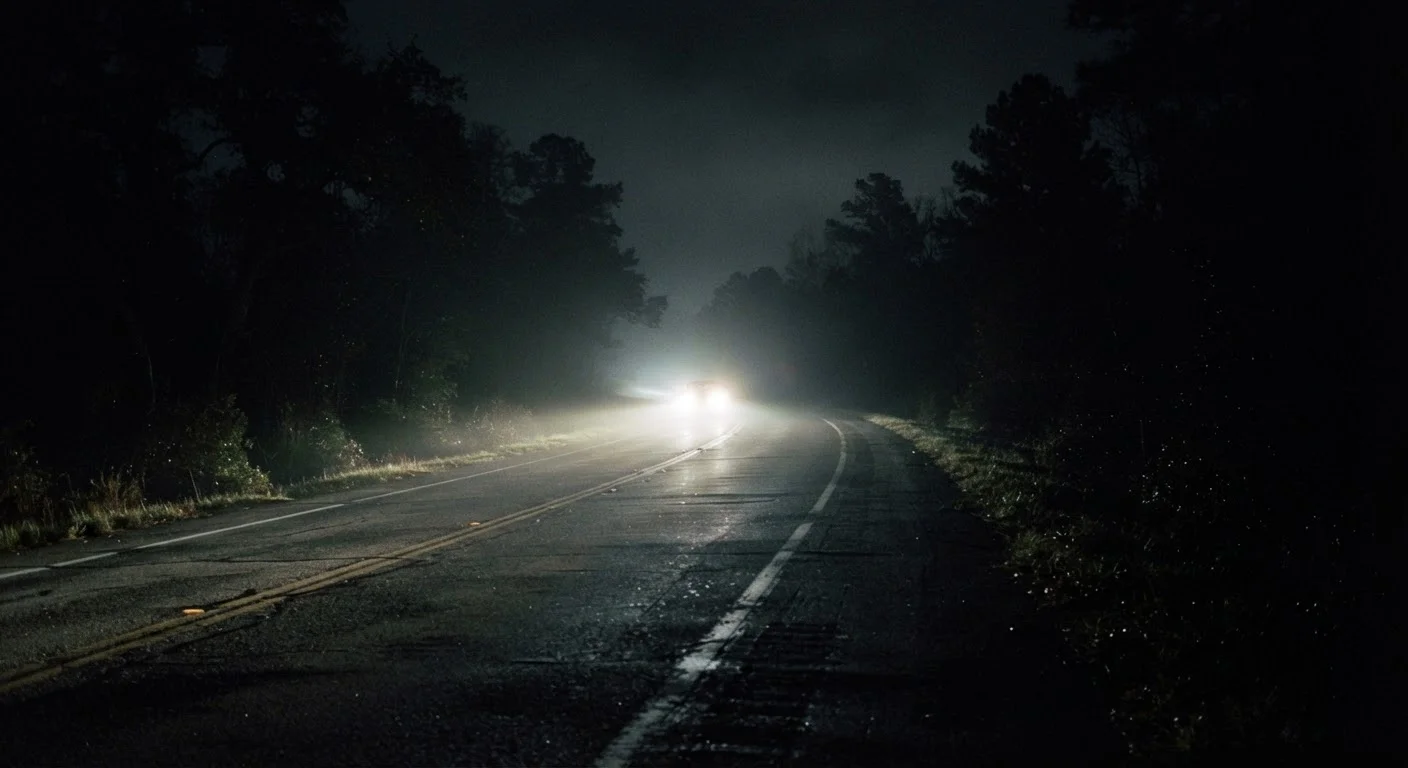
Why Nighttime Driving Carries Higher Risk
Roughly a quarter of all driving happens after dark, yet night driving accounts for a disproportionate share of traffic fatalities. The core reason is simple: human vision is built for daylight. At night, your ability to perceive depth, judge speed, and see color all degrade. Peripheral vision — critical for spotting hazards at the edge of the road — narrows significantly in low light.
Glare compounds the problem. Oncoming headlights, especially high-intensity LEDs, can temporarily overwhelm the eye's night adaptation and leave you functionally blind for a moment or two. On a road where things can change in the span of a few car lengths, that's a serious exposure.
Fatigue adds a third layer. The body's circadian rhythm naturally promotes sleepiness after dark, meaning that many night drivers are fighting biology at the same time they're fighting reduced visibility. This combination — not any single factor alone — is what makes after-dark driving uniquely demanding. Understanding it is the first step to managing it effectively. See our broader guide to safer driving habits for context on how nighttime risk fits into overall road safety.
Fatigue at Night Is a Crash Risk
Drowsy driving impairs reaction time in ways that closely resemble alcohol impairment. The combination of darkness and fatigue is especially dangerous because reduced stimulation makes drowsiness harder to detect until it's severe. If you find yourself drifting, blinking heavily, or losing track of recent miles, pull off the road at the earliest safe opportunity. No destination is worth the risk.
Preparing Your Vehicle and Yourself
Good preparation before you ever turn the key makes a meaningful difference. On the vehicle side, the priorities are clear: working lights, clean lenses, and a clear windshield. Many drivers are surprised by how much light output they've lost to oxidized headlight covers — it's a gradual change that's easy to miss until you compare old lenses to new ones.
On the personal side, your eyes need time to adapt, and your schedule matters. If you've been staring at screens for hours before a late-night drive, your visual system isn't primed for darkness. A few minutes away from bright light before you start helps. If you're already tired before you leave, be honest with yourself about whether the trip can wait.
Working Headlights and Taillights
Illuminate the road ahead and make your vehicle visible to others — the single most important equipment check before driving at night.
Clean Windshield (Inside and Out)
Interior film and exterior grime both scatter oncoming light into distracting glare; a clean windshield reduces this significantly.
Dashboard Dimmer Control
Reducing interior brightness improves your eyes' adaptation to the dark outside, reducing eye strain on long night drives.
Anti-Glare Rearview Mirror Setting
Most mirrors have a manual or auto-dimming setting that reduces glare from headlights behind you without blocking your view.
What you will need
For drivers who wear glasses or contacts, an anti-reflective coating on lenses can meaningfully reduce glare. If night driving feels harder than it used to, changes in vision — including the development of conditions like cataracts — are worth discussing with an eye care professional. Vision and reaction time change with age, and what was easy at 30 may need active management at 60.
Step-by-Step: Adjusting Your Technique After Dark
Night driving isn't a completely different skill — it's the same fundamentals applied with tighter margins. The steps below walk through the adjustments that matter most, from the moment you start your vehicle to the decisions you make on the road.
Don't Overdrive Your Headlights
Standard low-beam headlights illuminate roughly 160–200 feet ahead. At 60 mph, a vehicle needs about 300 feet to stop in an emergency. That gap — traveling faster than your lights allow you to see and react — is called overdriving your headlights, and it's a leading factor in nighttime crashes. Slow down enough that you can always stop within the distance your lights reveal.
Check your lights and windshield before you leave
Walk around your vehicle and confirm that headlights, taillights, and brake lights are all working. Cloudy or yellowed headlight lenses can reduce light output dramatically — a condition that's easy to overlook until you're already on a dark road. Also clean both sides of your windshield. Interior film — common from outgassing plastics — scatters oncoming light into a wide glare pattern that's hard to see through.
Give your eyes time to adjust before driving in full darkness
Human eyes can take 20–30 minutes to fully adapt to low-light conditions — a process called dark adaptation. Avoid staring at your phone screen or bright interior lights right before a night drive. Even a few minutes of reduced light exposure before you start helps your vision perform closer to its nighttime potential.
Set your speed so you can stop within your headlight range
This is the core rule of safe night driving. Standard low beams cover roughly 160–200 feet. At higher speeds, your stopping distance exceeds that range — meaning you could encounter an obstacle (a pedestrian, a stopped vehicle, an animal) before you have time to react and stop. Reduce your speed compared to what you'd drive in daylight on the same road, even if it feels overly cautious.
Use high beams correctly — and dim them for oncoming traffic
On unlit roads with no oncoming traffic, high beams can nearly double your visible range. Use them. But switch back to low beams when you see another vehicle approaching, and do so early — at around 500 feet. In most states, law requires dimming for oncoming traffic and for vehicles you're following. Blinding another driver with your high beams creates a hazard as real as any road condition.
Increase your following distance
At night, you have less time to read what's happening ahead of you — brake lights may be the first signal you get that traffic is slowing. Extend your following distance beyond the standard 3-second rule, aiming for 4–5 seconds in darkness. This applies especially on highways where speeds are higher and reaction windows are shorter. See our guide on following distance and stopping distances for the numbers behind this recommendation.
Watch for pedestrians, cyclists, and animals
These hazards are far harder to spot at night. Pedestrians without reflective gear can be nearly invisible until they're within your headlight range — sometimes less than 2 seconds at highway speeds. Scan the edges of the road actively rather than focusing only on the center lane. In rural areas, be especially alert for deer and other wildlife, which are most active at dawn and dusk but present throughout the night.
Manage fatigue actively — and stop if you need to
Darkness itself is fatiguing; the reduced visual stimulation can accelerate drowsiness even when you feel alert. Know your personal warning signs: heavy eyelids, drifting attention, trouble holding your lane. If you notice them, act immediately — pull into a well-lit rest area, take a short break, or, when possible, switch drivers. Pushing through drowsiness is not a viable strategy.
Use Road Markings as Your Guide
On unlit rural roads, keep your eyes on the right edge line or fog line rather than staring into oncoming headlights. This protects your night-adapted vision and helps you track your lane position accurately. It's a small habit shift that experienced night drivers rely on consistently.
If you drive frequently at night and want to extend these principles to other challenging conditions, our guide to bad-weather driving covers how rain, fog, and ice layer additional challenges on top of what you've learned here.
The content on this site is for informational purposes only and is not a substitute for professional advice. Always consult a qualified professional for guidance specific to your situation.