

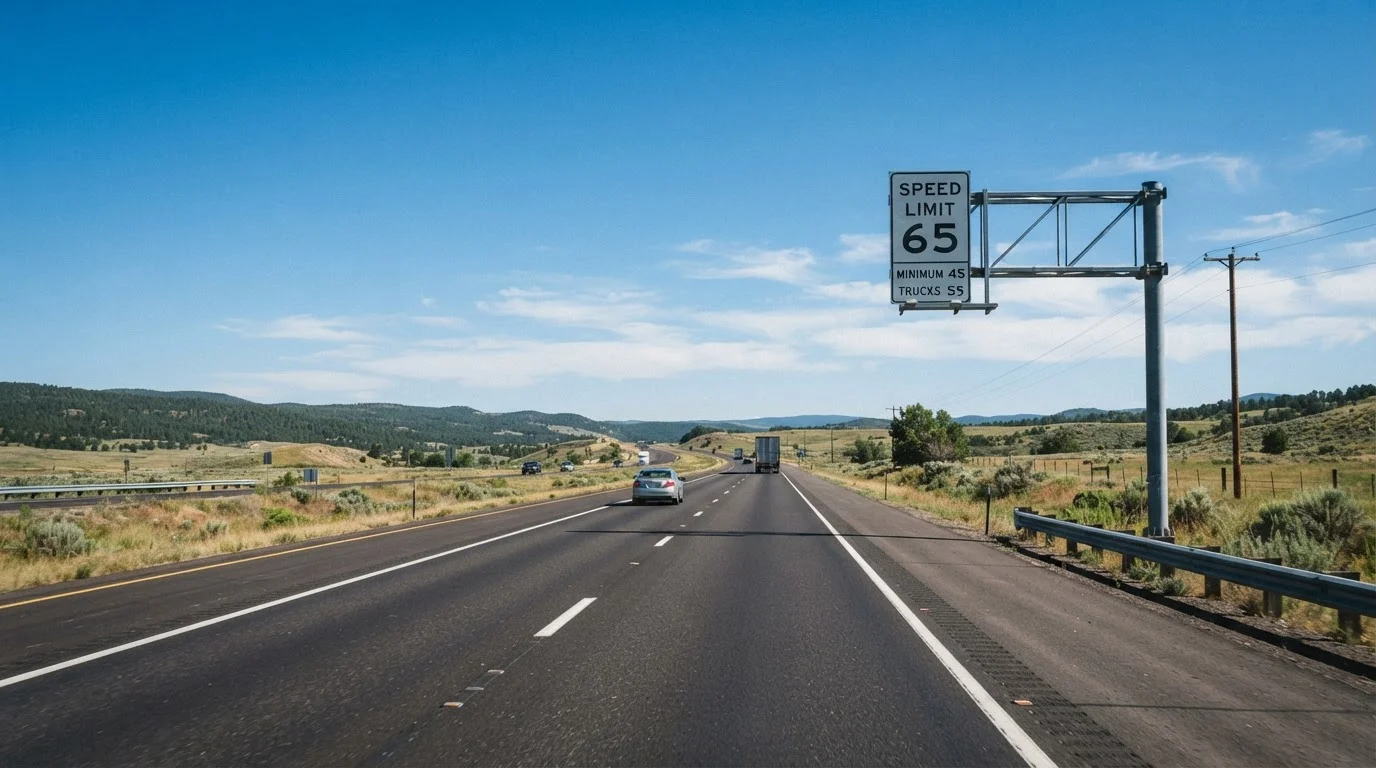
Posted Speed Limits: The Numbers on the Signs
When most drivers think of speed limits, they're thinking of posted limits — the white rectangular signs with black numbers you see on virtually every road in America. These are legally established maximums set by state or local government and enforced by law enforcement. Exceeding them is a traffic violation, period.
Posted limits are determined based on road design, traffic volume, and engineering studies. Highways differ from neighborhood streets; rural roads differ from urban corridors. Those differences are intentional. When you see a number on a white sign, that's the legal ceiling for that stretch of road under normal conditions. For a broader look at road rules that affect everyday driving, see our guide to U.S. road rules every driver should know.
~29%
Speeding-related traffic fatalities
According to the National Highway Traffic Safety Administration (NHTSA), speeding was a factor in approximately 29% of all U.S. traffic fatalities in a recent reporting year.
85 mph
Highest posted speed limit in the U.S.
A toll road in Texas holds the highest posted speed limit in the country at 85 mph, while many other states cap interstates at 65–70 mph.
50+
Different sets of speed limit laws
Because speed limits are primarily governed by state law, there are more than 50 distinct legal frameworks across U.S. states and territories.
Statutory Speed Limits: The Law Without a Sign
Here's something many drivers don't realize: speed limits can apply even when no sign is visible. These are called statutory speed limits — default maximums written into state law for specific road categories. They exist so that every road has a legally enforceable limit, whether it's marked or not.
Common examples include:
- Residential streets: typically 25 mph in most states
- School zones: often 15–25 mph during school hours
- Alleys: commonly 15 mph
- Unmarked rural roads: state-dependent, often 55 mph
The exact numbers vary by state, so it's worth knowing your state's defaults. Claiming you didn't see a sign won't exempt you from the statutory limit — the law assumes drivers know these rules before getting behind the wheel.
Know Your State's Default Limits
Before driving in an unfamiliar state, take two minutes to look up its statutory speed limits — particularly for residential roads and school zones. Your own state's rules may not match. Most state DMV websites publish this information clearly in their driver handbooks.
Advisory Speed Limits: Recommendations, Not Requirements
Advisory speed limits appear on yellow signs — not white — and indicate the suggested safe speed for a specific road feature, such as a sharp curve, a highway on-ramp, or a winding mountain pass. These are not legal maximums. You won't get a speeding ticket simply for exceeding the number on a yellow sign.
That said, ignoring advisory limits isn't without risk or consequence. If you take a curve marked at 25 mph at 45 mph and lose control, investigators and insurers will likely factor that speed into their assessment of fault. Advisory limits are based on engineering standards for vehicle handling — they exist because exceeding them meaningfully increases crash risk. Treating them as optional is one of the subtler mistakes drivers make. Our article on why speeding is riskier than it feels covers the physics behind these decisions in more detail.
Conditions Change What's Actually Safe
Even if you're at or under the posted limit, you can still be driving unsafely. Most states have what's called a basic speed law — sometimes worded as driving at a 'reasonable and prudent' speed — which requires drivers to adjust for conditions regardless of the posted number. Rain, fog, ice, heavy traffic, construction zones, and nighttime visibility all demand lower speeds than clear, dry daylight conditions.
A driver doing 65 mph on a dry interstate is following the law. The same driver doing 65 mph in a heavy snowstorm may be violating the basic speed law even if 65 is the posted limit. Weather-related crashes frequently involve drivers who were technically within the legal limit but not driving for conditions. For practical guidance on adjusting your speed and technique in bad weather, see our bad weather driving guide.
The same logic applies to adjusting your technique between highway and city driving — the risks look different in each environment, and your speed should reflect that.
Speed Limits in Work and School Zones
Work zones and active school zones often carry reduced speed limits and heightened fines — sometimes double the standard penalty. These limits may be in effect only during certain hours or when workers or children are present. Always watch for posted signs indicating when reduced limits apply; enforcement in these zones tends to be strict.
Frequently Asked Questions
Statutory speed limits still apply. Each state sets default speed limits for road types — residential streets, rural highways, school zones — that are legally binding even without a sign. Check your state's driver handbook for the specific numbers.
Advisory limits are not legally enforceable speed maximums. However, if you're driving faster than the advisory speed and crash or endanger others, that speed can be used as evidence of negligent or reckless driving.
Yes. In many states, you can be cited for driving at the posted limit if conditions — such as heavy rain or fog — make that speed unsafe. The legal standard in most states is 'reasonable and prudent' speed given conditions.
Yes, significantly. Some rural interstates allow up to 85 mph in Texas, while many urban interstates cap at 55 mph. Always pay attention to posted signs when crossing state lines or entering unfamiliar areas.
White signs indicate legally posted speed limits — they are mandatory. Yellow signs indicate advisory speeds, typically for curves, ramps, or other specific road features, and are recommendations rather than legal maximums.
School zones have lower statutory and posted limits because children are present and unpredictable. These reduced limits — often 15–25 mph — apply during specific hours and are strictly enforced; fines are frequently doubled in active school zones.
The content on this site is for informational purposes only and is not a substitute for professional advice. Always consult a qualified professional for guidance specific to your situation.