

Why Calorie Count Alone Tells You Very Little
Two foods can share the same calorie count and deliver completely different nutritional experiences. A 150-calorie serving of plain potato chips and a 150-calorie serving of cooked lentils both register identically on a calorie counter — but their nutritional profiles couldn't be more different. The lentils bring protein, fiber, iron, folate, and potassium. The chips bring primarily starch and salt.
This gap is precisely what nutrient density captures. It reframes the question from how many calories? to what am I getting for those calories? That shift in framing can meaningfully change how you evaluate food choices without requiring complicated tracking or strict rules.
As calorie counting alone paints an incomplete picture of nutrition, nutrient density offers a more complete lens — one that asks about food quality, not just quantity.
~90%
Americans fall short of vegetable intake recommendations
According to U.S. Dietary Guidelines data, the vast majority of Americans do not meet recommended intakes for vegetables — among the most nutrient-dense food categories.
2x+
More micronutrients in whole vs. refined grains
Research comparing whole and refined grain products shows whole grains can contain substantially more fiber, B vitamins, and minerals due to retention of the bran and germ.
Top 5
Nutrient-dense food groups in USDA guidance
The USDA Dietary Guidelines consistently highlight vegetables, fruits, legumes, whole grains, and lean proteins as the foundation of a nutrient-rich dietary pattern.
How to Recognize a Nutrient-Dense Food
There is no single universal score that labels foods as nutrient-dense or not, but several practical patterns hold across most nutrition research:
- High amounts of vitamins and minerals relative to calories — leafy greens, organ meats, shellfish, and eggs fit this description.
- Significant fiber content — legumes, whole grains, fruits, and vegetables tend to deliver meaningful fiber alongside micronutrients.
- Minimally processed ingredients — the closer a food is to its whole form, the more likely it retains the nutritional content it started with.
- Limited added sugar, sodium, and refined fats — these components add calories without adding micronutrient value.
Learning to read a food label sharpens this skill considerably. Reading a nutrition label without getting lost helps you decode percent daily values and ingredient lists so you can spot where real nutrients are — and aren't — in the foods you buy.
A Simple Heuristic for the Grocery Store
When comparing two similar products, look at the nutrition label's micronutrient section — vitamins A, C, D, calcium, iron, and potassium. The option delivering more of these per serving, without a significantly higher calorie count, is generally the more nutrient-dense choice. This quick check works especially well for comparing grains, dairy alternatives, and packaged snacks.
Nutrient Density in the Context of a Whole Diet
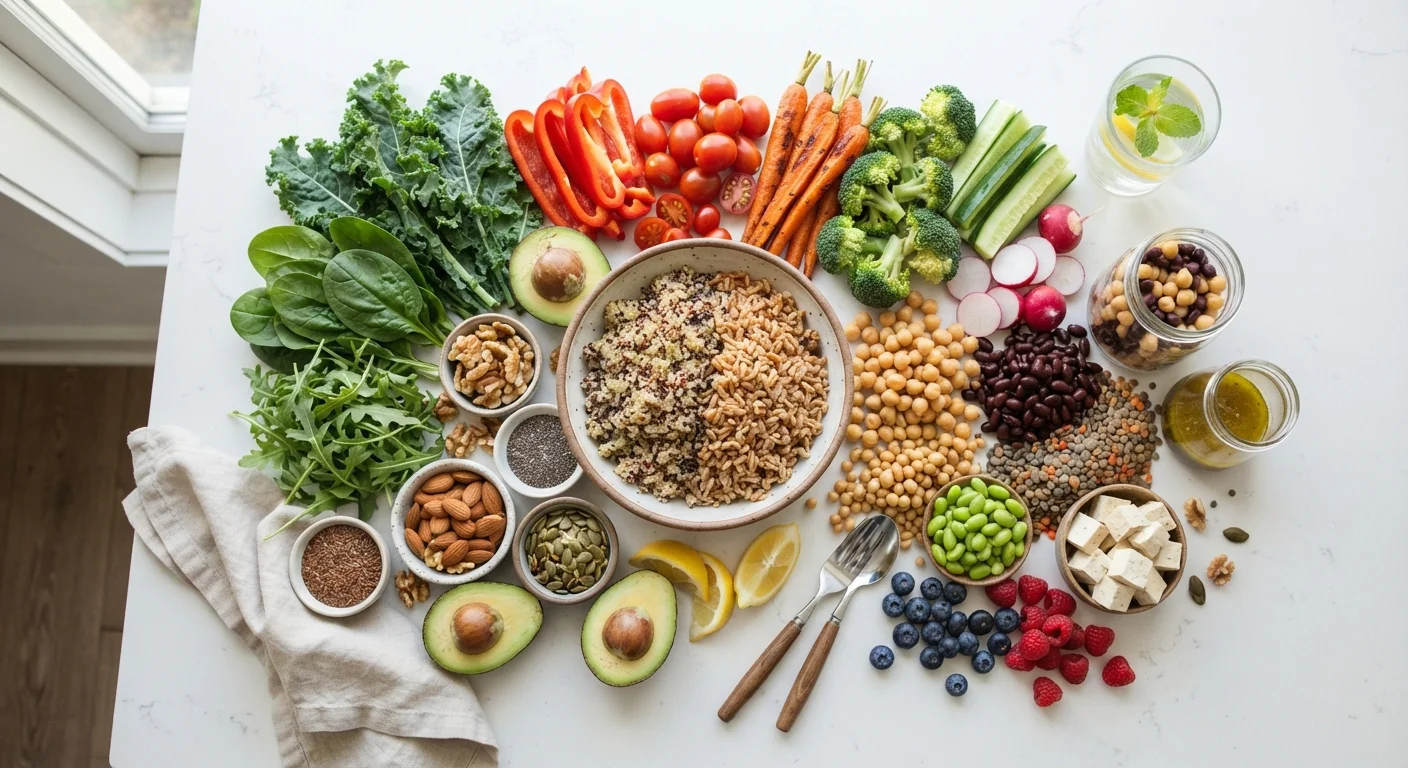
Nutrient density is most useful as a guiding principle rather than a rigid scoring system. A diet built predominantly around nutrient-dense foods — vegetables, fruits, legumes, whole grains, lean proteins, and healthy fats — naturally aligns with the eating patterns that nutrition research most consistently supports.
Eating patterns that nutrition research consistently supports, such as Mediterranean-style and DASH diets, are characterized by an abundance of whole, minimally processed foods. That overlap is not a coincidence — nutrient density is part of what makes those patterns effective.
It is also worth noting that nutrient density does not mean every food in your diet must be maximally nutritious. Foods serve social, cultural, and sensory purposes too. The goal is a dietary pattern where the majority of choices are nutrient-rich, leaving room for flexibility. A foundation for everyday balanced eating is a useful starting point if you are new to thinking about food this way.
Putting Nutrient Density to Practical Use
Applying this concept day-to-day does not require memorizing charts. A few habits translate the idea into action:
- Anchor meals around vegetables and legumes. These consistently rank among the most nutrient-dense food categories across research.
- Choose whole grains over refined ones where it fits your preferences — brown rice, oats, and whole wheat bread retain more fiber and micronutrients than their refined counterparts.
- Think about what you are adding, not just removing. Nutrient density is an additive framework — it encourages crowding in nutritious foods rather than simply cutting things out.
- Apply it across eating patterns. Whether you eat primarily plant-based or include animal products, nutrient density applies. See how the trade-offs play out in plant-based vs. omnivore diets.
“The quality of the diet — measured largely by the nutrient density of the foods consumed — may matter as much as, or more than, the total quantity of energy intake for long-term health.”
— Walter Willett, Professor of Epidemiology and Nutrition, Harvard T.H. Chan School of Public Health
This article is for general informational and educational purposes only and does not constitute medical or dietary advice. Consult a qualified healthcare provider or registered dietitian for guidance specific to your health needs.
Frequently Asked Questions
Nutrient density is a measure of how much nutrition — vitamins, minerals, fiber, protein — a food provides compared to its calorie count. Foods that deliver a lot of nutrition for relatively few calories are considered nutrient-dense.
No. A food can be relatively high in calories and still be nutrient-dense. Avocados and nuts, for example, are calorie-rich but packed with healthy fats, fiber, vitamins, and minerals. Low-calorie foods, like diet sodas, can be essentially nutrient-free.
Leafy greens, cruciferous vegetables, legumes, eggs, fish, whole grains, and berries are commonly cited as highly nutrient-dense. They provide significant vitamins, minerals, and other compounds relative to their calorie content.
Yes. Prioritizing whole, minimally processed foods over heavily processed options is a practical way to apply the concept. Checking nutrition labels for vitamins, minerals, and fiber per serving can also help — see our guide on <a href="/health-wellness/nutrition-basics/reading-a-nutrition-label-without-getting-lost">reading a nutrition label</a>.
They serve different purposes. Nutrient density focuses on food quality, while calorie counting addresses energy balance. Many nutrition experts suggest that improving food quality through nutrient density often makes managing energy intake more natural and sustainable.
Research consistently associates diets rich in whole, minimally processed, nutrient-dense foods with lower risks of chronic disease. However, individual health outcomes depend on many factors, and this information is general education, not personal medical advice.
The content on this site is for informational purposes only and is not a substitute for professional advice. Always consult a qualified professional for guidance specific to your situation.