

Why Physical Activity Isn't the Whole Picture
Walk the dog, play with the cat, done — right? Not quite. While daily movement is essential, it addresses only one dimension of your pet's wellbeing. Animals evolved with complex behavioral repertoires: hunting, foraging, problem-solving, social negotiation. In a domestic setting, many of those drives go unfulfilled even when a pet gets regular outdoor time.
The result is often subtle but real: a dog who's physically tired but still restless, a cat who bats objects off shelves, a parrot who over-grooms. These aren't signs of a "bad" pet — they're signs of an understimulated one. Physical exercise and mental enrichment serve different neurological functions, and a fulfilling daily routine needs both.
The good news: mental enrichment doesn't require expensive equipment or hours of extra time. It requires understanding what your specific pet finds engaging — and building small, consistent habits around that.
14%
Dogs showing destructive behavior from boredom
Behavioral surveys consistently identify boredom and under-stimulation as among the most common triggers for destructive behaviors in pet dogs.
300M
Olfactory receptors in a dog's nose
Compared to approximately 6 million in humans, this figure — cited widely in veterinary and comparative biology literature — illustrates why scent work is so cognitively demanding for dogs.
5–10 min
Effective enrichment session length
Short, frequent sessions are generally more effective than one long daily activity, according to applied animal behavior guidance from veterinary behaviorists.
Core Enrichment Methods That Fit Into Real Life
Puzzle Feeders and Slow Feeder Bowls
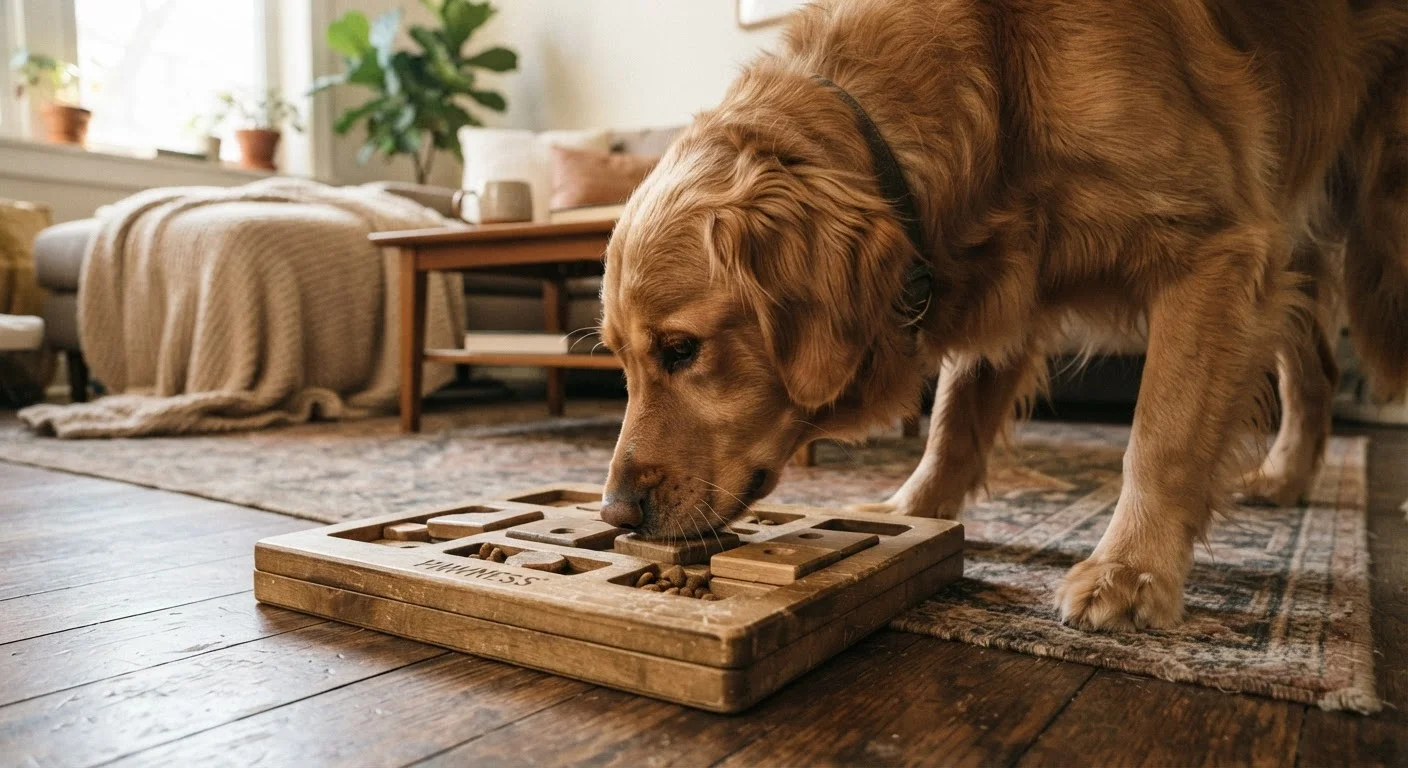
Feeding is already part of your day — the only change is making it cognitively engaging. Puzzle feeders require pets to manipulate compartments or surfaces to release food, turning a 30-second meal into a 10-minute mental workout. Slow feeder bowls serve a similar function with less complexity, making them a good starting point for pets new to enrichment. These tools are particularly effective for dogs and cats but are also used with rabbits and birds.
Scent Work
A dog's nose contains up to 300 million olfactory receptors — compared to about 6 million in humans. Scent-based activities tap directly into this natural capability. Simple nose work involves hiding small treats around a room and letting your dog find them using scent alone. You can scale this activity from easy (treats in plain sight) to genuinely challenging (hidden in closed cardboard boxes with holes). Even 10 minutes of scent work is mentally exhausting in the best way.
Training Bursts
Short training sessions — three to five minutes, a few times a day — build both cognitive engagement and communication between you and your pet. Teaching a new cue, practicing impulse control exercises, or running through a short sequence of known behaviors all count. These sessions strengthen your pet's ability to focus and respond, which carries benefits into other areas of daily life. Predictable training windows woven into a fixed schedule tend to yield the most consistent results.
Start Small and Build Gradually
If your pet has never used a puzzle feeder, begin with the easiest level and let them succeed quickly. Frustration early on can make a pet avoid the activity altogether. Once they consistently solve the beginner version, move to something more challenging. The goal is a satisfying challenge — not an impossible one.
Building Enrichment Into Your Existing Routine
The most common reason enrichment doesn't stick is that it gets treated as optional — something to do when there's extra time. Instead, attach it to things you already do. Feed your dog's breakfast through a puzzle feeder rather than a bowl. Hide a portion of your cat's kibble around the house before you leave for work. Run a two-minute training session while your coffee brews.
This approach — sometimes called habit stacking — means enrichment becomes automatic rather than effortful. See our morning routine guide for practical ways to layer pet care tasks without adding stress to your schedule. You can also use the daily pet care checklist to track enrichment alongside feeding, water, and exercise.
Tailoring Enrichment to Your Pet's Species and Personality
Not all enrichment fits all animals. Dogs generally thrive on social interaction, physical challenges, and nose work. Cats are more solitary hunters — they respond well to prey-simulating toys, vertical climbing spaces, and foraging opportunities. Small animals like guinea pigs and rabbits benefit from environmental complexity: tunnels, foraging trays filled with hay and hidden vegetables, and opportunities to dig.
Personality matters as much as species. A high-energy border collie needs more cognitive challenge than a laid-back basset hound. A timid cat may need enrichment that feels safe and low-pressure before progressing to more complex games. Observe your pet's reactions and adjust — if they disengage quickly, simplify. If they master something too easily, add complexity.
For homes with multiple animals, managing enrichment across different pets requires some planning to avoid competition and ensure each animal gets appropriate stimulation. Even small adjustments — separate feeding puzzle sessions, rotating toys — make a meaningful difference. For a broader look at how enrichment supports your pet's overall health, the Pet Health Basics hub covers the core practices every owner should know.
This article is for general informational purposes only and is not a substitute for professional veterinary advice. If your pet shows new or concerning behavioral changes, consult a licensed veterinarian.
Frequently Asked Questions
Most dogs and cats benefit from at least 15–30 minutes of mentally stimulating activity spread across the day. This doesn't need to happen all at once — two or three short sessions work well. Small animals like rabbits or birds may need enrichment woven into their environment rather than active sessions.
No — mental enrichment complements physical activity rather than replacing it. Both are important for overall wellbeing. A dog that gets plenty of exercise but no cognitive stimulation can still develop boredom-related behaviors like excessive barking or chewing.
Common signs include destructive chewing, excessive vocalization, restlessness, attention-seeking behavior, and repetitive actions. These can also signal other health issues, so if behaviors are new or severe, consult your veterinarian to rule out underlying causes.
Puzzle feeders are generally safe when appropriately sized and designed for the species. Always supervise a pet the first few times they use a new feeder to ensure they aren't becoming frustrated or attempting to destroy it. Choose feeders rated for your pet's size and chewing strength.
Yes — senior pets especially benefit from gentle cognitive engagement, which may support brain health as they age. Low-intensity scent games and slow-feeder bowls are great options for pets with reduced mobility. Always adapt activities to your individual pet's physical condition.
Cats have strong predatory instincts that need an outlet even indoors. Activities like hide-and-seek feeding, wand toys with varied movement, and window perches for wildlife watching all provide meaningful stimulation. Enrichment is just as important for indoor cats as it is for dogs.
The content on this site is for informational purposes only and is not a substitute for professional advice. Always consult a qualified professional for guidance specific to your situation.