

Our Verdict
Raw diets occupy a genuinely complicated space in canine nutrition — some owners report meaningful improvements in their dogs, while veterinary organizations broadly caution against them due to documented safety and nutritional risks. The gap between anecdotal enthusiasm and peer-reviewed evidence is wide, and the stakes of getting it wrong are real. This is not a feeding approach to adopt casually or without professional input.
Best suited to owners who have already consulted a veterinary nutritionist, fully understand the food-safety protocols required, and have a healthy adult dog without immune, kidney, or digestive conditions.
What Is a Raw Diet for Dogs?
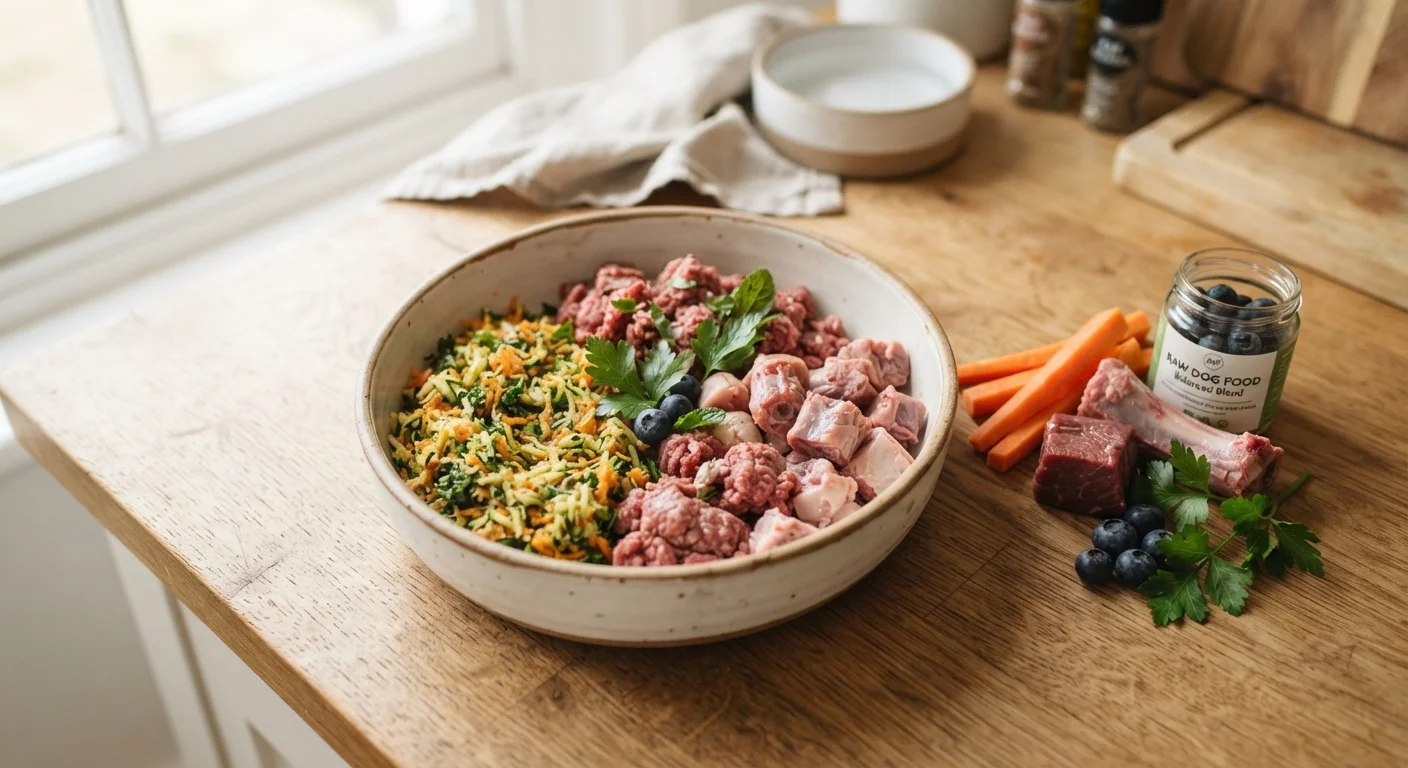
A raw diet — sometimes called BARF (Biologically Appropriate Raw Food) or a prey-model diet — typically includes uncooked muscle meat, raw meaty bones, organ meat, raw eggs, and sometimes fruit, vegetables, or dairy. The core idea is that dogs evolved eating whole, unprocessed prey and that cooking degrades nutrients or alters proteins in ways that reduce nutritional value.
Raw feeding can be home-prepared or purchased as commercially frozen or freeze-dried formulas. Both approaches vary widely in composition, and the quality and balance of ingredients can differ dramatically from one recipe or product to the next. For a broader look at what dogs genuinely require nutritionally, see what canine nutrition science actually shows.
What Proponents Claim
Advocates of raw feeding are vocal about the benefits they observe in their dogs. While these reports are largely anecdotal, they reflect genuine experiences that have driven significant interest in the approach.
Reported improvements in coat shine and skin health
Many owners switching to raw diets describe a visibly shinier coat and reduced skin irritation in their dogs. This is often attributed to higher fat content and the absence of fillers, though controlled studies confirming a causal link are limited.
Smaller, firmer stools noted by some owners
A higher meat-to-carbohydrate ratio typically results in less digestive waste. Raw-fed dogs often produce smaller, less odorous feces, which proponents interpret as a sign of better nutrient absorption.
Potential for greater dietary control
Preparing raw food at home allows owners to know exactly what goes into their dog's bowl — useful for dogs with specific ingredient sensitivities, as long as the diet is nutritionally complete and professionally reviewed.
Claimed improvements in energy and muscle tone
Some proponents report that their dogs appear leaner and more energetic on raw diets, which they link to higher protein bioavailability. These observations are self-reported and not consistently replicated in controlled research.
Dental health benefits from raw meaty bones
Chewing on raw bones can mechanically scrape plaque from teeth, and some advocates argue this reduces tartar buildup. Veterinary opinion is divided on this, given the concurrent risks that bones pose.
It is worth noting that many of these claimed benefits have not been rigorously studied in controlled trials. Improvements in coat or digestion, for example, may reflect other dietary changes happening simultaneously — such as reduced ultra-processed ingredients or lower carbohydrate content — rather than the raw format itself.
What Veterinarians and Researchers Observe
Major veterinary organizations — including the American Veterinary Medical Association (AVMA) and the American Animal Hospital Association (AAHA) — have issued formal guidance discouraging raw protein diets for dogs, citing documented public and animal health risks. Their concerns are grounded in published research rather than preference.
High risk of bacterial contamination
Raw meat commonly carries pathogens such as Salmonella, Listeria, and E. coli. Studies, including FDA sampling research, have found contamination rates in commercial raw pet foods significantly higher than in conventional pet foods.
Nutritional imbalances are common
Without formulation by a veterinary nutritionist, home-prepared raw diets frequently lack adequate calcium, vitamin D, or essential trace minerals. These deficiencies can cause serious skeletal and organ problems over time.
Bone ingestion poses choking and injury risks
Raw bones can splinter, lodge in the throat, or perforate the gastrointestinal tract. Veterinary emergency cases involving bone fragments are well-documented, even with raw (as opposed to cooked) bones.
Elevated risk for immunocompromised and young dogs
Puppies, senior dogs, and dogs undergoing treatment for illness have less capacity to fight off foodborne pathogens. Veterinary guidelines specifically caution against raw diets in these populations.
Human household members face infection exposure
Raw-fed dogs shed more bacteria through feces and saliva, raising contamination risks for people in the home. This is a documented public health concern, particularly for households with young children or immunocompromised individuals.
Higher cost and time commitment
Properly sourcing, portioning, and safely storing raw ingredients demands significantly more time and expense than feeding commercial diets. Errors in storage or preparation can quickly introduce health risks.
7.7x
Higher Salmonella detection in raw pet foods
An FDA study found Salmonella contamination in raw dog and cat food at rates approximately 7.7 times higher than in conventional dry pet foods sampled during the same period.
~60%
Nutritionally incomplete home-prepared raw diets
Research published in veterinary nutrition journals has found that a majority of home-prepared raw diet recipes analyzed fail to meet established minimum nutrient requirements for dogs.
Nutritional completeness is another consistent concern. Unless a raw diet is formulated by a board-certified veterinary nutritionist, it is common for home-prepared raw meals to be deficient in calcium, phosphorus, or key vitamins. Homemade diets of all kinds carry this risk, and raw feeding is no exception.
Food Safety: A Risk for Pets and People
One dimension of raw feeding that sometimes gets overlooked is the human health dimension. Dogs fed raw meat shed bacteria — including Salmonella and Campylobacter — in their feces and saliva at higher rates than dogs on cooked or commercial diets. This creates real exposure risk for people in the household, particularly children, elderly individuals, and anyone who is immunocompromised.
Households With Vulnerable Members
If anyone in your home is pregnant, under age five, over age 65, or living with a condition that affects immune function — including cancer treatment or autoimmune disease — raw pet food poses heightened zoonotic (animal-to-human) disease risk. The CDC and AVMA both recommend that these households avoid raw meat diets for pets. Speak with your physician and veterinarian together if you are unsure how to proceed.
Proper raw feeding requires rigorous kitchen hygiene: dedicated cutting boards, careful handwashing, and thorough sanitation of food preparation surfaces. For households with vulnerable members, this risk warrants a direct conversation with both your veterinarian and your own healthcare provider.
How Raw Diets Compare to Conventional Feeding
If you are weighing raw feeding against standard commercial options, it helps to understand what each format actually offers. Dry kibble and wet food each carry their own trade-offs in terms of nutrition, cost, hydration, and dental health — and both benefit from the regulatory safety net of AAFCO (Association of American Feed Control Officials) nutritional standards.
Raw diets, whether home-prepared or commercially packaged, are not subject to the same pre-market testing requirements. Commercial raw foods labeled "complete and balanced" must meet AAFCO profiles, but this does not guarantee that a specific batch is free of pathogens or optimally bioavailable. Part of responsible pet ownership is understanding these distinctions as part of your broader daily pet care routine.
This article provides general educational information about raw feeding practices and is not a substitute for personalized veterinary advice. Always consult a licensed veterinarian or board-certified veterinary nutritionist before making significant changes to your dog's diet.
The content on this site is for informational purposes only and is not a substitute for professional advice. Always consult a qualified professional for guidance specific to your situation.