

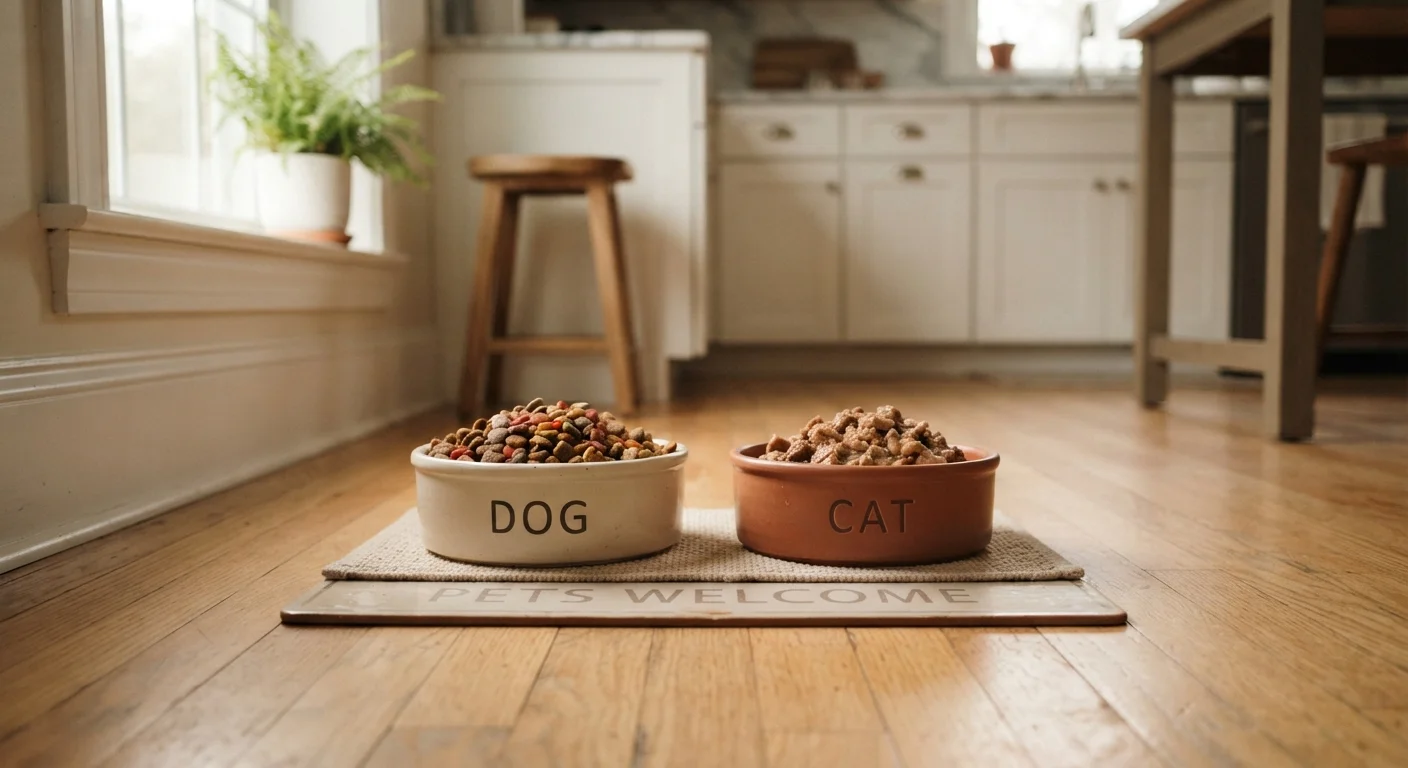
Option A
Dry Kibble
The convenient, shelf-stable everyday staple.
Best for: Pet owners who prioritize ease of storage, dental benefits, and lower per-meal cost.
Option B
Wet Canned Food
The moisture-rich, palatable alternative.
Best for: Cats, senior pets, or animals needing higher hydration or who are picky eaters.
What Sets These Two Formats Apart
The most fundamental difference between dry kibble and wet canned food comes down to moisture content. Dry kibble typically contains around 8–12% water, while wet food usually ranges from 70–80% water. That gap has real consequences for your pet's health, digestion, and how much actual nutrition they get per bite.
Beyond moisture, both formats can be nutritionally complete — meaning they can serve as a pet's sole diet — provided the label carries an AAFCO statement confirming they meet established nutrient profiles. Learning to read those labels matters more than the format itself. See our guide to pet food labels for a deeper look at ingredient lists and guaranteed analysis.
Kibble gets its dry texture through extrusion — a high-heat manufacturing process that shapes, cooks, and dries the food. Wet food is typically cooked inside sealed cans or pouches, which preserves moisture and requires no added preservatives to remain shelf-stable before opening.
| Criterion | Dry Kibble | Wet Canned Food |
|---|---|---|
| Moisture content | ~8–12% | ~70–80% |
| Cost per serving | Lower | Higher |
| Storage convenience | Room temp, long shelf life | Refrigerate after opening, 1–2 days |
| Palatability | Moderate aroma | Stronger aroma, often preferred |
| Dental benefit | Mild abrasive effect | Minimal |
| Hydration support | Low | High |
| Works with auto-feeders | Yes | No |
| Suitable for seniors/dental issues | Less ideal | Well suited |
Hydration, Dental Health, and Palatability
Hydration: Cats evolved as desert animals with a low instinct to seek water independently. Feeding a cat primarily dry kibble means they may chronically consume less fluid than is ideal — a concern linked to urinary tract issues and kidney strain over time. Wet food delivers moisture alongside nutrition, making it especially valuable for cats. Dogs tend to drink more water voluntarily, so hydration is less urgent but still worth considering, particularly in hot climates or for dogs prone to urinary crystals.
For more on how a cat's nutritional needs change across life stages, see our feeding guide for cats.
Dental health: A common claim is that the crunching action of kibble cleans teeth. The evidence here is modest — dry food does provide some mild abrasive benefit, but it is not a substitute for active dental care such as tooth brushing or veterinarian-recommended dental treats. Wet food, by contrast, leaves more residue on the gum line. Either way, dental hygiene should be addressed separately from food format.
Palatability: Wet food is generally more aromatic and appealing to finicky eaters, making it useful for pets recovering from illness or those with reduced appetite. Kibble's smell is subtler, though most healthy pets eat it readily.
70–80%
Moisture in wet canned pet food
Compared to roughly 8–12% in dry kibble, according to established pet food composition standards.
~50%
U.S. cats fed primarily dry food
Industry surveys suggest roughly half of domestic cats in the U.S. are fed dry food as their primary diet, raising ongoing veterinary discussions about feline hydration.
3–4×
Typical cost premium for wet food
On a per-calorie basis, wet canned food generally costs several times more than dry kibble, varying by brand and pet size.
Cost, Convenience, and Storage
Dry kibble costs considerably less per calorie than wet food and offers unmatched convenience. A sealed bag can sit in a pantry for weeks or months, and kibble works well in automatic feeders — a practical advantage for busy schedules. If you're deciding how often and when to serve meals, our comparison of feeding schedules vs. free feeding explores how meal structure affects pet health beyond food format.
Wet food, once opened, must be refrigerated and used within 1–2 days. The higher per-serving cost can add up quickly for larger dogs, making it less practical as a sole diet for bigger breeds. For cats and small dogs, the cost difference is more manageable.
Many pet owners settle on mixed feeding — using kibble as the daily base and adding a portion of wet food for palatability, hydration, or variety. This approach is nutritionally sound as long as portions are adjusted so total caloric intake stays appropriate. Overfeeding is just as possible with wet food as with dry.
This article provides general pet care information and is not a substitute for personalized veterinary guidance. Always consult your veterinarian before making significant changes to your pet's diet, especially if your animal has an existing health condition.
The content on this site is for informational purposes only and is not a substitute for professional advice. Always consult a qualified professional for guidance specific to your situation.