

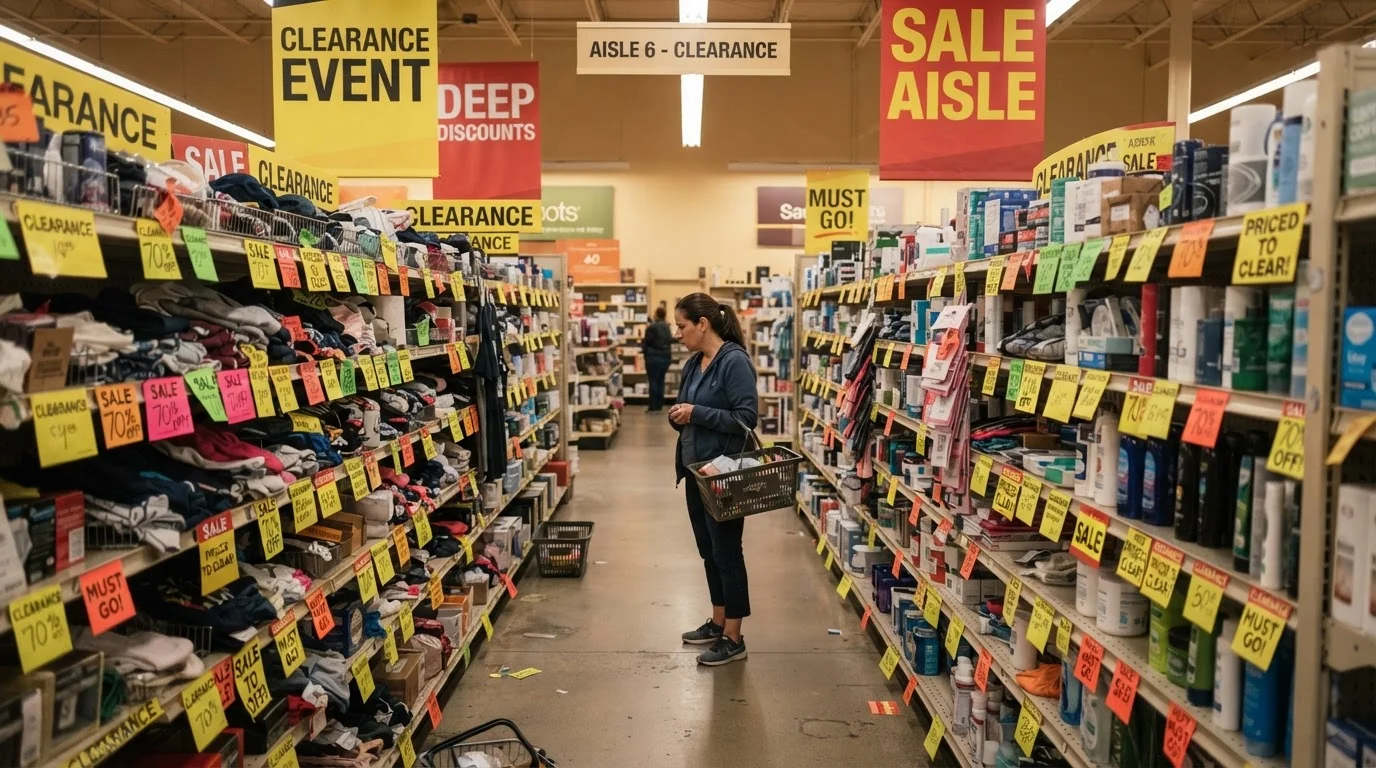
Why the Label Matters Before You Buy
Retail discount labels look similar at a glance, but they signal very different things about why a price dropped, what condition the item might be in, and whether you can return it. Treating these terms as interchangeable is one of the more costly assumptions shoppers make.
This reference explains exactly what each label means from a retail operations standpoint — not from a marketing standpoint. Understanding the difference helps you decide whether a marked-down price is a genuine opportunity or a situation that warrants caution.
| Clearance pricing | Permanent — item will not be restocked |
| Markdown pricing | Can be temporary or permanent |
| Liquidation channel | Usually sold outside the original store |
| Condition of liquidated goods | May include returns, shelf pulls, or damaged items |
| Return policy on clearance | Often restricted or final sale — varies by retailer |
| Price trajectory on clearance | Tends to decrease further over time until sold |
Clearance: The Store Is Exiting That Product
Clearance means the retailer has made a permanent business decision to stop carrying an item. The price reduction exists because the store needs to recover shelf space and remaining inventory cost — not because it wants to reward loyal shoppers. The item will not be reordered when stock runs out.
Key implications for shoppers:
- Price may drop further. Retailers often run multiple clearance markdowns on the same item. If stock is still sitting, another reduction may follow. Markdown schedules are more predictable than most shoppers realize.
- No restock means no size/color options later. What's on the shelf is all there is.
- Return policies are often restricted. Many retailers mark clearance as final sale. Verify before purchasing.
Clearance is not the same as a sale event. That distinction matters more than most people expect.
Clearance
A retailer's permanent reduction on items it intends to stop stocking. Once a product is marked clearance, it typically will not be reordered, and the price may continue to drop until the unit is sold.
Markdown
A price reduction applied by a retailer at any stage of a product's lifecycle — not necessarily tied to discontinuation. Markdowns can be temporary or permanent and are often driven by sales targets, inventory levels, or promotional schedules.
Liquidation
The process of converting excess, returned, or discontinued inventory into cash — often through third-party channels such as liquidation wholesalers or auction platforms. Liquidated goods frequently move outside the original retailer's stores.
Reference Price
The 'original' or 'regular' price shown alongside a sale or clearance price. Reference prices establish perceived value, but may not reflect the price a product actually sold at for any meaningful period.
Inventory Overhang
Excess stock a retailer needs to move — often the underlying reason a product enters clearance or gets sent to a liquidator. Overhang can result from overbuying, low sales velocity, or a seasonal reset.
Price Floor
The lowest price a retailer is willing to accept before routing unsold goods elsewhere. Clearance items approaching a retailer's price floor may soon disappear from shelves entirely.
Markdown: A Price Reduction at Any Stage
Markdown is a broader term used inside retail operations to describe any downward price adjustment. A clearance tag is one type of markdown, but not all markdowns lead to clearance. A retailer may temporarily mark down an item to meet a weekly sales target or respond to a competitor's pricing, then restore the original price later.
This distinction matters because a markdown label alone tells you little about the product's future availability. It could be:
- A planned promotional markdown with a set end date
- A permanent reduction ahead of a product update or model change
- An inventory-driven reduction with no formal clearance designation
Price tag codes and color systems can sometimes reveal whether a markdown is recent or part of a longer reduction cycle — useful context when deciding whether to wait for a further drop.
Reference Prices May Not Reflect Reality
When a clearance or markdown tag shows an 'original price,' that figure may reflect an inflated starting price rather than what most shoppers actually paid. Understanding how reference pricing works can help you evaluate whether a discount represents genuine value. See how 'sale price' can mislead for a closer look at this practice.
Liquidation: Outside the Normal Retail Channel
Liquidation occurs when a retailer or manufacturer converts unsold inventory into cash — typically through third-party buyers rather than in its own stores. Liquidated goods may end up at overstock retailers, auction platforms, or wholesale lots sold to resellers.
What liquidation often involves:
- Mixed condition merchandise. Liquidation pallets and lots frequently include customer returns, shelf pulls, overstock, and occasionally damaged units. Condition is not guaranteed.
- No manufacturer warranty in many cases. Items sold through liquidation channels may no longer carry the original warranty, or the warranty may be voided by the secondary sale.
- Pricing that reflects risk, not just discount. A steep price reduction on a liquidation item may compensate for condition uncertainty, not just excess inventory.
Liquidation is a legitimate channel, but it operates differently from retail clearance. Approach it with realistic expectations about product condition and after-sale support. Several common beliefs about clearance and liquidation don't hold up when examined closely.
3 Labels
Common retail discount types with distinct meanings
Clearance, markdown, and liquidation each signal a different inventory situation and a different risk-reward profile for shoppers.
Final Sale
Common return policy on clearance items
Many major retailers restrict or eliminate return windows on clearance merchandise — always verify before purchasing.
Using These Definitions When You Shop
Knowing what each label means shifts the right questions to ask before purchasing. Instead of reacting to the size of a discount, you can evaluate the actual situation:
| Label | Why the Price Dropped | Watch Out For |
|---|---|---|
| Clearance | Retailer exiting the product | Restricted returns, final stock |
| Markdown | Inventory or promotional adjustment | May be temporary; check reference price |
| Liquidation | Bulk inventory conversion via third party | Mixed condition, limited warranty |
For a grounded approach to evaluating discounts before they reach these stages, researching a product thoroughly before purchase reduces the chance of a markdown or liquidation price driving a regrettable decision. The Retail Know-How hub covers additional context on how store pricing systems operate.
The content on this site is for informational purposes only and is not a substitute for professional advice. Always consult a qualified professional for guidance specific to your situation.