

Why Your Brakes Make Noise
Brakes are designed to be largely silent during normal operation. When they start making noise, that's not random — it's the system telling you something has changed. The type of sound, when it happens, and how long it lasts all point to specific causes. This guide breaks those sounds down so you can describe the problem accurately and know how urgent it really is.
Part of being a prepared car owner is recognizing the difference between a noise that's mildly annoying and one that means stop driving now. See our complete maintenance overview for broader context on keeping your vehicle in good shape.
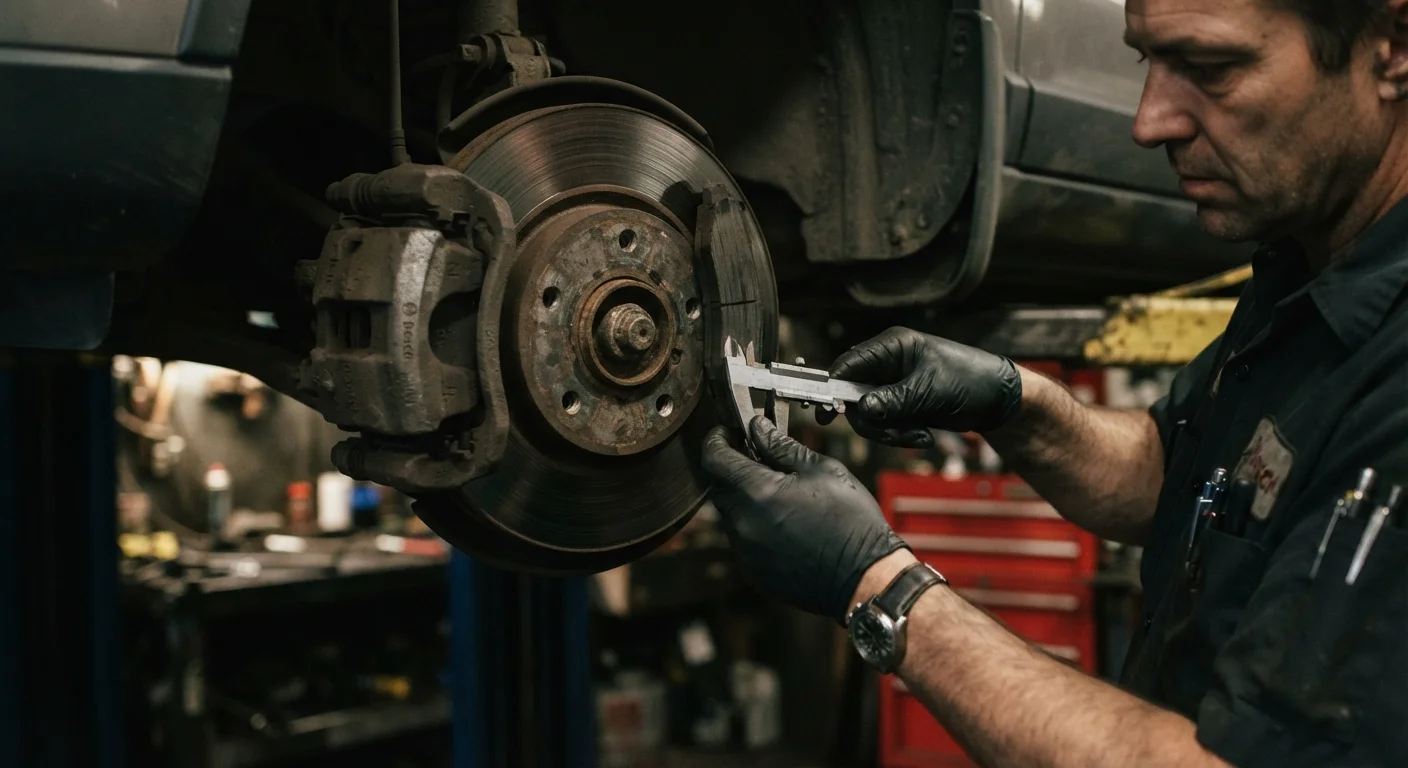
Brake pad
A friction material pressed against the rotor to slow the vehicle. Pads wear down over time and must be replaced when the material is depleted.
Rotor (brake disc)
The metal disc that rotates with the wheel. The brake pad clamps against it to create the friction that stops the car.
Wear indicator
A small metal tab built into most brake pads that makes a squealing sound when the pad material wears thin — a built-in warning to inspect or replace the pads.
Warped rotor
A rotor that has developed uneven thickness or a slight bend, usually from excessive heat or hard braking. Causes a pulsing or vibrating pedal during stops.
Brake caliper
The hydraulic clamp that squeezes the brake pads against the rotor when you press the pedal. A stuck or seized caliper can cause uneven braking and noise.
Brake fluid
The hydraulic fluid that transfers pedal force through the brake lines to the calipers. Low or contaminated fluid can result in a soft or spongy pedal feel.
Common Brake Noises and Their Causes
Use the quick-reference facts below alongside these descriptions to orient yourself quickly.
| Squeal cause | Worn pad material triggering the built-in wear indicator |
| Grinding cause | Metal-to-metal contact — pad worn completely through |
| Pulsing pedal cause | Warped or unevenly worn brake rotors |
| Clicking cause | Loose brake pad hardware or broken anti-rattle clip |
| Spongy pedal cause | Air in brake lines or brake fluid leak |
| Morning squeak | Usually normal — surface rotor rust clears after first few stops |
Squealing or Squeaking
A high-pitched squeal when you apply the brakes is often the most common complaint — and also one of the more benign ones, depending on context. Most brake pads include a small metal wear indicator that's engineered to squeal when the pad material wears thin. Think of it as a built-in alarm. If the squealing is consistent every time you brake, have your pads inspected soon — they're likely approaching the end of their service life.
Occasional squeaking, especially after rain or when the brakes are cold first thing in the morning, can be normal. Surface rust briefly forms on rotors overnight and typically clears after a few stops. If the noise disappears quickly and doesn't return during normal driving, it's usually nothing to worry about.
Grinding
Grinding is a more serious sound — a harsh, metallic noise that often means the brake pad material is completely worn through and the metal backing plate is contacting the rotor. At that stage, stopping distance increases, rotor damage accelerates, and repair costs rise significantly. If you hear grinding, treat it as urgent and have the vehicle inspected by a qualified mechanic as soon as possible. Continuing to drive on metal-to-metal brakes is a safety risk.
Pulsing or Throbbing Sensation
If the brake pedal pulses up and down under your foot when you stop — or if you feel vibration through the steering wheel during braking — the rotors are likely warped or have uneven thickness. Rotors can warp from excessive heat, hard braking, or simply age. A pulsing pedal isn't always accompanied by loud noise, but it's a sign that braking performance is compromised and rotor resurfacing or replacement may be needed.
Clicking or Rattling
A clicking sound specifically when you first press or release the pedal can point to a loose brake pad. Pads are held in place with hardware clips and shims; if those components wear out or a clip breaks, the pad can shift and produce a click or rattle. This is usually fixable with relatively straightforward hardware replacement.
Soft or Spongy Pedal With No Noise
Not all brake problems announce themselves with sound. A pedal that sinks toward the floor or feels soft and unresponsive suggests air in the brake lines or a fluid leak — both of which directly reduce braking force. This is a safety issue that warrants immediate professional attention.
What to Do Next
If you're hearing any of the sounds described above — particularly grinding — don't delay having them checked. Note when the noise occurs: during braking only, at low speeds, at highway speeds, or all the time. That detail helps a mechanic diagnose the issue faster.
When to Stop Driving Immediately
Grinding brakes, a soft pedal that sinks to the floor, or any sharp loss in stopping power are reasons to avoid driving until the vehicle has been inspected. These conditions can affect your ability to stop in an emergency. If you're uncertain, err on the side of caution and contact a qualified mechanic before getting back on the road.
Also worth noting: brake noise and tire condition are often connected. Uneven tire wear can change how weight is distributed during braking, which affects wear on your pads and rotors. Our guide on reading tread wear patterns covers what your tires may be telling you at the same time. And if a warning light has appeared on your dashboard alongside the noise, cross-reference our dashboard warning lights field guide to understand what you're seeing.
When in doubt, have a qualified mechanic inspect the brakes. Brake work often looks daunting from the outside, but catching problems early almost always means simpler, less expensive repairs — and a safer car.
The content on this site is for informational purposes only and is not a substitute for professional advice. Always consult a qualified professional for guidance specific to your situation.