

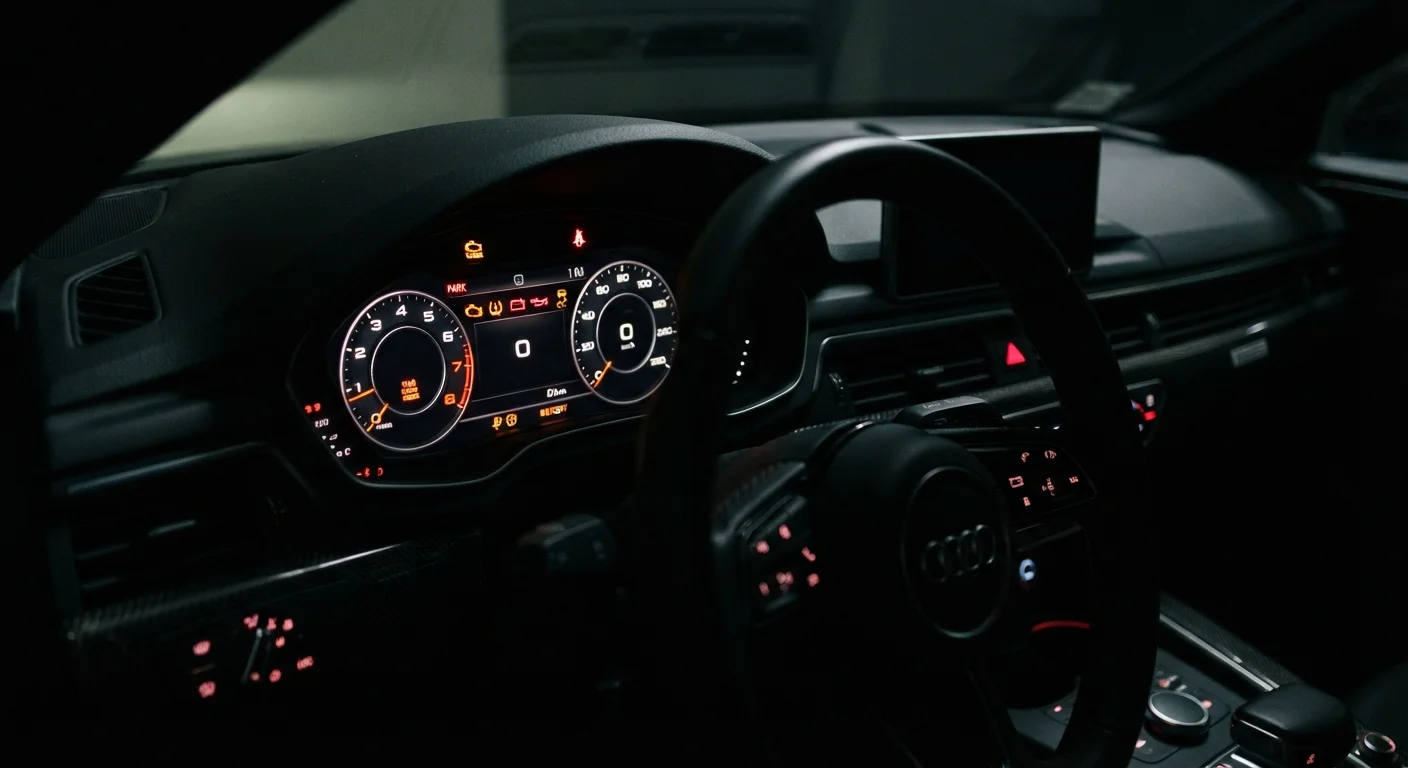
How Dashboard Warning Lights Work
Your car's onboard computer constantly monitors dozens of systems — engine, brakes, transmission, emissions, and more. When something falls outside normal operating range, it trips a warning light on your instrument cluster. Think of the dashboard as your car's way of sending you a text message: it can't fix the problem itself, but it can tell you something needs attention.
Most modern vehicles use a three-color system to signal urgency:
- Red — Stop or act immediately. These lights indicate a condition that could damage your vehicle or put you in danger.
- Amber/Yellow — Proceed with caution. Something needs attention soon, but you're not necessarily in immediate danger.
- Green or Blue — Informational. A system is active (high beams, turn signal, cruise control).
Your owner's manual is the authoritative source for your specific vehicle. Dashboard symbols can vary by make and model, so when in doubt, look it up before assuming.
| Number of OBD codes | Thousands of possible diagnostic codes (Society of Automotive Engineers (SAE) OBD-II standard) |
| Most common dashboard light | Check Engine Light (CEL) |
| TPMS required since | 2008 (all new U.S. passenger vehicles) (NHTSA TPMS final rule) |
| Red light response | Stop driving as soon as safely possible |
| Owner's manual role | Definitive reference for your specific model's symbols |
Common Warning Lights and What They Mean
Below are the most frequently encountered dashboard symbols, grouped by urgency. This is general guidance — always verify with your vehicle's documentation.
Stop Immediately (Red)
- Engine Temperature Warning
- Your engine is overheating. Pull over safely, turn off the engine, and let it cool before checking coolant levels. Do not open the radiator cap while the engine is hot. Continuing to drive risks serious engine damage.
- Oil Pressure Warning
- Engine oil pressure has dropped dangerously low. Stop driving as soon as it's safe to do so. Low oil pressure can destroy an engine within minutes of sustained driving. Check oil level once the engine is off.
- Battery / Charging System
- The electrical system is not charging properly. You may have limited time before the car loses power entirely. Reduce electrical load (A/C, radio) and head directly to a mechanic.
- Brake System Warning
- Could indicate low brake fluid, a hydraulic issue, or that the parking brake is engaged. If the parking brake is off and the light stays on, have the brakes inspected before driving further. See our guide to brake noises for related symptoms to watch for.
Address Soon (Amber/Yellow)
- Check Engine Light
- One of the most misunderstood lights on the dash — it can mean anything from a loose gas cap to an emissions system fault. A steady light usually means schedule a diagnostic soon. A flashing light means pull over and get the car checked immediately. For a full breakdown, see what the check engine light is actually telling you.
- Tire Pressure (TPMS)
- One or more tires is significantly under- or over-inflated. Check tire pressure at your next opportunity — a gas station pressure gauge works fine. Properly inflated tires affect braking, handling, and fuel economy.
- Traction Control / Stability Control
- If this flashes while driving in rain, snow, or ice, the system is actively working — that's normal. If it stays on without slippery conditions, have the system inspected.
- Transmission Temperature
- The transmission fluid is running hot, often from towing, stop-and-go traffic, or low fluid. Allow the vehicle to cool and have the transmission fluid level and condition checked.
When a Light Resets on Its Own
Some warning lights — like the TPMS light after you inflate a tire — will turn off once the underlying condition is resolved. However, a light that disappears on its own doesn't always mean the problem is gone. If a light came on and went off without an obvious explanation, it's worth having the system scanned for stored fault codes at your next service visit.
A good habit: add a dashboard light check to your pre-trip safety routine so you notice new lights before you're already miles down the road.
What to Do When a Light Comes On
The right response depends on the color and symbol:
- Red light: Don't ignore it. Pull over when safe, consult your owner's manual, and call for assistance if needed.
- Amber light: Note when it appeared and schedule a shop visit soon. Don't defer indefinitely — small issues become expensive ones.
- Flashing vs. steady: A flashing light almost always means more urgency than a steady one. A flashing check engine light, for example, often signals active misfires that can damage the catalytic converter.
- Multiple lights at once: This can indicate an electrical fault rather than multiple simultaneous failures. Still warrants prompt diagnosis.
If you're new to vehicle ownership or still building your confidence behind the wheel, this practical driving foundation guide covers how vehicle awareness fits into safe, confident road use.
This article is for general informational purposes only. Always consult a qualified mechanic for diagnosis and repair decisions specific to your vehicle.
The content on this site is for informational purposes only and is not a substitute for professional advice. Always consult a qualified professional for guidance specific to your situation.