

Our Verdict
DIY maintenance is a legitimate and worthwhile option for straightforward tasks — provided you have the right tools, a reliable information source, and an honest read on your own abilities. For anything touching safety systems or requiring specialized diagnostics, professional service is generally the smarter call. The goal in either case is the same: a vehicle that's safe and reliable.
Drivers who are comfortable with basic mechanical tasks and want to reduce routine maintenance costs, while knowing when to hand off more complex work to a qualified mechanic.
Where DIY Makes Sense
Plenty of routine maintenance tasks are genuinely within reach for a careful, attentive driver — no formal training required. These tend to be jobs with low consequence if you make a small mistake, require basic tools, and have clear step-by-step guidance available in your owner's manual or from reputable automotive sources.
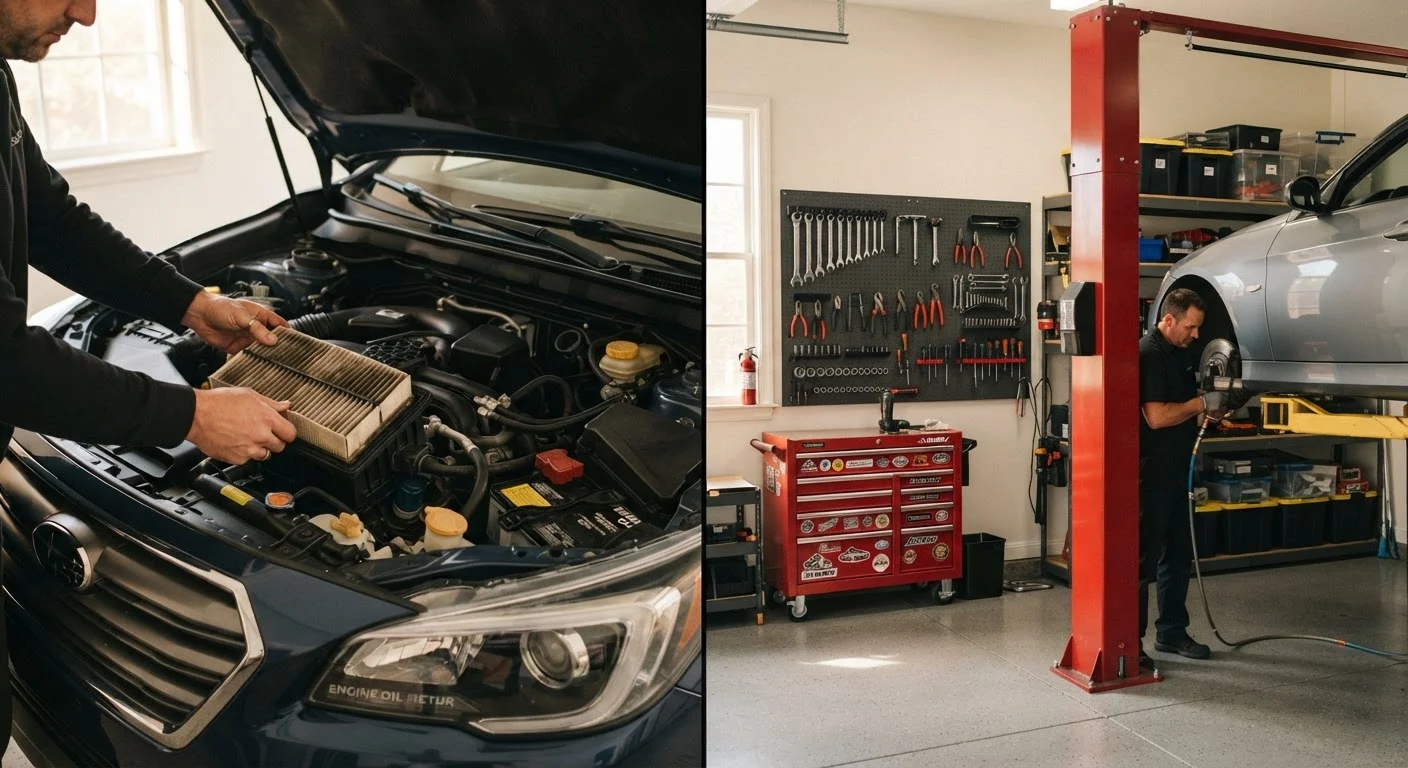
Common examples include replacing engine air filters, swapping out wiper blades, topping off fluid reservoirs (windshield washer fluid, coolant overflow), changing cabin air filters, and replacing a dead battery in most standard vehicles. These tasks are designed to be accessible, and manufacturers often make them straightforward to reach.
The financial case for DIY on these items is real. You pay for parts only, not labor. For something like an air filter — which a shop might bill 30 to 45 minutes of labor to replace — the savings can be meaningful over years of ownership. Our guide to managing car costs over time explores how small savings on routine jobs add up across years of ownership.
Saves money on labor for simple tasks
Labor accounts for a significant portion of most shop bills. Handling straightforward jobs yourself means paying only for parts, which can reduce costs noticeably over time.
Builds familiarity with your own vehicle
Regularly working under the hood helps you notice changes — unusual wear, leaks, or early warning signs — that you might otherwise miss until they become costlier problems.
Flexible scheduling on your own timeline
You're not waiting for an appointment or dropping your car off for the day. Simple maintenance can often be done in under an hour on your own schedule.
Satisfying and educational for willing learners
Understanding how your vehicle works gives you more confidence asking questions at a shop and helps you evaluate estimates and diagnoses more critically.
Where the Risks Get Real
The calculus changes sharply when a job involves your vehicle's safety systems or demands precise torque specs, specialty tools, or component-level diagnosis. Brakes are a prime example: bleeding brake lines, compressing calipers, or replacing rotors incorrectly can compromise stopping performance. This isn't a task where "close enough" is acceptable.
Suspension work, wheel bearing replacement, timing belt or chain service, and airbag system repairs all fall into the same category. Many modern vehicles also rely on electronic control units that require dealer-level or professional scan tools to calibrate properly after a component replacement — tools the average home garage simply doesn't have.
There's also the liability dimension. Some repairs, if done incorrectly, could void warranty coverage or create complications with insurance claims if something goes wrong afterward. If you're unsure whether a repair falls within your skill set, our tips for getting the most from a mechanic visit can help you approach a shop conversation with confidence.
Errors on safety-critical systems carry real risk
Mistakes on brakes, steering, or suspension aren't just costly to fix — they can compromise the vehicle's ability to protect you in an emergency situation.
Modern vehicles often require specialized tools
Many newer cars rely on electronic calibration after component replacement. Without professional-grade scan tools, some repairs simply can't be completed correctly at home.
A mistake can cost more than the original repair
Damaged threads, broken fasteners, or improperly installed parts can turn a straightforward job into an expensive one that requires professional intervention to correct.
Time investment is often underestimated
A job that takes a seasoned mechanic 30 minutes may take a first-timer several hours, especially if a part is stuck, a tool is missing, or instructions are unclear.
Potential warranty or insurance complications
Improper repairs could create complications with remaining manufacturer or extended warranty coverage, and may raise questions in the event of an insurance claim.
The Hidden Costs of Getting It Wrong
DIY gone wrong isn't just frustrating — it can cost significantly more than the professional repair would have. A stripped drain plug during an oil change can damage the oil pan. An improperly seated brake pad can cause uneven rotor wear. Overtightening spark plugs can crack the threads in an aluminum cylinder head.
When In Doubt, Ask Before You Start
Many independent mechanics will answer a quick question about whether a job is within a home mechanic's reach — especially if you're a returning customer. Some auto parts retailers also offer free loaner tool programs and staff who can walk you through basic procedures. Using these resources before starting a job, rather than halfway through, is a straightforward way to reduce the chance of a costly mistake.
This isn't meant to discourage DIY — it's a reminder that confidence should be matched with competence. Starting with truly simple tasks, building experience gradually, and consulting detailed, vehicle-specific guidance each time is the right progression. Skipping a repair entirely, on the other hand, carries its own risks — as outlined in our piece on why small repairs tend to grow into bigger ones.
~35%
Share of a typical shop bill that is labor
Industry estimates commonly place labor at roughly one-third or more of the average repair bill, illustrating where DIY savings are most achievable on simple jobs.
1 in 3
DIY repairs that require professional correction
Automotive industry observers have noted that a meaningful share of home repairs eventually need a shop visit to address errors or incomplete work, though exact figures vary by task complexity.
Making the Call: A Simple Framework
Before deciding, ask yourself four honest questions: Do I have the correct tools for this job — not improvised substitutes? Do I have a reliable, vehicle-specific source of instructions? If I make an error, is the consequence inconvenient or potentially unsafe? And am I comfortable taking responsibility for the outcome?
If the answers are yes, yes, inconvenient, and yes — you're likely in DIY territory. If any answer tilts the other way, a qualified shop is the lower-risk path. For a broader overview of what routine maintenance actually involves, the complete car maintenance overview lays out the full picture from fluids to tires to brakes.
Neither choice is a mark of skill or identity. DIY and professional service work best as complements — use each where it makes sense, and your vehicle will be better for it.
The content on this site is for informational purposes only and is not a substitute for professional advice. Always consult a qualified professional for guidance specific to your situation.