

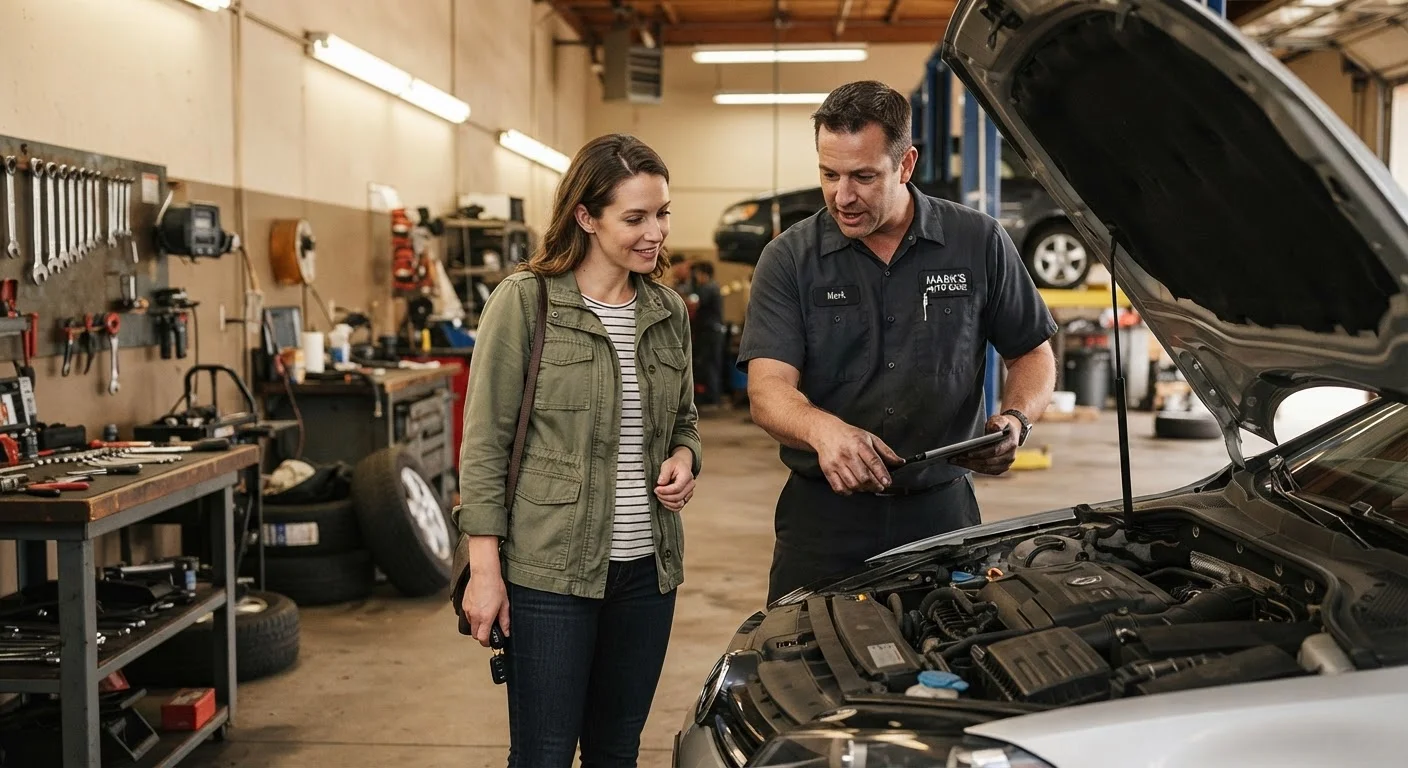
Before You Drive to the Shop
Most mechanic visits go sideways before the car even lifts off the ground — not because of bad mechanics, but because of vague information. The more clearly you can describe what's happening with your vehicle, the faster and more accurately a technician can diagnose the problem.
Before your appointment, take a few minutes to jot down:
- What you notice: a sound, a smell, a vibration, a warning light
- When it happens: only when braking, when the engine is cold, after highway driving
- How long it's been happening: two days, two weeks, gradually worsening
- Any recent work: if new tires or a battery were installed recently, say so
This isn't about knowing the answer — it's about giving the mechanic the full picture. Think of it the same way you'd describe symptoms to a doctor: the more detail you offer, the more useful the visit becomes. For a broader look at what regular maintenance involves, see the complete car maintenance overview.
Write down symptoms before your appointment, including when and how they occur.
Mechanics rely on your observations to narrow down the cause of a problem. Vague descriptions like 'it sounds weird' add diagnostic time and cost. Specific details — 'a grinding noise when braking at low speed' — point technicians in the right direction immediately.
Always ask for a written estimate before authorizing any work.
A written estimate sets clear expectations and gives you something to reference if the final bill differs significantly. Most states have consumer protection rules around automotive repair estimates, but having it in writing protects you regardless.
Keep a simple maintenance log — even a notes app will do.
A running record of past services helps you avoid redundant work, catch patterns in recurring problems, and give any mechanic instant context. It also helps you stay on schedule with manufacturer-recommended intervals.
Ask what to watch for after a repair and when you should return.
Some repairs take a short break-in period; others require a follow-up check. Knowing what's normal — and what's a warning sign — helps you catch problems early rather than returning to square one.
Separate urgent repairs from optional ones, and prioritize accordingly.
Not every item on a shop's recommendation list needs to be done the same day. Understanding which repairs affect safety or will worsen quickly helps you make informed decisions without overspending in one visit.
Understanding Your Estimate
Before any work begins, a reputable shop will give you a written estimate. Don't just glance at the total — take a moment to look at what's itemized.
A standard estimate breaks costs into two categories: parts and labor. Labor is usually billed by the hour, and many shops use a standardized time guide to price jobs. If something looks high, it's reasonable to ask how the labor hours were calculated.
Estimates vs. Final Bills: Know the Difference
An estimate is not always a guaranteed price — unexpected findings during a repair (like corrosion discovered once a part is removed) can change the total. A shop is generally required to contact you for approval before exceeding the estimated amount. Ask upfront how they handle cost overruns so there are no surprises.
You're entitled to ask questions. A straightforward one: "Is this repair necessary right now, or can it wait?" Some items are safety-critical and shouldn't be deferred. Others can be monitored. A good mechanic will tell you the difference plainly. For context on what happens when small issues get delayed, see why skipping small repairs tends to create bigger ones.
~$400
Average unexpected car repair bill for U.S. drivers
According to a survey by the American Automobile Association (AAA), unexpected vehicle repair costs catch many drivers off guard each year.
1 in 3
Drivers who feel unclear about what a repair involves
AAA consumer research has found that a significant share of vehicle owners feel they don't fully understand the work being recommended at a shop.
Habits That Make Every Visit More Productive
Consistency is what separates drivers who are always reacting to car problems from those who stay ahead of them. A few steady habits make your mechanic relationship more useful — and your ownership costs more predictable.
If you're unsure which tasks are worth doing yourself and which are better left to professionals, DIY maintenance vs. taking it to a shop walks through where that line typically falls. And if seasonal changes affect your region, seasonal car care preparation outlines what to check before conditions shift. Managing these visits well also ties directly into keeping car costs manageable over the life of a vehicle.
The content on this site is for informational purposes only and is not a substitute for professional advice. Always consult a qualified professional for guidance specific to your situation.