

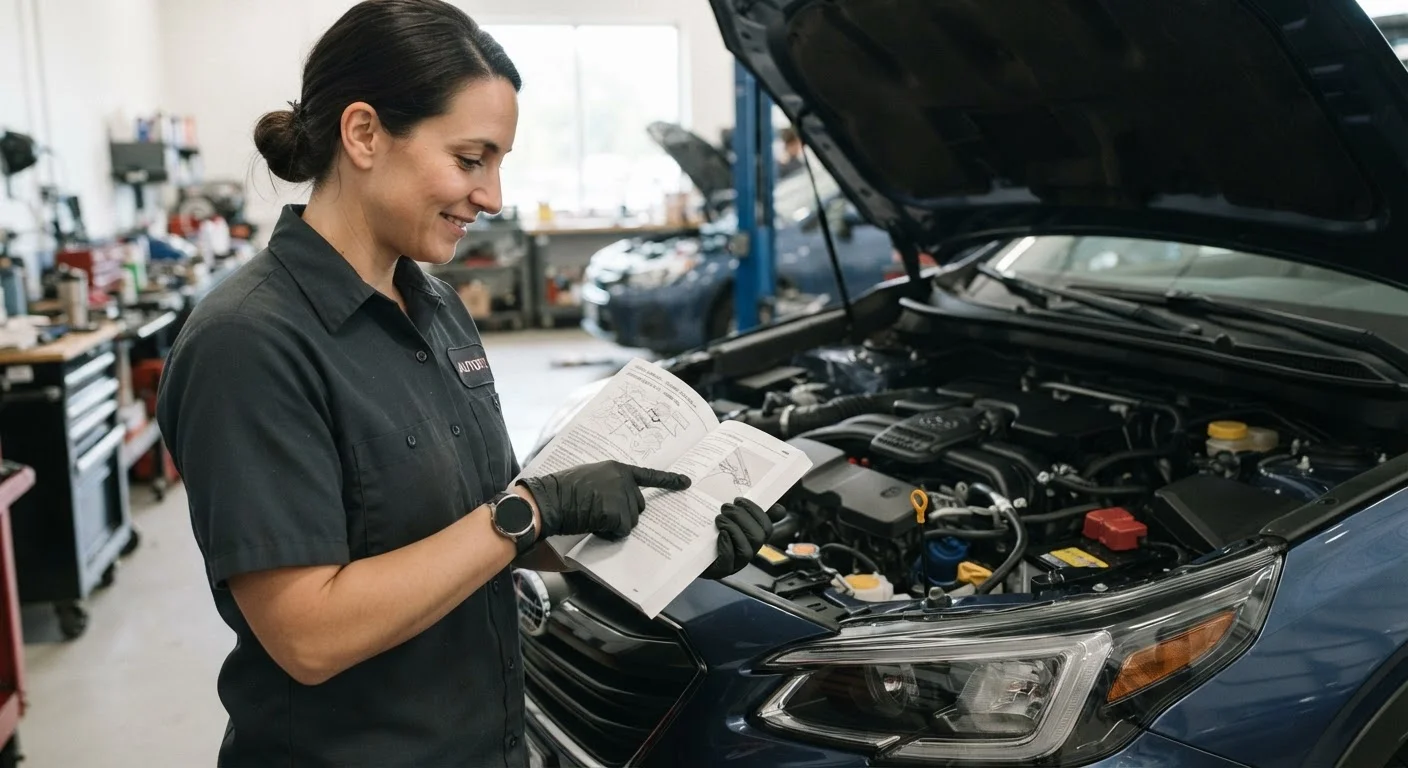
Why Your Owner's Manual Is the Only Schedule That Matters
Every car comes with a maintenance schedule built specifically for that vehicle — its engine, transmission, fluids, and driving conditions. That schedule lives in your owner's manual, and it trumps any generic advice you'll find on a sticker or a shop's recommendation board.
Manufacturers set these intervals after testing under real-world conditions. Following them keeps your warranty valid, protects resale value, and — most importantly — prevents the kind of mechanical failures that turn a $50 oil change into a $2,000 repair bill. Staying on top of your schedule is one of the most reliable ways to control what you spend over years of ownership.
| Oil change interval (conventional oil) | Every 3,000–5,000 miles (Varies by vehicle; check owner's manual) |
| Oil change interval (full synthetic) | Every 7,500–10,000+ miles (Varies by vehicle; check owner's manual) |
| Tire rotation frequency | Every 5,000–7,500 miles (General industry guideline) |
| Engine air filter replacement | Every 15,000–30,000 miles (Sooner in dusty environments) |
| Brake fluid flush | Every 2 years or 30,000 miles (Many manufacturers recommend this interval) |
| Spark plug lifespan (iridium/platinum) | 60,000–100,000 miles (Copper plugs wear sooner, around 30,000 miles) |
The Core Service Intervals, Explained
Most schedules rotate around a handful of key services. Here's what each one actually does:
Oil and Filter Change
Engine oil lubricates moving parts and carries away heat and contaminants. As it ages, it breaks down and becomes less effective. Conventional oil typically needs changing every 3,000–5,000 miles; full synthetic oil commonly lasts 7,500–10,000 miles or more — but your manual specifies the right interval for your engine. Skipping this service is the single fastest way to shorten an engine's life.
Tire Rotation
Front and rear tires wear at different rates depending on whether your car is front-, rear-, or all-wheel drive. Rotating them — usually every 5,000–7,500 miles — evens out that wear, so all four tires last roughly the same amount of time. It's inexpensive and extends a set of tires considerably.
Air Filter Replacement
Your engine air filter blocks dust, dirt, and debris from entering the engine. A clogged filter restricts airflow, which can reduce fuel efficiency and performance. Most manufacturers recommend replacing it every 15,000–30,000 miles, though driving on dusty roads shortens that window.
Cabin Air Filter
Separate from the engine filter, this one cleans the air coming through your vents. A dirty cabin filter reduces airflow from your heater and air conditioner and can worsen air quality inside the car. Replacement is typically recommended every 15,000–25,000 miles.
Brake Inspection and Fluid
Brake pads wear gradually and should be inspected at least once a year. Brake fluid absorbs moisture over time, which lowers its boiling point and reduces stopping power — most manufacturers recommend flushing it every two years or 30,000 miles. Don't wait for squealing to investigate your brakes; catching wear early is far safer and cheaper.
Coolant Flush
Coolant (antifreeze) keeps your engine from overheating and prevents freezing in cold weather. It also contains additives that protect metal parts from corrosion. Those additives deplete over time. Flush intervals vary widely — some vehicles go 30,000 miles, others 100,000 — so check your manual specifically.
Spark Plugs
Spark plugs ignite the fuel-air mixture in your engine. Worn plugs cause misfires, rough idling, and poor fuel economy. Copper plugs may need replacement around 30,000 miles; iridium or platinum plugs in many modern cars can last 60,000–100,000 miles.
Transmission Service
Transmission fluid lubricates gears and keeps the transmission shifting smoothly. Neglecting it is a leading cause of costly transmission damage. Intervals range from 30,000 to over 100,000 miles depending on the vehicle and fluid type.
Service interval
The mileage or time period after which a specific maintenance task should be performed. Intervals are set by the manufacturer and listed in the owner's manual.
Coolant (antifreeze)
A liquid that circulates through the engine to regulate temperature. It prevents overheating in summer and freezing in winter, and contains corrosion inhibitors that degrade over time.
Transmission fluid
A specialized lubricant that keeps a vehicle's transmission operating smoothly. Degraded fluid can lead to rough shifting and, eventually, expensive transmission damage.
Severe driving conditions
A category defined by manufacturers for vehicles used in demanding ways — such as frequent short trips, towing, or extreme climates — that require more frequent maintenance than normal use.
Synthetic oil
A refined motor oil engineered for greater stability and longevity compared to conventional oil. It generally allows longer intervals between oil changes, though the correct interval depends on the specific vehicle.
Severe vs. Normal Driving Conditions
Most owner's manuals list two maintenance tracks: normal and severe. Severe conditions include frequent short trips (under 5 miles), stop-and-go city driving, towing, driving on dusty or unpaved roads, or operating in extreme temperatures. If that sounds like your daily routine, you likely fall into the severe category — meaning shorter service intervals.
Many drivers assume they fall into the normal category when their driving actually qualifies as severe. When in doubt, default to the more frequent schedule. It costs less than repairs caused by under-maintained components.
If you're unsure whether a service is something you can handle yourself or needs a professional, the DIY vs. shop breakdown covers where that line typically sits. And when you do head to a mechanic, knowing your schedule helps you have a more productive visit — see practical tips for getting the most out of every mechanic visit.
Building Maintenance Into Your Budget
Routine maintenance costs are predictable — which makes them budget-friendly if you plan ahead. A yearly car ownership cost checklist can help you set aside money for scheduled services before they come due, rather than scrambling when the reminder light comes on.
One final note: your maintenance schedule won't catch everything. If a warning light appears between scheduled services — particularly the check engine light — don't wait for your next interval. Learn what those signals typically mean by reading up on what your check engine light is actually telling you. Catching a problem early almost always costs less than letting it develop.
This article is for general informational purposes only. Always consult your vehicle's owner's manual and a qualified mechanic for guidance specific to your car and driving conditions.
The content on this site is for informational purposes only and is not a substitute for professional advice. Always consult a qualified professional for guidance specific to your situation.