

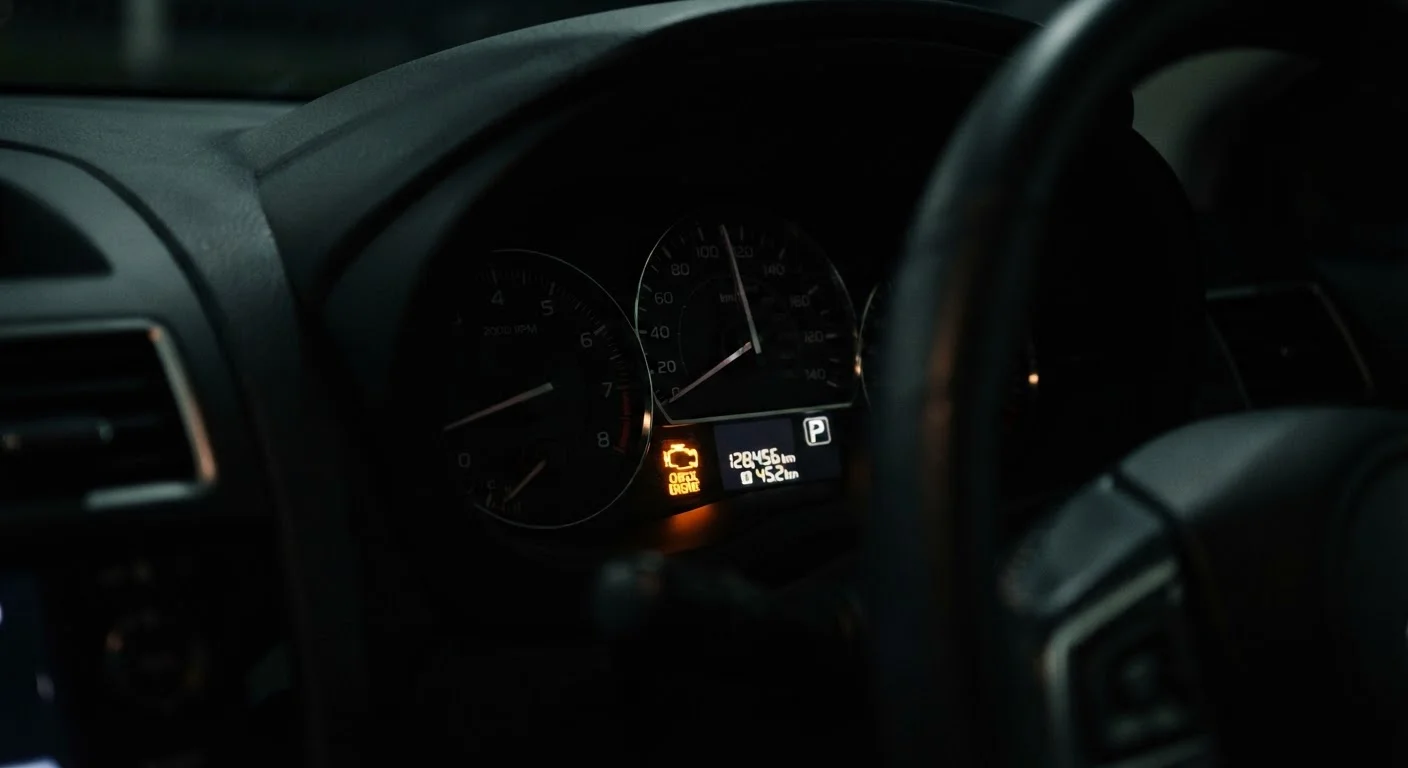
Steady vs. Flashing: The First Thing to Notice
Not all check engine lights are equal, and the first clue is whether the light is steady or flashing.
A steady light means the system has logged a fault, but it isn't necessarily an emergency right now. You should still have it checked within a few days — not weeks. Driving around indefinitely with an unresolved code can turn a minor fix into a bigger one.
A flashing or blinking light is a different story. It typically signals an active engine misfire — meaning unburned fuel is passing into the exhaust system and can quickly destroy your catalytic converter, an expensive component. If your light is flashing, reduce speed, avoid heavy acceleration, and get to a shop as soon as safely possible.
Also pay attention to how the car feels. If you notice rough idling, a loss of power, strange smells, or unusual sounds alongside any illuminated warning light, treat it as urgent. See our guide to dashboard warning lights for a broader look at what other symbols mean.
Common Causes — From Simple to Serious
The check engine light can be triggered by dozens of different fault codes. Here's a practical breakdown from least to most concerning:
- Loose or missing gas cap: One of the most common triggers. A cap that isn't tight allows fuel vapors to escape, which the evaporative emissions system detects. Tighten the cap and the light may clear on its own within a few drive cycles.
- Faulty oxygen sensor: Oxygen sensors monitor exhaust gases to help the engine run efficiently. A failing sensor can reduce fuel economy and increase emissions without dramatically affecting drivability — at first.
- Failing catalytic converter: The catalytic converter reduces harmful exhaust emissions. If it's clogged or damaged (often from ignored engine misfires), replacement can be costly.
- Bad spark plugs or ignition coils: Misfires caused by worn spark plugs or failing coils can trigger the light and, if left unchecked, damage the catalytic converter.
- Mass airflow sensor issues: This sensor measures the air entering the engine. When it fails, the engine can't properly balance the air-fuel mixture, affecting performance and efficiency.
~400
Possible OBD-II diagnostic trouble codes
The OBD-II standard defines hundreds of standardized fault codes covering engine, transmission, and emissions systems across all vehicle makes.
1 in 8
U.S. vehicles with a check engine light on
Industry estimates have suggested that roughly one in eight vehicles on American roads is driving with an active check engine light at any given time.
$20–$40
Typical cost of a replacement gas cap
A loose or cracked gas cap is one of the cheapest check engine light triggers to fix, yet it's frequently overlooked.
Keeping up with routine service helps prevent many of these triggers. Our article decoding your car's maintenance schedule walks through the service intervals that keep these systems healthy.
What to Do When the Light Comes On
Here's a simple action plan that doesn't require any mechanical know-how:
- Check your gas cap first. Remove it, reseat it firmly, and listen for a click. If it's cracked or damaged, replacing a gas cap is inexpensive.
- Note any symptoms. Write down anything unusual — odd smells, sounds, rough idling, or reduced acceleration. This information is valuable when talking to a mechanic. Our guide on getting the most from a mechanic visit explains exactly how to communicate symptoms clearly.
- Get the code read. Many auto parts retailers offer free OBD-II scanning. The code alone won't diagnose the repair needed, but it gives you and your mechanic a starting point.
- Don't ignore it. Even if the car seems fine, the light is telling you something. Delaying can allow secondary damage to develop.
Keep a Simple Record of Warning Light Events
Whenever a warning light appears, jot down the date, any symptoms you noticed, and roughly how many miles are on the odometer. This log takes seconds to create and gives your mechanic useful context that can shorten diagnostic time and reduce guesswork.
It's also worth doing a quick visual check of obvious things — fluid levels, tire condition — before heading to a shop. See how to check your vehicle's fluids for a straightforward walkthrough.
At the Shop: What to Expect
When a technician connects a professional scanner to your car's OBD-II port, they retrieve the specific diagnostic trouble code (DTC) stored by the vehicle's computer. That code points to a system or circuit — it doesn't always name the exact failed part. A good technician uses the code as a starting point for further testing, not as a simple parts swap order.
Ask the shop to explain what the code indicates and what tests they'll perform to confirm the root cause. A reputable mechanic will walk you through this without pressure. Understanding the problem in plain terms helps you make informed decisions about repairs.
One important note: if your check engine light is on and you're due for an emissions test, the vehicle will likely fail in most states — regardless of how well it runs. The fault must be repaired and the system must complete its readiness checks (a series of self-tests the car runs over several drive cycles) before a retest.
Frequently Asked Questions
If the light is steady and the car feels normal, you can typically drive a short distance to a shop. If the light is flashing or you notice rough running, strange smells, or loss of power, pull over safely and avoid driving further until a mechanic evaluates it.
Sometimes. If the fault was intermittent — like a temporarily loose gas cap — the light may clear itself after several drive cycles. However, the underlying code remains stored, so having it scanned is still worthwhile.
Many auto parts stores offer free code reading. A full diagnostic at a repair shop typically ranges from around $75 to $150 depending on the shop and region. This fee is often waived if you proceed with the recommended repair.
A faulty or loose gas cap is among the most common triggers. Other frequent causes include a failing oxygen sensor, catalytic converter issues, a bad mass airflow sensor, or misfiring spark plugs.
A flashing light usually indicates an active engine misfire severe enough to damage the catalytic converter if driving continues. It warrants pulling over and having the vehicle towed or driven very carefully to a shop right away.
Yes. In most states, a vehicle with an active check engine light will automatically fail an emissions inspection. The underlying fault must be diagnosed and repaired before the vehicle can pass.
The content on this site is for informational purposes only and is not a substitute for professional advice. Always consult a qualified professional for guidance specific to your situation.