

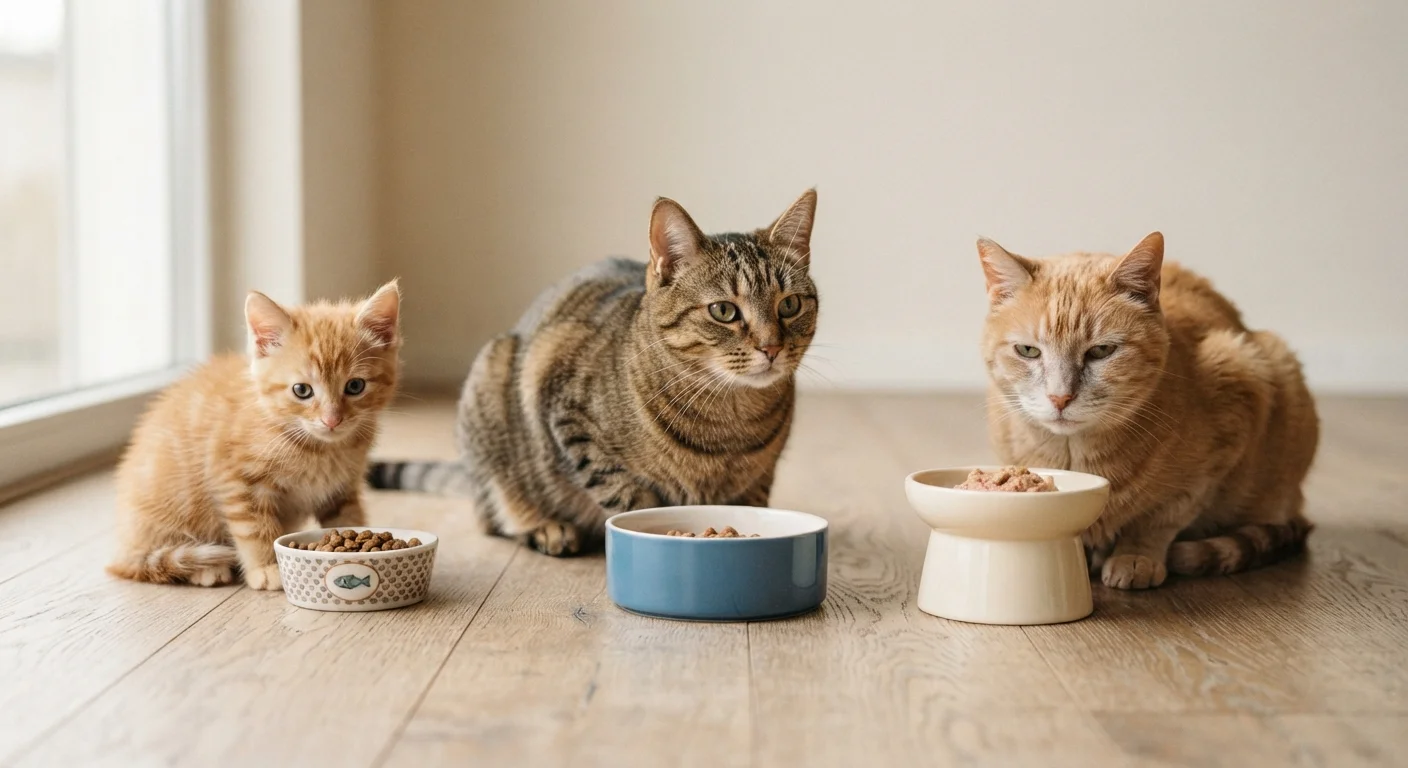
Why Life Stage Nutrition Matters for Cats
A cat's body changes dramatically between kittenhood and old age, and those changes have direct implications for what she needs to eat. Feeding a kitten the same food as a senior cat — or vice versa — can leave nutritional gaps or create surpluses that affect long-term health. Because cats are obligate carnivores (meaning they must obtain certain nutrients exclusively from animal tissue), getting the foundation right matters at every age. For a deeper look at the biology behind this, see why cats are obligate carnivores.
Life-stage labels on pet food — "kitten," "adult," and "senior" — aren't just marketing. They reflect real differences in protein ratios, fat content, caloric density, and micronutrient levels calibrated to different physiological demands. Understanding those differences helps you make informed choices for your cat throughout her life.
When introducing a kitten to solid food, warm the wet food slightly to enhance its aroma — kittens are highly scent-driven and are far more likely to accept a new texture if it smells appealing.
A kitten's sense of smell plays a major role in food acceptance, and warming food releases volatile aromatic compounds that stimulate appetite in young cats.
Weigh your adult cat monthly at home using a digital scale and note the trend — a slow, steady gain or loss of even a few ounces over several months is often the first sign that portion sizes or food formulas need adjustment.
Body weight changes in cats tend to be gradual and easy to miss visually, especially in long-haired breeds; regular weighting catches problems before they become significant.
Feeding Kittens: Birth to 12 Months
Kittens have extraordinarily high energy needs relative to their size. In their first weeks, they rely entirely on their mother's milk or a veterinarian-recommended milk replacer — never cow's milk, which can cause digestive upset. Around three to four weeks, solid food can be introduced gradually, beginning with wet food moistened with warm water to a gruel-like consistency.
By eight weeks, most kittens are fully weaned and ready for kitten-specific formulas. Look for food that meets the AAFCO (Association of American Feed Control Officials) nutritional profile for "growth" or "all life stages." Kitten food is higher in protein, fat, and calories — particularly the amino acid taurine, which is essential for heart and eye health and must come from diet since cats cannot synthesize adequate amounts on their own.
- Frequency: Kittens under six months benefit from three to four small meals per day to support their fast metabolism.
- Portion size: Follow the feeding guide on the packaging as a starting point, adjusting based on your kitten's growth and your vet's guidance.
- Wet vs. dry: Many veterinarians recommend incorporating wet food for kittens to support hydration habits that benefit health into adulthood.
Never Feed Kittens Cow's Milk
Cow's milk is not a suitable substitute for queen's milk or commercial kitten milk replacer. Most cats are lactose intolerant, and feeding cow's milk to a young kitten can cause diarrhea and dehydration. If a kitten is orphaned and needs supplemental feeding, ask your veterinarian to recommend an appropriate milk replacer formula.
Adult Cat Nutrition: 1 to 7 Years
Once a cat reaches about 12 months, her growth rate slows and her caloric demands moderate. This is the right time to transition to an adult formula, which is calibrated to maintain healthy body weight rather than fuel rapid development. Continuing kitten food into adulthood can contribute to obesity — a common and consequential health problem in domestic cats.
Adult cats generally do well on two measured meals per day. Structured mealtimes make it easier to monitor appetite changes, which can signal illness early. If you're weighing scheduled feeding against leaving food out all day, this comparison of feeding schedules vs. free feeding covers the trade-offs in detail.
Protein should remain the primary ingredient. Check that the first listed ingredient is a named animal protein (chicken, salmon, turkey) rather than a grain or a vague "meat by-product." For a practical breakdown of how wet and dry formats compare on nutrition and hydration, see dry kibble vs. wet food.
Senior Cat Feeding: 7 Years and Beyond
The veterinary community generally considers cats "senior" around age seven, though many cats remain active and healthy well into their teens. Nutritional needs in this stage shift in a few key ways. Some senior cats gain weight due to reduced activity; others lose weight because of changes in digestion, dental pain, or underlying conditions like hyperthyroidism or kidney disease.
Higher-moisture food becomes particularly important for older cats, as kidney function tends to decline with age and hydration supports urinary tract health. Wet food or adding water to dry food can help. Protein quality — not necessarily quantity — becomes more important: easily digestible animal proteins reduce the burden on aging kidneys and digestive systems.
~50%
Cats affected by obesity or overweight
According to the Association for Pet Obesity Prevention, roughly half of domestic cats in the U.S. are assessed as overweight or obese during routine veterinary visits.
30–40%
Senior cats with chronic kidney disease
Studies in veterinary medicine estimate that chronic kidney disease affects a substantial proportion of cats over age 10, making hydration and protein quality especially important in senior diets.
If your senior cat is losing weight, becoming a picky eater, or showing changes in litter box habits, consult your veterinarian rather than switching foods independently. These can be signs of treatable medical conditions, and your vet can recommend a therapeutic diet if needed.
Making Smart Food Transitions at Every Stage
Each time your cat moves from one life stage to another — kitten to adult, adult to senior — a food transition is necessary. Abrupt changes almost always cause digestive upset: vomiting, loose stools, or a flat refusal to eat. A gradual switchover over seven to ten days gives the digestive system time to adjust. Follow a structured transition approach to make the change as smooth as possible.
A general schedule for transitioning:
- Days 1–3: 75% old food, 25% new food
- Days 4–6: 50% old food, 50% new food
- Days 7–9: 25% old food, 75% new food
- Day 10 onward: 100% new food
Go slower if your cat has a sensitive stomach or is particularly resistant to the new formula. Cats have preferences, and some require extra patience.
Reading the Label: What to Look For
AAFCO nutritional adequacy statements are your most reliable shortcut on a cat food label. A statement that a food is "complete and balanced" for a specific life stage means it has been formulated — or tested through feeding trials — to meet established minimum nutritional standards for that stage.
Beyond that statement, look for:
- Named animal protein first: Chicken, beef, salmon — not generic "meat" or predominantly plant ingredients.
- No unnecessary fillers: Some carbohydrates are fine, but they should not dominate the ingredient list in a cat's food.
- Appropriate moisture content: Wet food typically contains 75–80% moisture; dry food contains around 10%. Both can be part of a healthy diet depending on your cat's needs.
- Life stage match: Confirm the AAFCO statement matches your cat's current stage.
For broader guidance on building consistent, healthy pet care routines, the Daily Pet Care hub is a helpful starting point. And if you're curious how a cat's shifting needs compare to nutritional changes across the human lifespan, this overview of nutrition through life stages offers an interesting parallel.
This article is for general informational purposes only and is not a substitute for personalized veterinary advice. Always consult a licensed veterinarian for guidance specific to your cat's health and dietary needs.
The content on this site is for informational purposes only and is not a substitute for professional advice. Always consult a qualified professional for guidance specific to your situation.