

Why the Layout Exists in the First Place
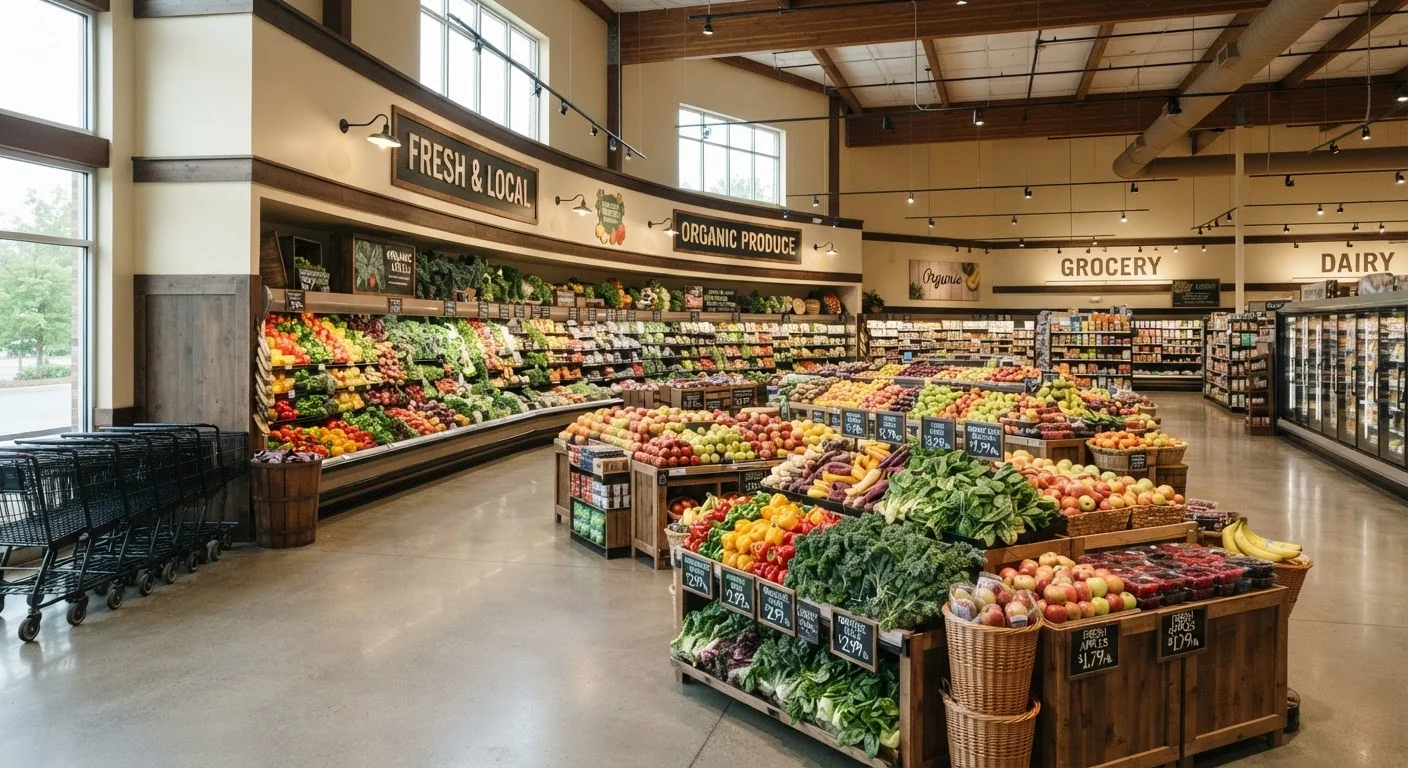
Walk into almost any full-service American supermarket and you'll find produce near the entrance, meat along the back wall, and dairy tucked in a far corner. This pattern feels like common sense — but it exists for reasons that mix practical infrastructure with deliberate retail design.
The most straightforward explanation is mechanical. Refrigeration compressors, drainage lines, and electrical runs for display cases are expensive to route through a building's interior. Placing refrigerated departments on or near exterior walls is an engineering convenience that dates back to when large-scale grocery refrigeration became standard in the mid-20th century. The perimeter layout stuck because it worked structurally.
On top of that foundation, retailers layered behavioral strategy. Produce positioned at the entry creates a visual impression of freshness and abundance. Research in consumer psychology suggests that shoppers who begin their trip in a fresh, health-oriented section tend to feel more permissive about subsequent purchases — a phenomenon sometimes called the "health halo" effect. Stores benefit from that psychology whether or not shoppers consciously register it.
For a broader look at how physical store design shapes spending decisions, see how store layout is engineered to guide shoppers.
~35%
Share of supermarket sales from perimeter departments
Industry analysts have estimated that fresh perimeter categories — produce, meat, dairy, and bakery — collectively account for roughly a third or more of supermarket revenue, reflecting both consumer demand and margin dynamics.
66%
Grocery purchases that are unplanned
Point-of-purchase research has consistently found that a substantial majority of in-store grocery purchases were not on a shopper's original list, underscoring how much store layout influences basket composition.
What the Center Aisles Are Actually Doing
If the perimeter draws shoppers in with fresh appeal, the center aisles are where stores extract margin. Shelf-stable packaged goods — cereals, snack foods, condiments, soft drinks, and processed meals — typically carry higher profit margins per unit than most fresh produce or bulk commodity items.
Aisle placement within the center store isn't random either. Slower-moving, high-margin items tend to cluster at eye level; economy or store-brand alternatives often land on lower shelves. End caps — the displays at the end of each aisle — are premium real estate frequently purchased by brands for promotional placement, though the items there aren't always on sale in any meaningful sense.
Knowing this doesn't mean avoiding center aisles. Dried lentils, canned tomatoes, oats, nut butters, and frozen vegetables are all center or back-of-store staples that offer solid nutritional value at predictable price points. The point is to approach those aisles with a list rather than browsing open-endedly — which is precisely what the layout encourages you to do.
Shop With a Department-Ordered List
Before heading to the store, organize your shopping list by section — produce, proteins, dairy, pantry staples — rather than by recipe or meal. This lets you move through the store efficiently, reduces backtracking, and limits the time you spend in high-impulse zones like end caps and checkout lanes.
The Deliberate Placement of Staples
Eggs, milk, and bread — the items most households need on every trip — are rarely near the entrance. Eggs and dairy are almost universally positioned at the furthest point from the front door, requiring shoppers to traverse the full store. This is not coincidence. It's a routing decision that maximizes exposure to merchandise a shopper didn't plan to buy.
The same logic applies to in-store bakeries, which are often positioned so that the smell of fresh bread circulates toward the entrance, while the actual bakery counter requires walking past numerous other departments. Sensory cues — smell, lighting, visual warmth — are part of how perimeter departments are designed to feel inviting and slow foot traffic.
Understanding these mechanics doesn't require cynicism about grocery retailers. Stores need to operate profitably, and layout is one tool for doing so. But shoppers who recognize the structure can use it rather than be used by it. A list organized by store section, rather than by recipe, often results in a more efficient trip with fewer impulse additions.
If you're working on a household food budget alongside these strategies, building a grocery budget that holds offers a practical framework for setting and tracking weekly spending.
What This Means for Shoppers
Grocery store zoning isn't a conspiracy — it's a system built from a mix of logistics, behavioral research, and profit optimization. Recognizing the structure gives shoppers a more accurate mental map of the store and a clearer sense of where unplanned spending tends to happen.
A few practical implications worth keeping in mind:
- Perimeter doesn't automatically mean healthy. Deli counters, prepared foods sections, and in-store bakeries are all perimeter departments. Evaluating what goes into your cart still requires reading labels and knowing your nutritional priorities.
- Center aisles aren't the enemy. Whole grains, canned legumes, and frozen produce are often more economical and nutritionally sound than their perimeter equivalents and are consistently located in center or back sections.
- End caps deserve scrutiny. A prominent display doesn't mean a product is discounted or a good value. Check unit prices and compare against shelf alternatives before assuming it's a deal.
- High-traffic routes are managed. The path from entrance to dairy is designed to maximize your exposure to merchandise. A deliberate route — or a list organized by department — counters that effect.
For a comprehensive look at how retailers use layout, lighting, and product placement to shape purchasing behavior, explore how store design influences spending.
Frequently Asked Questions
Fresh and refrigerated products require consistent temperature control, and the exterior walls are the practical location for heavy refrigeration units and utility connections. Placing perishables there is partly an infrastructure solution, not only a merchandising choice.
The perimeter does contain most whole, unprocessed foods, but it also includes items like deli meats, full-fat dairy, and bakery pastries. Center aisles carry canned legumes, whole grains, and frozen vegetables. Nutritional quality depends on specific product choices, not location alone.
Yes, high-frequency staples like eggs, milk, and bread are commonly placed toward the back or far corners of the store. This routing ensures shoppers pass through more of the store — and past more products — to reach what they came for.
Center aisles typically stock shelf-stable packaged goods — cereals, canned goods, snack foods, condiments, and beverages. Quality varies widely. Many center-aisle staples, such as dried beans, oats, and canned tomatoes, are nutritious and economical choices.
A predetermined shopping list and awareness of how stores route traffic allows you to move through the store deliberately. You can bypass high-impulse zones, avoid end-cap displays that feature items on thin margins, and reach your actual needs without detours.
Most full-service supermarkets follow a broadly similar perimeter-fresh, center-packaged structure, but exact layouts vary by chain, store size, and location. Discount grocers, warehouse clubs, and specialty stores often use distinct configurations.
The content on this site is for informational purposes only and is not a substitute for professional advice. Always consult a qualified professional for guidance specific to your situation.