

Summary
18 items · 2–5 minutes
Why a Quick Check Before Every Drive Actually Matters
Most drivers assume their car is ready to go the moment they get in. That assumption is usually right — but not always, and the exceptions are what cause crashes, breakdowns, and expensive repairs. A vehicle that sat overnight can have a flat tire, a burned-out brake light, or fogged mirrors that you simply won't notice until it's too late.
This checklist is designed to run in two to five minutes, from the driveway, without any tools for the basic items. Think of it as the same habit a pilot uses before takeoff — brief, consistent, and non-negotiable. For a broader look at keeping your car in good shape over time, visit our Car Maintenance hub.
Outside the Vehicle
Inside the Vehicle
Dashboard and Controls
Cargo and Passengers
What to Do If You Find a Problem
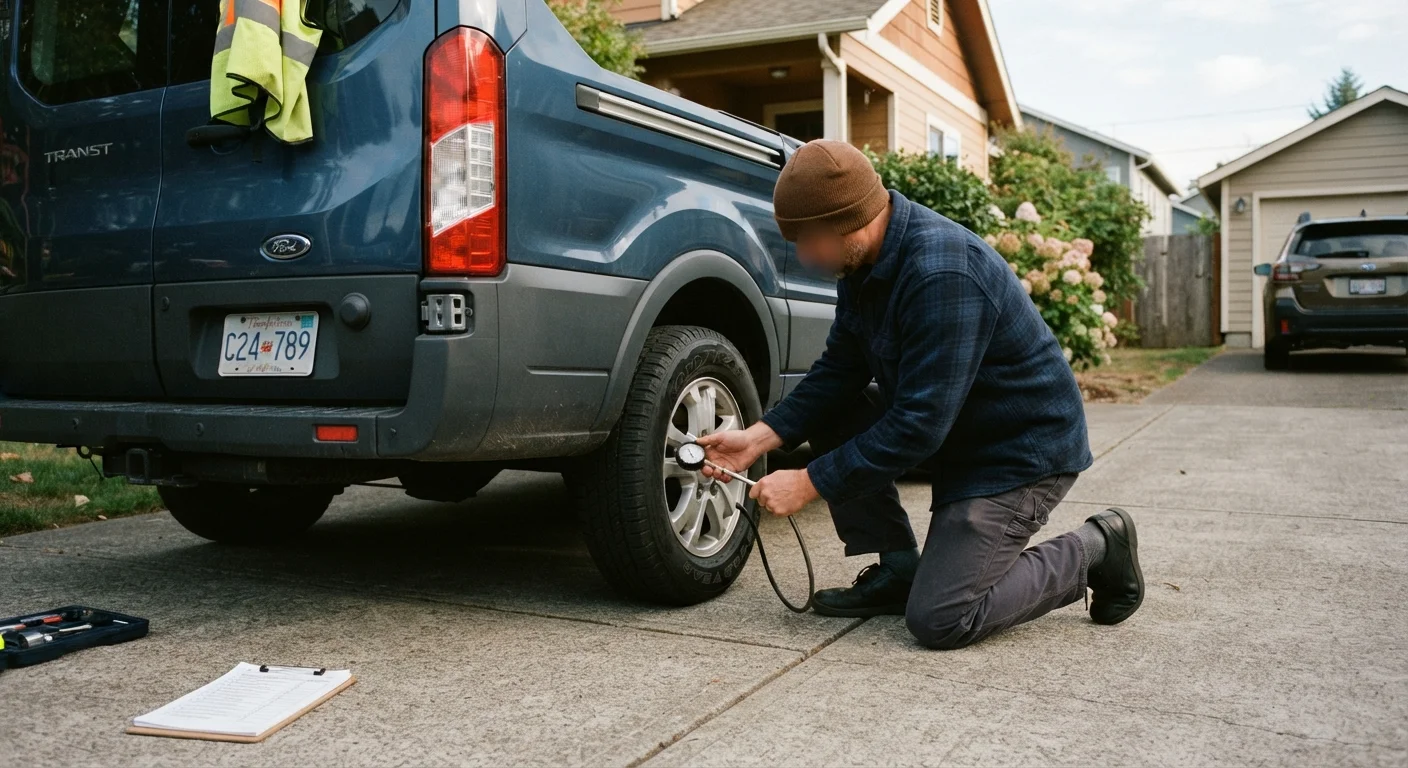
Spotting an issue before you leave is exactly the point of this routine. If a tire looks low, check the pressure before driving — running on an underinflated tire dramatically shortens its life and affects braking. If you're not sure how to read tread depth or pressure, our guide on reading tread wear walks you through it step by step.
A dashboard warning light that wasn't on yesterday deserves attention before you drive. Some lights indicate something minor; others signal an immediate safety concern. Our dashboard warning lights field guide explains what each symbol means and how urgently to act.
Never Drive With an Illuminated Brake or Tire Warning Light
A brake system warning light or a tire pressure monitoring system (TPMS) alert indicates a condition that can directly affect your ability to stop or control the vehicle. If either of these lights is on, check the issue before driving — do not assume the light is a sensor glitch. Driving with compromised brakes or a severely underinflated tire creates real crash risk for you and others on the road.
For anything involving fluids — oil, coolant, brake fluid — a quick visual check is something most drivers can handle themselves. See fluid checks every driver should know how to do for a plain-language walkthrough. If you're unsure whether a problem needs a shop visit, DIY maintenance vs. taking it to a shop lays out where the line sits. And once you're on the road, the habits you practice matter just as much as the condition of the car — behind-the-wheel habits that make roads safer is worth a read.
Tire Pressure Gauge
Used to verify each tire is inflated to the pressure listed on the driver's door jamb sticker — visual inspection alone can miss a tire that's 10–15 PSI low.
Windshield Ice Scraper
Removes frost and ice from windows and mirrors quickly without damaging the glass — essential in cold climates.
Microfiber Cloth
Clears interior fog, smudges, or dust from inside windows and mirrors for maximum visibility before driving.
The content on this site is for informational purposes only and is not a substitute for professional advice. Always consult a qualified professional for guidance specific to your situation.